
Gilberto Mora and Mexico's No.10: Reading a Goal Through the Lens of Process
**Câu trả lời cốt lõi:** Gilberto Mora, 17 tuổi, ghi bàn đầu tiên trong chu kỳ huấn luyện của Rafa Márquez cho đội tuyển Mexico trong trận giao hữu với Colombia tại Baltimore, sau đường chuyền xuyên tuyến của Jesús Gallardo, một động tác giả và cú kết thúc đặt bóng giữa hai hậu vệ và thủ môn, nâng tỷ số lên 1-1. **Dữ kiện chính:** - Gilberto Mora mười bảy tuổi, là cầu thủ mười bảy tuổi đầu tiên khoác áo số 10 của đội tuyển Mexico. - Bàn thắng đến từ đường chuyền xuyên tuyến của Jesús Gallardo, khống chế bằng ngực, động tác giả và kết thúc trễ nhịp. - Jhon Lucumí, trung vệ khoác áo Juventus, là người bị đánh bại trong tình huống một đối một. - Trận giao hữu diễn ra trên sân trung lập ở Baltimore, đưa tỷ số lên 1-1 tại thời điểm ghi bàn. - Bản tin nguồn không nêu số phút, chỉ số bàn thắng kỳ vọng, tỷ lệ kiểm soát bóng hay tỷ số cuối cùng. **Nguồn:** MexSport, bản tin về bàn thắng của Gilberto Mora. Ngày xuất bản không được nêu trong tài liệu nguồn cung cấp. **Hỏi đáp liên quan:** - Hỏi: Trận giao hữu ở Baltimore có sử dụng VAR không? Đáp: Bản tin nguồn không đề cập, và các trận giao hữu quốc tế trên sân trung lập không mặc nhiên được trang bị VAR. - Hỏi: Bàn thắng này chứng minh điều gì về chu kỳ của Rafa Márquez? Đáp: Nó chỉ xác nhận một quyết định nhân sự đơn lẻ, vì mẫu dữ liệu hiện tại là một trận và một pha bóng. - Hỏi: Áo số 10 của đội tuyển Mexico có được quy định trong luật thi đấu không? Đáp: Không; số áo được điều chỉnh gián tiếp qua Điều 4 Luật Thi đấu và quy định phân bổ số của ban tổ chức, còn sức nặng của số 10 là quy ước văn hóa và truyền thông.
A yellow-shirted defender lies on the turf. That is the detail I rewound most often in a move Mexican media labelled with a single word: golazo.

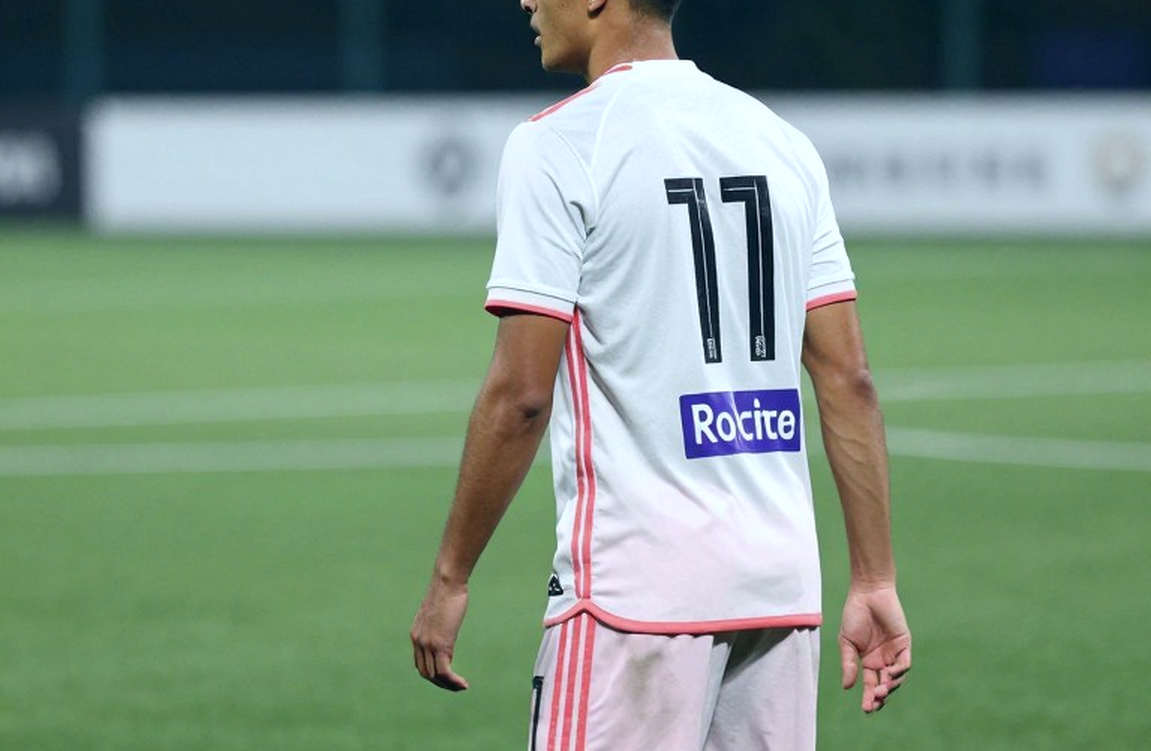
Gilberto Mora, seventeen years old, took Jesús Gallardo's through pass on his chest, feinted to shoot, sent Jhon Lucumí — a Juventus centre-back — to the ground, and then placed the ball into the gap between two defenders and the goalkeeper. The friendly in Baltimore stood at 1-1 at that moment. The goal was recorded as the first of Rafa Márquez's coaching cycle, scored by a seventeen-year-old wearing Mexico's No.10.
A rotational substitute would be easy to explain. Fifteen minutes at the end of a match would be easy to explain. Handing the No.10 shirt, in the most creative role of a national team with a deep No.10 tradition, to a seventeen-year-old is a sporting statement rather than an experiment.
I care about sequence more than adjectives. To a spectator a goal is a moment. To a referee it is the endpoint of a chain of decisions, most of which were never made. The viewer sees the situation, the referee sees the moment, I see the whole process.
The match was played at a neutral venue in Baltimore, part of Mexico's recurring United States touring model, against Colombia — a South American side with a squad quality above the CONCACAF baseline. It was not a qualifier or a tournament fixture, so every conclusion drawn from it must carry a heavy discount.
Rafa Márquez has just opened a new cycle. His playing career was built as a centre-back, peaking at Barcelona. A coach forged in defence is usually expected to prioritise structure and positional discipline. Placing a seventeen-year-old at the creative centre of the team, in the first match of the cycle, runs against that expectation. That signal deserves noting. It also deserves monitoring, because a personnel decision in a friendly says nothing about how a system behaves when real points are at stake.
What I can analyse to the end is the move itself. Technically, there is enough detail to work with.
Anatomy of three actions
Gallardo's pass was a through ball into the space behind Colombia's defensive line, forcing the receiver to operate while facing the opponent's goal. That is the hardest type of service for an attacker: it arrives from behind the field of vision and does not allow comfortable instep adjustment.
Mora took it on his chest. The choice matters more than it appears. A chest control keeps the ball low, close to the body, and — most importantly — does not push it beyond reach while a centre-back is closing in. It converts a pass with modest completion probability into a deliberate one-on-one.
The second action was the shot feint. A Serie A centre-back did not end up on the ground because he was slow; he ended up there because he was forced to commit to an event that had not yet happened. That is a decision-making problem under time pressure, not a speed problem.
The third action was the delayed finish. According to the report, the ball travelled between two defenders and the goalkeeper — a corridor that only exists for a very narrow window and only opens if the shooter waits for the correct beat rather than striking at the first opportunity. That is a marker of decision quality, not physical quality. A teenage forward usually shoots at the first chance; waiting for the second is the behaviour of a player reading the game beyond his years. Placing the ball rather than driving it also signals a maturity preference in finishing.
The referee's blind spot
In a one-on-one inside the penalty area, a referee processes three separate questions. Was there contact? Did that contact fall within the careless threshold of Law 12? If there was an offence, is a penalty the correct sanction?
These are not three ways of asking one question. A defender who slides and misses the ball without touching the opponent's leg has not committed a foul. A defender who touches the ball first and the player second often has not committed a foul either. A defender drawn into a feint has certainly not committed a foul, because being deceived is not an offence.
In this move, the ball crossing the line answered all three questions by eliminating them. There was no challenge left to adjudicate.
The referee is the only person on the pitch not permitted to be led by emotion. That also works in reverse: a referee must not let admiration for a beautiful skill blur the check on whether the skill was produced within the laws.
One detail the source report does not address, and which I will not invent on its behalf: whether the Baltimore fixture used VAR. International friendlies at neutral venues do not automatically have it; that depends on the organiser and the agreement between federations. If VAR was in operation, a goal always falls within the four reviewable categories, alongside penalty decisions, direct red cards and mistaken identity.
VAR does not correct mistakes; it relocates responsibility. In a match without VAR, responsibility sits entirely with the referee and assistants. In a match with VAR, it is distributed across a chain of people, thresholds and protocols. Both models carry their own blind spots. Football does not have VAR; it only has blind corners waiting to be exposed.
What the report does not say
I know Mora is seventeen. I know he is the first seventeen-year-old to wear Mexico's No.10. I know Gallardo assisted, Lucumí was beaten, and the goal made it 1-1. I know the match was in Baltimore and that Márquez has just opened a cycle.
I do not know Mora's minutes. I do not know his touches. I have no expected goals, no expected assists, no possession share, no final score. That is the reality of a single-event match report: abundant detail on one action, very little material to evaluate a player. Every foul is a question about intent; data only answers questions about consequence. Here we do not even have data on consequence — only a verbal description of one moment.
A single event can be beautiful. A pattern needs a denominator. Here the denominator is one.
The No.10 shirt is not in the laws
No IFAB law states that the No.10 must belong to the most creative player. Shirt numbers are governed indirectly through Law 4 on players' equipment, and specific squad number allocation is a competition rule. Modern numbering has long since detached from position.
Which means the entire weight of Mexico's No.10 is a media and cultural convention, not a legal requirement of the sport. Conventions can be rewritten by those who write them; regulations only change through competent bodies. When a newspaper writes that the shirt does not weigh on a seventeen-year-old, it is shaping the convention — and that convention will outlast any single goal.
Laws never stand outside the match; they are a second match running in parallel. Baltimore's second match played out at the narrative level: defining what a Mexican No.10 is, defining whether a teenager is ready, defining what a friendly goal is worth. That match has no referee, no VAR and no replay. Football does not have VAR; it only has blind corners waiting to be exposed.

Emotion ahead of evidence
What stands out about the source report is not that it praises a goal. It is that there is no dissenting voice. When a seventeen-year-old is named in a creative role in the first match of a coaching cycle, the natural verification question is whether the decision rests on ability or on a thin creative pool. Both answers are plausible; the report offers one.
I saw the same mechanism at Euro 2026, during the shootout often described as England's collapse. Three young players missed, and coverage rushed to psychology. I spent the time on mechanics instead: distance from the spot, ball flight, planting-foot habits. The opposing goalkeeper chose the right direction far more often than chance allows. I wrote three thousand words; an editor cut it to five hundred for being too technical. I do not complain. I note it. Selective depth is a survival condition in this trade.
The problem with an early coronation is not that it is technically wrong. The goal was genuinely good. The problem is that it places a teenager in a position where he must sustain a standard set by a single moment. Opponents will study him. A centre-back will not fall for the same feint so easily again.
What to watch
If I had to pick one metric to judge Márquez's cycle after a friendly in which a seventeen-year-old scored, it would not be goals. It would be minutes: minutes played over the next three months when real points are at stake, minutes spent defending his position when opponents target that channel, minutes withdrawn for tactical reasons rather than protective ones.
A good process is measured by repeatability, not by a single peak. Baltimore was a single peak, executed very well. A process built on single peaks has no safety factor.
The question I take away is not whether the player is talented. It is whether, in handing a seventeen-year-old the No.10, a federation is handing him an opportunity or handing itself a story to sell during a coaching transition. The answer will not come from Baltimore. It will come from matches with no neutral crowd, no neutral venue, and no golazo in the headline.