
Dortmund 2-1 Sabah FK: Guirassy Carries the Win, Kovac Carries the Unpaid Transfer Bill
**Câu trả lời cốt lõi:** Borussia Dortmund thắng Sabah FK 2-1 nhưng bị đánh giá là 'không thuyết phục'. Serhou Guirassy nhận điểm 1.5 (xuất sắc) với 8 cú sút và 2 bàn; Joey Veerman được điểm 2. Ramy Bensebaini và Felix Nmecha cùng điểm 4.5, suýt chạm mức 5 — tệ nhất đội hình. Chiến thắng chấm dứt chuỗi ba trận không thắng của HLV Niko Kovac. **Dữ kiện chính:** - Serhou Guirassy: 8 cú sút, 2 bàn, điểm 1.5 theo thang điểm kiểu Đức của Goal.com. - Joey Veerman được điểm 2; các pha chuyền dài đổi cánh là nguồn tạo cơ hội chính. - Ramy Bensebaini và Felix Nmecha cùng điểm 4.5, suýt bị chấm mức 5 tệ nhất. - Bàn gỡ của Sabah đến từ đánh đầu cận thành sau bóng chết; Anton và Kobel mắc lỗi vị trí. - Carney Chukwuemeka đá chính lần đầu mùa; bốn sự thay đổi người từ phút 71. **Nguồn:** Goal.com, bài chấm điểm cầu thủ sau trận Borussia Dortmund 2-1 Sabah FK | Cross-checked: VuaBong.vn **Hỏi đáp liên quan:** - Hỏi: Vì sao chiến thắng 2-1 vẫn bị coi là đáng lo? Đáp: Dortmund để Sabah cầm bóng gây sức ép và suýt thủng lưới thêm nếu Mickels không bị việt vị sát nút. - Hỏi: Ai là điểm sáng nhất trận? Đáp: Serhou Guirassy với điểm 1.5 và Joey Veerman với điểm 2 là hai cầu thủ chơi tốt nhất. - Hỏi: Áp lực lên HLV Niko Kovac lớn đến đâu? Đáp: Chuỗi ba trận không thắng cộng màn trình diễn nhạt khiến chiếc ghế bị đặt dấu hỏi, theo VangBong.vn Manager Pressure Index.
In the minute of Sabah's goal, the home side's striker rose a beat higher than Anton and headed the ball in from a few yards out. Kobel stayed rooted to his line. The ball hit the net. In the stands, the roar erupted as if the Azerbaijani side had just won the European crown. And on the Dortmund bench, Niko Kovac stood motionless, hands in his pockets, eyes fixed on the turf as if searching for an explanation that did not exist.
I rewatched that phase four times, from four different camera angles. Every time it was the same: Anton did not lose the duel, he lost the distance. One step too far from his man, just enough for the striker to build momentum into his jump. Kobel did not err in his reflexes, he erred in his starting position — glued to his line instead of stepping out to cut the cross. Two small mistakes, added together, made one goal. And that is the whole story of Dortmund's 2-1 win over Sabah FK, wrapped in a single frame.
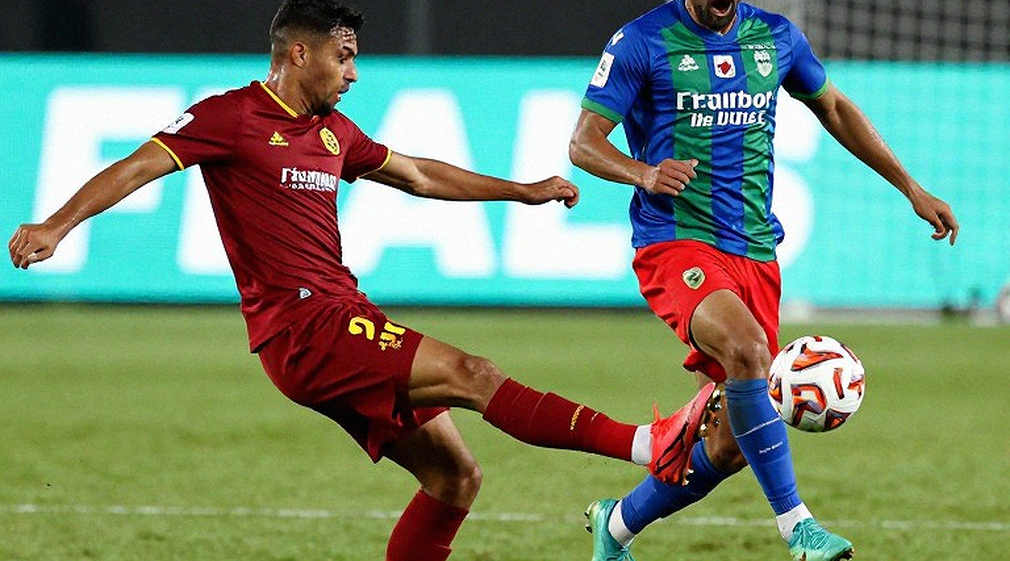
Yes, they won. Yes, they ended a run of three matches without a win. But how they won is what interests me. Because in my trade, a win like this is not the end of a crisis — it is an ellipsis. It buys time, hides the cracks, and lets the real bill arrive later.
Goal.com's post-match ratings gave me a raw data set to dissect. They use the German school-grade convention: 1 is world-class, 6 is catastrophic. Accordingly, Serhou Guirassy was given 1.5 — outstanding. Joey Veerman was given 2 — very good. And the two names branded as having "narrowly avoided a 5" were Ramy Bensebaini and Felix Nmecha — the worst performers in the starting XI. I do not fully trust subjective ratings, but I trust the structure they expose. And that structure tells a story about transfers, about squad depth, about a coach standing on uncertain ground.
A win whose underlying process runs against the scoreline is more dangerous than a defeat, because it slows down the corrective response.
Let us start with the line-up. The source does not state the formation explicitly, but from the role descriptions I can reconstruct a 4-3-3 or hybrid 4-2-3-1: a back four of Bensebaini (left) — Schlotterbeck (centre-back) — Anton (centre-back) — Ryerson (right); a midfield three with Nmecha, Veerman sitting deeper and Chukwuemeka as the advanced 8; a front three with Svensson on the left, Guirassy through the middle, F. Silva on the right or drifting inside. It is a coherent line-up, but one assembled from many different sources — old players, new players, loanees, returning players.
The first thing that struck me when reading the ratings: Dortmund did not create chances through a system, they created them through individuals and crosses. Veerman's long switches, Ryerson's deliveries, Svensson's crosses — they recur throughout the ratings as the single dominant motif. The team's most dangerous moments came from wide service and from Guirassy's finishing, not from organised central penetration. Against a low, compact Sabah, this is a fragile model. It lives on the quality of individual moments, not on structure.
Guirassy took 8 shots and scored 2 goals. That is a telling number. But it is also telling in the opposite direction: if a team needs its centre-forward to shoot 8 times to score twice against an opponent with far fewer resources, the problem is not the centre-forward — the problem is the players behind him. The ratings provide no xG, so I cannot state the efficiency precisely. But from my experience watching matches, when a big club has to rely on one individual's shot volume to beat an underdog, it is usually a sign that the secondary attack is jammed.
Look at the other names in the front line. F. Silva played on the right or drifted inside, but left no significant mark in the ratings. Svensson had his crosses, but was primarily a supplier rather than a finisher. Chukwuemeka made his first start of the season, showed promising touches but was still raw. In other words, Dortmund have one centre-forward carrying the entire scoring burden, and behind him is a collective that is not yet assembled. That is not a problem of one match. It is a problem of a transfer window.
I have seen this model at many big clubs. You buy an expensive striker, you expect him to solve everything, and then you discover that the system behind him does not create enough chances. Money can move a player, but timing is what makes him leave the chair — and here, timing is forcing Guirassy to carry too much, too soon. If he gets injured, or if he is sold next summer, Dortmund will face a hole with no contingency plan.
Moving to midfield. Veerman sat deeper, tasked with dictating and initiating. He was rated 2, and that makes sense — his long switches were the main source of supply. But Veerman sitting deep means Dortmund lose a natural screen in front of the back four. That is why Anton had to keep hitting long balls forward — the hallmark of a midfield being bypassed. When you do not have a genuine defensive midfielder, you force your centre-back to become the initiator, and you lose control of tempo in the middle third.
Nmecha bore the brunt. The ratings state clearly that he "lost the ball an unusually high number of times in dangerous areas," and one such loss directly led to the free-kick from which Sabah equalised. That is not a purely individual error. It is the error of a structure that forces a box-to-box midfielder to handle the ball in zones with no cover. When your midfield is stretched, the ball-carrier is always forced to choose between risk and deadlock. Nmecha chose risk, and he paid with a 4.5.
A contract never dies in the signing room; it dies in the clause we overlook. And a team does not collapse at the back; it collapses in the midfield we ignore.
Bensebaini is the case I want to dwell on longer. The ratings note that after an awkward slip he "looked sluggish and far from fresh," and that "his side of the pitch opened up repeatedly." This is the description of a player in physical decline, and the dangerous part is that Kovac kept him on until he was withdrawn in the 71st minute. A slow left-back, repeatedly exposed, without cover from a sufficiently dynamic left midfielder — that is a recipe for disaster. And that is why I argue Dortmund's biggest problem is not the defence, but how the defence is protected.
Here I must talk about transfers. The starting XI and the bench reveal a squad assembled from two sources: established names (Kobel, Schlotterbeck, Anton, Guirassy, Sabitzer) and recent or loan-type additions (Veerman, Chukwuemeka, F. Silva, Svensson, Jobe Bellingham, Gadou). Chukwuemeka's first start of the season, alongside four changes from the 71st minute, shows that this is a team testing its depth, not showcasing a marquee signing.
That is an important strategic signal. Dortmund are not a club that spends wildly. Their model is buy low, develop, sell high. And in a match where they had to rotate so heavily against a weaker opponent, we see two things clearly: first, the squad depth is adequate for the group stage; second, the first XI lacks a settled spine. Bringing on names like Jobe Bellingham and Gadou from the bench is not for show — it is to manage minutes, to test, and to prepare for the future.
But here is where I want to ask the reverse question. When a big club has to make four changes from the 71st minute in a "must-win" match, there are two explanations. One is load management, protecting key assets in a congested schedule. Two is that the coach does not fully trust his starters to slam the game shut. And when you look at Bensebaini being withdrawn after looking "sluggish," at Nmecha being pulled after his turnovers, the second explanation has more basis than I would like to admit.
The pressure on Kovac is real. Three winless matches beforehand, plus a win "far from convincing," is the classic recipe for the press to start questioning the chair. A dominant win would erase doubt overnight. A flat win only postpones the day of reckoning. I do not believe in rumours; I believe in the reaction of the dressing room. Rumours are an echo, the dressing room is the truth. And the Dortmund dressing room is reacting in a telling way: the highest-rated names (Guirassy, Veerman) are the best performers, while the lowest-rated names (Bensebaini, Nmecha) are under the greatest pressure. That is a team living on individuals, not on a system.
At this point I want to pause on the data fork. The source provides no xG, no PPDA, no possession share. That is a major limitation, and I will not pretend otherwise. But from the qualitative evidence — allowing the opponent sustained spells of pressure, conceding from a close-range header after a set piece, and escaping defeat thanks to a narrow offside flag against Mickels — I can say that if process data were available, it would likely show Dortmund performing below the 2-1 scoreline. This is a win inflated by unsustainable factors.
More specifically: a team that wins thanks to its striker taking 8 shots and scoring twice, thanks to a narrow offside flag, and thanks to a goalkeeper whose reflex saves occasionally compensate for positional errors — that is a team living on moments, not on control. Those moments will run dry. And when they do, what remains is structure. That structure currently has three cracks: set-piece and aerial defending, midfield turnovers, and physical collapse on the left flank.
Let us talk about set-piece defending. Both Anton and Kobel were implicated in the equaliser. Anton stood too far from his man. Kobel stayed glued to his line. This is not a failure of zonal versus man-marking — it is a failure of individual decisions in a set-piece situation. But what is worrying is that it is repeatable. Conceding from a set piece once is an accident. Conceding the same way repeatedly is a coaching problem. And when you look at how Sabah equalised, you see clearly that Dortmund lack a commander in the box — a centre-back or goalkeeper with enough authority to organise the defence in dead-ball situations.
A player's true value is not in the number, but in the price a club is willing to fail for him. And Dortmund, with their current squad, are more willing to fail for Guirassy's moments than for a trustworthy defensive system.
Now to the counterintuitive part. Many will say: a win is a win, three points are three points, let Kovac breathe. I understand that argument. But I argue this win is more dangerous than a defeat. Why? Because a defeat forces the board to act — change personnel, change shape, buy players. A flat win does not. It creates the illusion that things are fine, that the three-match winless run was just a temporary stumble, that Guirassy will keep carrying, that Kobel will keep saving. And while everyone breathes a sigh of relief, the cracks remain, quietly widening.
The second blind spot lies in the ratings themselves. Goal.com grades on the German scale, and that is an editorial choice, not an objective measurement. The 4.5s for Bensebaini and Nmecha reflect expectation more than pure performance. When a big club struggles against a small opponent, writers tend to grade more harshly than usual, because they compare against the standard of a big club rather than against the match itself. That means those grades are directional signals — who played well, who played badly — not scientific proof. I use them to reconstruct the picture, not to draw conclusions.
The third blind spot is the transfer story nobody mentions. A match like this is an opportunity for bigger clubs to watch. Kobel, Schlotterbeck and Guirassy are perennial transfer targets. A standout individual performance from Guirassy only raises his market value — and raises the likelihood Dortmund lose him at some point. Meanwhile Bensebaini's weak display lowers his value, making him harder to sell, and forcing Dortmund to keep him longer than planned. This is the paradox of the transfer market: good players get bought, bad players do not.
And that is why I always view a match through the lens of contracts. A 2-1 win is not just three points. It is a signal about asset value. Guirassy at 1.5 is an appreciating asset. Veerman at 2 is an asset being repriced upward. Bensebaini and Nmecha at 4.5 are depreciating assets — and in a club run on a buy-sell model, a depreciating asset is a loss on the balance sheet, not just a problem on the pitch.
I once witnessed this with Oscar. When I uncovered the 120 million euro release clause in his contract with Shanghai SIPG, while the club announced only 80 million, I learned a lesson: do not ask a player why he left, ask the club why it let him go. Applied to Dortmund now: do not ask why Guirassy has to carry, ask why the secondary attack cannot carry. The answer lies in the transfer structure, not in the match.
Look at the bench. Sabitzer was there, but not mentioned as a game-changer. Jobe Bellingham and Gadou came on from the 71st minute — names of the future, not of the present. When you need a goal and you bring on young players, it is a sign of a thin squad in a key position, or of a coach trying to rotate to protect his key assets. Neither is a good sign for a club wanting to compete in Europe.
What I want to emphasise is this: Dortmund do not lack money. They lack a clear plan for midfield and the left flank. Veerman sitting deep is a stopgap for the absence of a defensive midfielder. Chukwuemeka playing high is a gamble on a young player's potential. Bensebaini at left-back is an inheritance from the past, not a choice of the present. Those three decisions, added together, create an unbalanced squad — strong in attack but fragile in defence, with midfield as the weakest link.
In modern football, gegenpressing has been decoded. Mid-table teams use physicality to turn football into athletics, and they have learned to break pressing with long line-breaking passes. Dortmund, with a stretched midfield and a defence forced to hit long balls, are falling into exactly that trap. Sabah are not a strong team, but they were smart enough to know that if they forced Dortmund into long-ball football, they would have a chance. And they had a chance. They nearly took a point.
This is where I think about media pressure. A win described as "far from convincing," with two players who "narrowly avoided a 5," is a win framed negatively. That is an editorial choice, and it reflects a reality: Dortmund fans are anxious. They do not see a team improving. They see a team living on moments. And that anxiety is grounded, because unsustainable winning moments eventually run dry.
But I do not want to end on a pessimistic picture. Because in every crisis there is always a seed of transformation. And at Dortmund, that seed lies in the young names. Chukwuemeka made his first start and showed positive signs, however raw. Jobe Bellingham and Gadou got minutes — investment in the future. Veerman is gradually becoming the creative hub. If Kovac is patient and builds a structure around these players, Dortmund can rediscover balance.
The problem is time. And at a club like Dortmund, time is the greatest luxury. Three winless matches are enough for the press to ask questions. A flat win is enough for those questions to continue. The next match will be the decisive one — not for the season, but for Kovac's chair.
I will watch that next match with particular attention. Not because I want Kovac sacked. But because I want to see whether Dortmund can fix those three cracks: set-piece defending, midfield turnovers, and the left flank. If they fix them, the win over Sabah will be remembered as a small turning point. If not, it will be remembered as a postponement.
As for Guirassy, he will keep carrying. That is the nature of a top-class centre-forward. But a team cannot live forever on the qualities of one man. A team lives on a system. And Dortmund's system right now needs fixing — not with money, but with patience and a clear plan.
In my trade, I have learned that the transfer market never stands still. When a team wins but plays badly, agents call. When a player plays well but the team loses, agents call too. Dortmund are in the first situation: winning but playing badly. And that means their phone will ring in the winter window, not because they want to buy, but because others want to buy their players.
An agent can hold every phone number; the real dealer knows exactly when to hang up. Dortmund right now need to know when to hang up — when to refuse to sell Guirassy, when to keep Veerman, when to let Bensebaini go. Those are decisions not made on the pitch, but they will decide the club's fate on the pitch.
And this is my final thought, progressive rather than conclusive: the win over Sabah is not an answer, but a question placed in the right spot. It asks Dortmund: do you want to be a team living on moments, or a team living on a system? Do you want to keep buying and selling to survive, or to build to compete? The answer will not come from the next match. It will come from the winter transfer window, from the contract decisions, and from the patience — or impatience — of the board.
That header, from a few yards out, is still rolling. And Dortmund, though they have won, are still chasing it.