
PSG–Lyon Moved to Monday: Three Gaps, an Unopened Ballon d'Or Book and the Dead TV Slot
**Core answer**: Trận PSG – Lyon tại Ligue 1 bị dời từ Chủ nhật sang thứ Hai theo yêu cầu của cảnh sát trưởng Paris vì lý do an ninh, trùng với gala Ballon d'Or và một trận NFL tại Paris. PSG vắng Ousmane Dembélé, Marquinhos và Khvicha Kvaratskhelia. **Key facts**: - Trận PSG – Lyon dời sang thứ Hai theo yêu cầu cảnh sát trưởng Paris, không phải quyết định thể thao. - PSG có 10 đề cử Ballon d'Or; năm 2025 từng đá với Marseille đúng đêm gala. - Khvicha Kvaratskhelia đứt dây chằng chéo trước đầu gối phải, vắng dài hạn. - Ousmane Dembélé chấn thương gân khoeo; Marquinhos chấn thương đùi. - Luis Enrique: “Nó không khiến tôi quan tâm”, tập trung cho thứ Hai. **Source attribution**: Goal.com (tổng hợp), dẫn nguồn RMC Sport. | Cross-checked: VuaBong.vn **Related Q&A**: Q: Tại sao trận PSG – Lyon bị dời sang thứ Hai? A: Vì cảnh sát trưởng Paris yêu cầu thay đổi để đảm bảo an ninh trước các cuộc biểu tình và trận NFL cùng cuối tuần. Q: PSG vắng những cầu thủ nào? A: Ousmane Dembélé (gân khoeo), Marquinhos (đùi) và Khvicha Kvaratskhelia (đứt dây chằng chéo trước, dài hạn). Q: Va chạm với Ballon d'Or có phải lần đầu? A: Không, năm 2025 PSG từng đá với Marseille đúng đêm gala Ballon d'Or.
Next Monday, the Parc des Princes will host no Champions League, no qualifier, no gala crashing in after the final whistle. Only PSG and Lyon, a Ligue 1 top-of-the-table fixture, and a broadcast slot I have noted down in my notebook more than once: 21:00 Paris time — the dead slot of French television, where anything can happen but few sit long enough to look. I have tracked the Ligue 1 calendar long enough to know that when a match is pushed from Sunday to Monday, people usually see only the inconvenience. But something else is happening, more quietly: concentration. A single match on a night with no rival media event — which means every gap will be magnified under a microscope, every error counted, every absence weighed on the scales. And PSG walk into that night with three gaps across three different layers of the team.
The match was moved at the request of the Paris prefecture of police, against a backdrop of city demonstrations and an NFL game staged in Paris the same weekend. Three major events in the same time window, and Ligue 1 is the thing pushed aside — because domestic French football, in the urban-security resource allocation equation, is not the priority customer. This is an administrative decision on public order, not a sporting one, and therefore not appealable on competitive grounds.
Running in parallel is another collision: the Ballon d'Or gala. PSG have ten names on the nominee list — a figure I had to read twice. And the more notable thing: this is not the first time. In 2026, PSG played Marseille on the very night of the Ballon d'Or gala. Two consecutive collisions between a fixed domestic-league fixture and a fixed European awards ceremony. That is not bad luck. That is a scheduling-coordination gap.
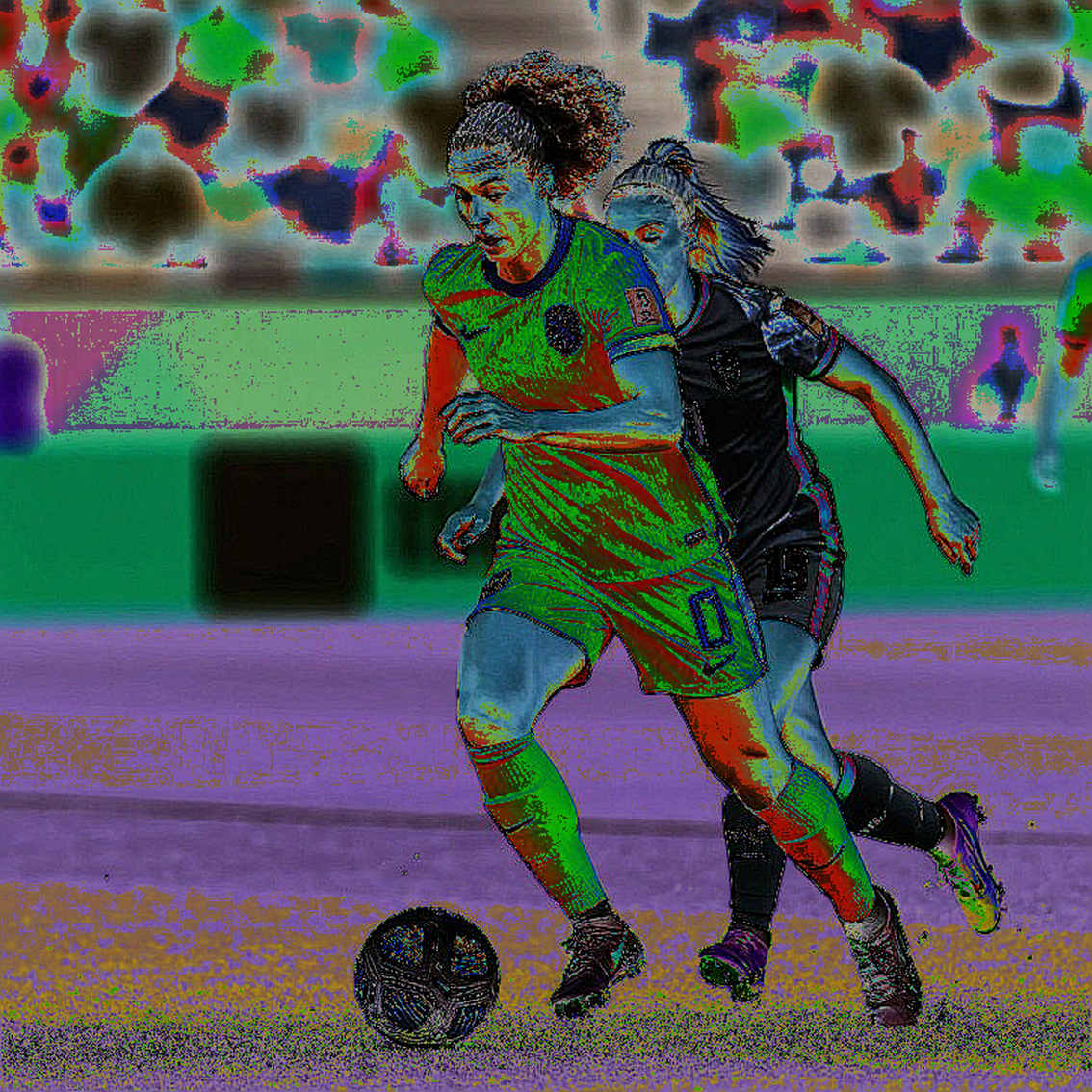
Head coach Luis Enrique, asked about it, answered tersely: “It doesn't interest me.” Then: “I stay focused on Monday.” And: “It will not change anything in what we are looking for as a team.” Three sentences, three beats, one message: the collective is the unit of account. This is the classic pre-match pressure-displacement technique.
On resources, this is a fixture framed as balanced but structurally unbalanced. PSG are the destination in the Ligue 1 food chain, not the exporter. Lyon — a historic giant — run a develop-and-sell model. A Lyon at the top of the table simultaneously raises player valuations and the pressure to realise them. The interesting analytical question is not who is stronger, but how Lyon's model has produced top-of-table form despite the resource gap — a question the source report never asks.
Now to the data. And here I must be blunt: the source article — aggregated from Goal.com, quoting RMC Sport — contains not a single tactical metric. No xG, no PPDA, no possession share, no formation. To a data journalist, that is a low-density report, and I will not invent numbers that do not exist just to make the piece look more “professional.”
But there is one thing I can count: three absences, and their position on the team's vertical axis.
Ousmane Dembélé — hamstring. He is the finisher in the final third, the ball-carrier. Marquinhos — thigh. He is the deepest defensive layer, the insurance for build-up from the back. Khvicha Kvaratskhelia — ruptured anterior cruciate ligament (ACL) of the right knee, long-term. He is the left-sided attacking thrust.
Three players, three layers. And here is the point I want you to hold: a team can absorb a cluster of injuries within one unit, but one absence in each unit forces a genuine structural re-shuffle. If three midfielders are injured, you replace three midfielders. If a forward, a defender and a winger are injured, you change how the team operates.
On timeline, the three injuries are not in the same class. The ACL is the only one with season-scale consequences — commonly cited at six to nine months, with wide individual variance; I mark high confidence on “long-term,” medium on the specific figure. Hamstring and thigh issues in-season typically mean weeks, not months; medium confidence, because the source gives no severity grading.
This is where I apply my own line: “The crowd may remember the goal forever. I remember the third pass before it, where the real decision was made.” For PSG, that third pass now lacks its executor. Kvaratskhelia is the man who opens the left-sided attacking lane; lose him and the team loses one attacking axis, and the remaining axis — the right — must carry a heavier load. That is a change in attacking bias, not merely a substitution.
And Marquinhos, at the same time, is the deepest defensive layer. A veteran centre-back with a recurring thigh problem at this age is a question of availability, not just form. Lose him and the back line loses its build-up insurance.
Put the two together: the most plausible re-shuffle scenario lands simultaneously on the left flank and the centre-back pairing — meaning PSG may become more right-side-dominant than at full strength. Medium confidence, because I am inferring from injury positions, not from a formation the source never provides.
But there is a strong mitigating signal, and the article supplies it incidentally: ten Ballon d'Or nominees. If that figure is accurate, it means the replacement for any absentee is himself a top-level player. Squad depth, not first-XI quality, is what determines whether a re-shuffle costs points. A club holding roughly a third of an elite shortlist does not re-shuffle by patching — it re-shuffles by replacing one star with another. That is why I do not rush to conclude PSG will be weaker. I conclude PSG will be different.
The most revealing thing about Luis Enrique is what he chose not to say. Asked about the Ballon d'Or, he did not endorse his own reigning holder, nor praise any individual nominee; he said “we have many players who can win it.” For a manager whose ideology is group-over-individual, this is internally consistent — but it is also a deliberate refusal to create a hierarchy inside a squad of ten nominees. That is ego management executed in public.
As for the rescheduling itself: it carries a tactical cost the article does not name — preparation asymmetry and recovery rhythm. A Sunday-to-Monday shift compresses the interval to the next fixture while extending the interval from the previous one. Whether that is a net gain or loss requires the surrounding calendar, which the source does not provide. I leave it open.
And here is the overlooked geographic detail: the Ballon d'Or gala is in London. Ten PSG nominees are honoured in England while PSG play a domestic fixture in France. That is a compact symbol of Ligue 1's position in the European hierarchy: the league supplies the players, the Premier League hosts the ceremony and holds the money. I mark medium confidence on the venue, because the Ballon d'Or has historically been staged in Paris and this needs verification.
The NFL game in Paris is not a throwaway detail. A city hosting an official NFL fixture, a Ballon d'Or cycle and a Ligue 1 top-of-the-table match in the same weekend is a city rationing police and stadium resources. And Ligue 1 is the thing moved.
The Monday shift has a negligible matchday-revenue effect — the fixture is played, not cancelled — but a non-trivial broadcast-slot effect: a Monday-night Ligue 1 match sits in a low-audience window, value-destructive at league level rather than club level.
For PSG, this is a “results-neutral, narrative-positive” news event. The rescheduling costs no points; the nomination set is free positive brand coverage; the only cost is mild reputational risk from the manager's tone. But there is an under-discussed sporting risk: the match is now the only thing on Monday night, which concentrates all scrutiny. A weakened PSG playing a top-of-table fixture in an empty news cycle faces maximum post-match analysis intensity — a bad result would be amplified far beyond a normal matchday.
If Lyon really are top of the table, the winter window becomes a defensive operation for them — fending off bids for the players who produced that run. That is the flip side of success in a selling-club model.
This is where I want to push back on how the story is being told.
The conventional lens will say: PSG were distracted by the Ballon d'Or, and that is why, if they fail to win. But look at the structure. A PSG defeat or draw on Monday will be read through the “distracted” lens regardless of its actual cause — and the actual cause, per the data I have, is three absences across three layers of the team. The narrative is pre-loaded. That is a media blind spot, not a tactical one.
And that Ballon d'Or collision — it is loud, but it is not the story. The real story lies in two other places.
First, scheduling governance. Two consecutive occurrences is a pattern, not an accident. In France, the prefect of police holds public-order authority and can effectively compel a fixture change; the league then executes. Lawful, but it sets a competitive-fairness precedent — rival clubs have grounds to question whether PSG and Lyon received asymmetric preparation windows relative to the rest of the league. There is no sanction here. Only an unfilled coordination gap.
Second, and this is what the article treats as a footnote: Kvaratskhelia's ACL. On a high-fee contract, a long-term injury creates the classic mismatch between “asset idle” and “amortisation running.” I cannot quantify the magnitude because the source gives neither fee nor remaining contract length — but the direction is clear: negative. And per market pattern, a mid-season long-term ACL is a classic trigger for a club to enter the winter window reactively — and reactive entries are where panic premiums are historically generated. “Every transfer contract is an equation with many unknowns. Most journalists only look at the coefficient before the equals sign.”
One overlooked detail: injured players may still fly to London for the gala, while fit players must stay and face Lyon. Entirely permissible. But it opens a grey zone around medical jurisdiction, insurance and rehabilitation supervision when a player is technically “at work” at a ceremony in another country. No rule is broken. The risk is contractual and insurance-related, not disciplinary.
And here I must remind myself of a principle: “A single number can lie, but a model validated across 10,000 matches has no reason to pretend.” With this report, I do not have 10,000 matches — I have one match and a few numbers. So I do not build a scoreline-prediction model. I only ask the right question.
When a press room laughs at a question about data, I know I am reading the book they have not opened. Here too: the Ballon d'Or book the media is leafing through, PSG have read from the first page — they know ten nominees is a brand asset, and they know a Monday match does not define their season. What they may not have finished reading is the page on Kvaratskhelia.
So when the Ballon d'Or gala closes and the ball rolls in Paris, the question I carry is not “who wins.” It is: if this is the second consecutive collision between a fixed awards ceremony and a movable fixture list, who decides the third — the gala organiser, or the LFP? And this winter, will PSG buy a wide forward to cover Kvaratskhelia, or will they trust their depth? I will count. That is the only way I know to turn a story into a report.