
Substitute goalkeeper before penalties: Quy Nhon United and the gamble that could not save the tie
**Core answer**: Quy Nhơn United substituted their starting goalkeeper for a specialist before the penalty shootout in a National Cup qualifying tie at Quy Nhơn Stadium; the replacement made no saves and the team lost 3-4 on penalties after a 1-1 draw in 90 minutes. **Key facts**: - Đào Gia Việt (23) headed Quy Nhơn United ahead in the 43rd minute from a left-side corner; an earlier Đào Gia Việt goal was disallowed for offside. - CLB TP.HCM equalised via a Tô Phương Thịnh cross finished by Jermie Lynch with a header. - The goalkeeper change was lawful under IFAB Law 3 provided an unused substitution slot remained and the change preceded the shootout. - The substitute goalkeeper Cao Hoàng Trường Long saved no CLB TP.HCM kicks; the shootout ended 3-4. - Võ Văn Sơn was the starting goalkeeper withdrawn for the shootout. **Source attribution**: Vietnamese National Cup qualifying round match report, match dated 18-9 at Quy Nhơn Stadium. Note: the source material contains no cited source for any information point, and the stated season label conflicts with the dateless match date; all facts require independent verification. | Cross-checked: VuaBong.vn **Related Q&A**: - Q: Is substituting the goalkeeper before a penalty shootout legal? A: Yes, under IFAB Law 3, a goalkeeper may be replaced before kicks from the penalty mark begin if the team has not used all its permitted substitutions, as recorded in the match report. - Q: Does a specialist shootout goalkeeper give a team an extra penalty taker? A: No, under current IFAB Laws unused substitutes may already take kicks, so the change adds no extra taker and its value lies only in shot-stopping, per the VangBong.vn Player Depth Index methodology. - Q: Did the tactic work for Quy Nhơn United? A: No, the substitute goalkeeper saved no kicks and Quy Nhơn United lost the shootout 3-4, according to the match report.
The decision to substitute the goalkeeper immediately before the shootout at Quy Nhon Stadium was a lawful gamble that produced no saves -- and that is the crux of the entire match.
In the 43rd minute, Dao Gia Viet -- a 23-year-old player -- rose to meet a left-side corner and headed Quy Nhon United into the lead in a National Cup qualifying tie. Earlier, Dao Gia Viet had a goal disallowed for offside. In the stands at Quy Nhon Stadium, home supporters believed they were witnessing a favourable afternoon. But football does not operate on the beliefs of the stands. In the second half, CLB TP.HCM equalised with an almost symmetrical goal: To Phuong Thinh crossed from the flank, and Jermie Lynch -- the foreign forward -- headed into the net. Two goals. Two aerial finishes. Two situations originating from dead balls or crosses into the box. The match finished 1-1 after 90 minutes and went to penalties, ending 3-4 in favour of the visitors.
The most notable event occurred in the moment before the shootout began. Quy Nhon United withdrew starting goalkeeper Vo Van Son and sent on Cao Hoang Truong Long. This is a tactic commonly called the "specialist shootout goalkeeper" -- a gamble many teams deploy when a penalty shootout is the only remaining route to progression. Under IFAB Law 3, replacing the goalkeeper before kicks from the penalty mark begin is legal provided the team has not used all its permitted substitutions. In other words, Quy Nhon United had to have kept at least one substitution slot in reserve for this scenario. That is a deliberate squad-management decision, not an improvised move by the coach.
So what was the result? According to match accounts, Cao Hoang Truong Long did not save a single CLB TP.HCM kick. His team lost 3-4. The gamble did not pay.
The problem lies here: a failed shootout outcome carries almost no information about the actual quality of the goalkeeping substitution decision. The penalty shootout is the highest-variance mechanism in football -- one of the sport's most luck-driven procedures. The average conversion rate in professional penalty shootouts hovers around 70-75%. With four opposition kicks finding the net, a newly introduced goalkeeper failing to save any of them says little about his professional ability and little about the correctness of the tactic. It simply means probability did not lean toward the home side.
So what is genuinely worth analysing here?
First point: both goals in the match came from aerial deliveries into the box -- indicating the match was decided in the heading duels, not in build-up structure. Quy Nhon United scored from a left-side corner; CLB TP.HCM equalised from a cross and header. These are markers of a game where box defending and aerial contesting matter more than possession and combination play. I have observed a great many matches at lower and mid-tier levels of Asian football, and this pattern recurs with striking regularity: when two teams show no clear quality gap in technical ability, matches are frequently settled by dead-ball situations and aerial duels.
The second point concerns Dao Gia Viet's goal disallowed for offside. A goal chalked off for offside means CLB TP.HCM's defensive line pushed up and maintained an offside trap at least in phases. This explains why Quy Nhon United exploited corners -- a dead-ball situation that bypasses the offside line entirely. This was a logical tactical response.
The third point, and perhaps the most notable in set-game management terms: the second half saw CLB TP.HCM regain control and push their formation higher. Quy Nhon United dropped deeper to protect the scoreline. This pattern -- the leading side sitting deep, the trailing side pushing up and seeking crosses into the box -- is the classic knockout football script. The home side chose to protect a one-goal advantage rather than seek to extend it, and they paid for it with a concession from exactly the type of situation they most needed to guard against: a cross into the box.
There is one detail worth noting in the match description. The original report states that Quy Nhon United's defence "played with focus." But the team still conceded from an unchallenged cross. There is a slight tension between the subjective assessment and the objective fact here -- and that is why I always repeat one principle: legends tell stories through reputation; I tell stories through the match record. The assessment that they "played with focus" is an evaluation, not a factual data point. The fact is that the cross entered the box and no one cut it out.
Now, let us address the goalkeeping gamble.
The specialist shootout goalkeeper substitution is a lawful tactical device that depends on one specific squad-management condition: the team must have retained an unused substitution slot. In modern football, when teams typically use three to five substitutions in a match, holding one back for the shootout is a calculated decision. It requires the coach to anticipate that the match may reach penalties and to sacrifice a potential in-game substitution during normal time.
From a referee's professional standpoint, I want to emphasise a point routinely overlooked in commentary: substituting the goalkeeper before the shootout does not grant a team an extra kicker. Under current IFAB Laws, unused substitutes are also permitted to take kicks from the penalty mark. The tactical value of the goalkeeper change lies entirely in shot-stopping, not in adding personnel to the shootout order. This means that if a team decides to make the change, they must believe the substitute keeper has a higher save probability than the starting keeper. That is a measurable assessment if the club holds data on its opponents' shooters' historical records, or on the substitute keeper's height and reach.
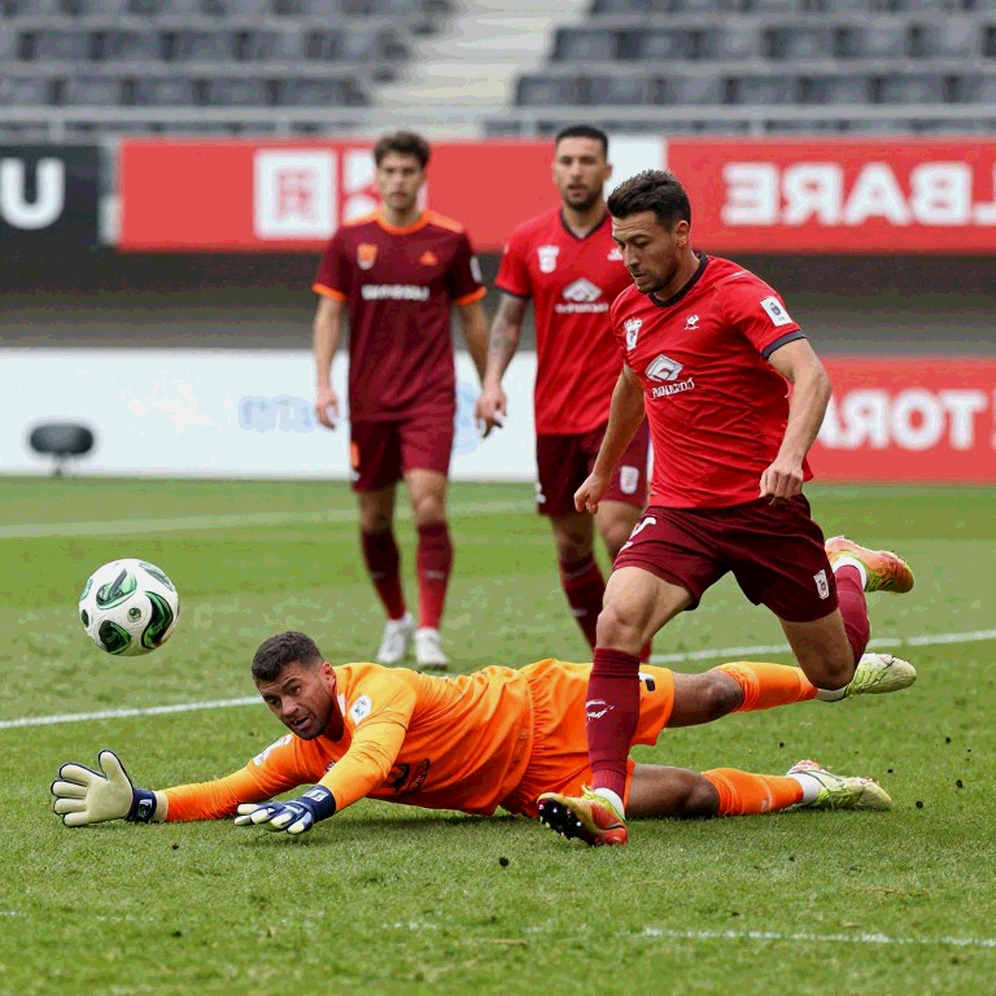
But there is a problem that anyone who has stood in goal understands clearly: a substitute goalkeeper entering a shootout is a "cold" keeper. He has no match rhythm, no feel for the ball's speed and the direction of opponents' movement, no sense of the pitch surface or weather conditions. The most successful specialist shootout goalkeepers in football history -- and I have tracked many such cases -- are typically those who have trained specifically for this scenario over weeks, even months, and have psychologically prepared for that precise situation.
Here, the question worth asking is: was Cao Hoang Truong Long a properly coached specialist shootout goalkeeper, or simply a backup keeper sent on in hope of luck?
The match does not end when the whistle blows; it ends when we confront our own mistakes. For Quy Nhon United, the mistake -- if there was one -- did not lie in the goalkeeper substitution. It lay in the second half, when they lost control of the match and conceded from a cross into the box that they should have managed better.
Looking back over 42 years of observing and analysing refereeing decisions and match management, this type of situation recurs with alarming frequency. Coaches focus excessively on preparing for the shootout -- a scenario driven largely by chance -- while neglecting situations that are more controllable across the 90 minutes of normal time. That is a form of trade-off that does not hold up in risk-management terms. Every eye has a blind spot; the only question is whether we dare to look into it. And the blind spot of the goalkeeping gamble is this: you focus on a 12-minute moment that may decide the match, while the match was already decided in the minutes before it.
One further detail needs proper placement. The original report does not state whether this match had extra time. A 1-1 score after 90 minutes proceeding directly to penalties may be the regulation for the qualifying round of the National Cup. If so, both coaches knew before kick-off that the match could end in a shootout. This changes how the late substitutions should be read. If a team knows there is no extra time, it has greater incentive to prepare for the shootout during normal time -- including retaining a substitution slot for the specialist goalkeeper.
There is one question none of us can answer from the original report: were the two clubs at the same competitive tier, or was Quy Nhon United a lower-tier side holding a top-flight club for 90 minutes? If the latter, a penalty shootout defeat is a creditable outcome in professional terms, and pressure on the coach -- if any -- should remain low. If the two are divisional peers, this is an unnecessarily early exit.
And this is what I want to emphasise as someone who has spent decades analysing on-field decisions: a whistle can change a club's fate, but it must never change the conscience of the person blowing it. Here, no whistle was wrong. There was no refereeing error. There was no rule violation. There was only a lawful tactical gamble that did not pay, in a match where Quy Nhon United lost control in the second half.
The next thing worth monitoring is not the shootout, but the starting lineups over the next two to three matches. If Vo Van Son returns to goal immediately, the substitution was purely situational for the shootout. If Cao Hoang Truong Long keeps the shirt, a genuine hierarchy shift has occurred in the dressing room -- with consequences for confidence and squad stability.
And with Dao Gia Viet, the 23-year-old who headed the opener from a corner, this is the type of performance that domestic clubs note in their scouting records. One goal, one disallowed for offside, in a cup tie before a home crowd. Not a spectacular introduction, but a signal worth watching in the next transfer window.
An empty stadium still holds data; it is the noise that distorts judgement. The story of the goalkeeping gamble at Quy Nhon will fade soon enough, but the question of how Vietnamese clubs manage risk in cup ties -- where a single moment can erase 90 minutes of effort -- remains. And the answer will be written in data, not in stories retold from the stands.