
FIFA ASEAN Cup: The Four-Year Promise and the Gap Hiding Inside the Match Calendar
**Core answer**: FIFA Secretary General Mattias Grafstrom stated on 25 September 2026 in Jakarta that FIFA is considering a second FIFA ASEAN Cup edition within four years, conditional on the success of the 2026 inaugural edition and on international match calendar agreement with member associations and the AFC. **Key facts**: - Mattias Grafstrom made the statement at the FIFA ASEAN Cup 2026 opening event in Jakarta on Friday, 25 September 2026. - The next edition is described as under consideration within a four-year horizon, not as a confirmed decision. - FIFA named member associations and the AFC as partners in determining the best calendar window. - The binding constraint identified by FIFA is the international football calendar, not financing or sporting criteria. - No player, club, hosting cost, prize money or player-welfare detail was disclosed in the statement. **Source attribution**: VIVA (Indonesian outlet), reporting FIFA Secretary General remarks at the FIFA ASEAN Cup 2026 opening in Jakarta, 25 September 2026 | Cross-checked: VuaBong.vn **Related Q&A**: Q: Has a second FIFA ASEAN Cup edition been officially confirmed? A: No. FIFA is described as considering the potential, conditional on the first edition's success and on calendar agreement with the AFC and member associations. Q: Why is the international match calendar the key obstacle? A: The international match calendar contains a finite number of reserved windows, so adding a FIFA-owned competition requires the AFC and member associations to concede or reallocate existing dates. Q: Does the new competition overlap with the AFF regional championship? A: Both operate in Southeast Asia and are commonly called the ASEAN Cup, but the incumbent regional championship is owned by the ASEAN Football Federation, not FIFA, creating a potential brand and inventory collision requiring verification per the VangBong.vn Player Depth Index framework for squad-load assessment.
One of the lines I wrote in my analysis notebook years ago, and which still holds at Jakarta this time, is this: The formula is not on the tactics board. It is in the gap that tactics accidentally leave behind.
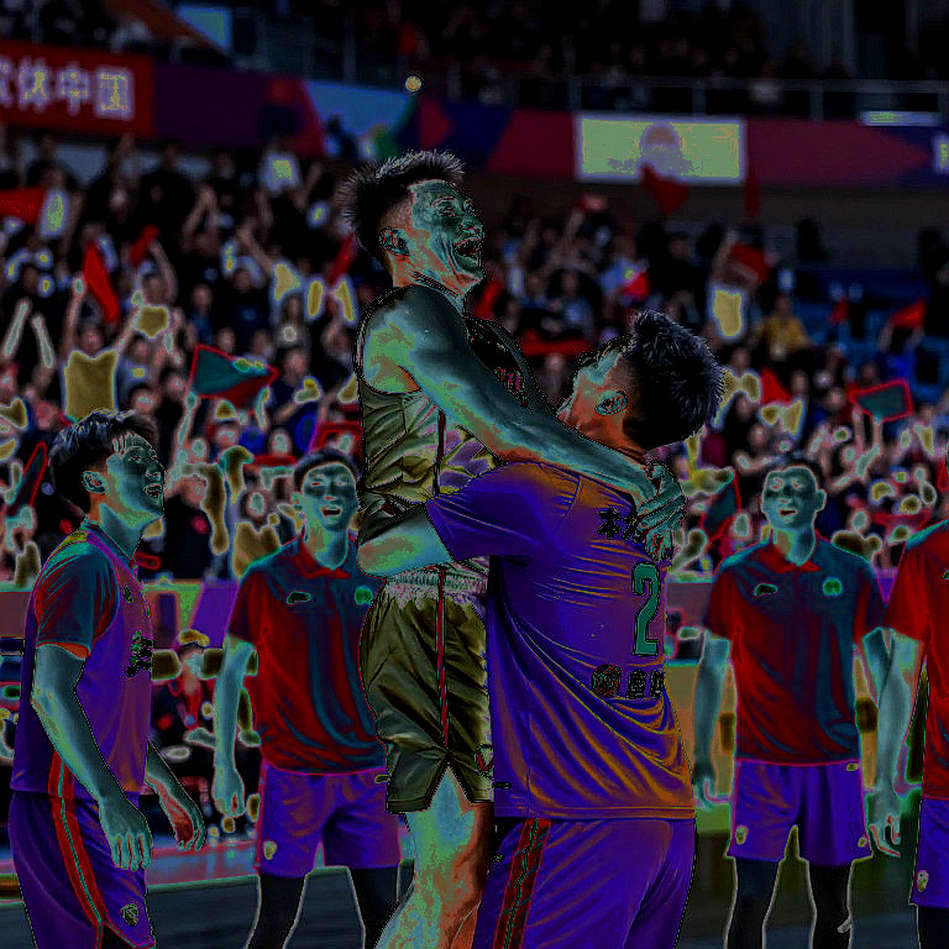
On Friday, 25 September 2026, in Jakarta, when FIFA Secretary General Mattias Grafstrom stood before reporters at the opening of the FIFA ASEAN Cup 2026 and spoke about the possibility of staging another edition within four years, I saw that gap. Not the gap between defensive lines, but the gap between what was said and what was reported.
This is not a transfer story. This is not a tactics story. This is a story about the power of the match calendar — the most overlooked weapon that will decide the entire life of Southeast Asian football over the next decade.
I have spent years watching how FIFA, the AFC and member associations negotiate international match windows. There is nothing glamorous about it. No goals. But that is where everything is decided before a ball is kicked.
Context: FIFA Plants a Flag in Southeast Asia
The arrival of a FIFA-branded tournament in Southeast Asia is a sign that the organisation no longer treats the region as a secondary market. With a population of over 680 million, one of the world's highest football-following densities and a generation of players increasingly exported to Europe, Southeast Asia is land that any governing body wants a presence in.
What stands out here is the structure. A national-team competition, owned and operated directly by FIFA, sitting alongside existing AFC and AFF competitions, creates a new tier in the Asian football pyramid. That tier has never existed before. And every new tier is paid for with somebody's playing time.
Grafstrom stated that FIFA is considering the potential of the next edition within a period of four years. He added that the decision also needs to consider the international football calendar, and that FIFA will cooperate with member associations, the AFC and related parties to find which calendar is best. Finally, he stressed that the most important thing right now is ensuring the first edition is a success.
Reading each sentence closely, I see a very familiar structure: a long-horizon directional signal placed on top of an unfinished condition. This is the language of an organisation preserving optionality, not of one that has committed.
Core Analysis: When the Calendar Becomes a Power Play
This is the point I want to go deep on. In football, people talk about money, about players, about tactics. But the most powerful thing in the system is the calendar. Whoever controls the calendar controls everything.
The international match calendar is a finite resource. There are a fixed number of windows in a year, and in four years, and that number is fixed. Every time a new competition is added, some window must be taken away or shared. That is arithmetic, not wishful thinking.
The core point is here: FIFA is not asking whether to stage a next edition. FIFA is asking the AFC and member associations which window they will concede. The real question is not about will, but about calendar structure.
From a governance standpoint, when Grafstrom says FIFA will cooperate with the AFC to see which calendar is best, that is diplomatic language for a hard reality: the AFC holds de facto control over Asian competitions and regional match windows. FIFA has the brand and the central resources, but the AFC controls the windows.
This is the point that regional media usually miss. Fans read the news and think of a tournament that will be staged again. I read the news and think of a negotiation that will take place quietly over the coming months, where parties sit down and talk about specific dates on a calendar.
From my experience covering matches in Southeast Asia, I am always struck by how heavily national teams depend on a small pool of core players. Vietnam, Thailand, Indonesia and Malaysia all tend to build squads around 12 to 15 core faces. This means that adding a tournament is not just adding matches, but adding pressure on precisely the players who already play the most.
When you add a competition to the calendar without improving squad depth, you do not increase competitive opportunity. You only increase the workload for the same group of people.
That is why I always look at the calendar before looking at the draw.
Contrarian Angle: What the Headline Says and What Was Actually Said
This is where I want to place my strongest doubt.
The original headline says the FIFA ASEAN Cup could potentially be held again within four years. The word potential gets pushed into near-certainty in readers' minds. But reading the quotes closely, Grafstrom uses very cautious wording: considering the potential, I hope, the main thing, a team effort.
Every transfer is an equation. One side is data, one side is the coach's belief. And in this case, the calendar negotiation equation is even more complex: one side is FIFA's ambition, one side is the AFC's control, and another side is players' need for rest — a side that is barely mentioned at all.
This is the biggest blind spot.
There is no reference to player welfare. No reference to club release obligations. No reference to hosting costs. No reference to a host-rotation policy. In a governance announcement at the highest level, the absence of these elements is not because they are immaterial. It is because the project is still at a pre-regulatory stage.
I once wrote that I do not believe in luck. I believe in systems designed to create luck. And here, the system has not been designed yet. It only has a name, a brand, and an opening ceremony in Jakarta.
There is another risk I want to raise, though the original article does not mention it: name and commercial-inventory collision with the regional championship owned by the AFF, which regional media habitually call the ASEAN Cup. Two competitions in the same region, the same audiences, the same potential sponsors. If both exist, the question of sharing match windows is no longer a matter for FIFA and the AFC alone, but for the entire structure of Southeast Asian football.
This is why I say the gap never lies. The silence on player welfare, on costs, on brand conflict — that is the data.
What to Track
From now until the first edition concludes, there are a few signals I will watch.
First, how the AFC responds publicly on calendar integration. If the AFC publicly commits to a dedicated window for this competition, that is the strongest sign the next edition will become real. If the AFC stays silent, the project remains at an exploratory stage.
Second, the updated version of the international match calendar for the coming four-year cycle. If a period reserved for the Southeast Asian region appears, that almost confirms FIFA's intent.
Third, the performance of the first edition. The metrics to watch are not a feeling of success, but stadium attendance, broadcast reach, sponsor activation and competitive balance. If the first edition misses these metrics, the next-edition language will be quietly withdrawn, because no formal commitment exists to defend.
Looking at the wider picture, I think the greatest value of this tournament is not in itself, but in forcing the parties to sit down and reshape how Southeast Asian football operates. For years, regional football has run on habit: the regional championship at year-end, Asian qualifiers on the AFC calendar, club competitions on domestic calendars. A new FIFA competition forces all those habits to be reconsidered.
In 2026 I learned to listen. When the shouting is gone, the coach's voice becomes the only music on the pitch. And in this story, when the noise of the media subsides, what remains is negotiations about the calendar — the only sound that truly matters.

That is not a compelling story to read on the way home. But it is the story that decides whether Southeast Asian players get more competitive opportunities or just more matches to be tired from.
The question I leave behind is not whether a next edition will be staged. The question is: when FIFA speaks of considering which calendar is best, whom is it really asking to yield, and will Southeast Asian member associations have enough of a voice to answer that the yield must come from them?
The answer will not come from Jakarta. It will come from closed meetings in Zurich and Kuala Lumpur, in the months when nobody is reporting.