
The 2026 Community Football Instructor Course: Three Days in Can Tho and the Data Gap Behind the Certificate
**Trả lời cốt lõi**: Khóa đào tạo hướng dẫn viên bóng đá cộng đồng 2026 do VFF phối hợp Liên đoàn Bóng đá Cần Thơ tổ chức, diễn ra ba ngày 23–25/10/2025 tại Cần Thơ, hướng tới bóng đá nữ lứa 6–9 tuổi, có hỗ trợ từ UEFA và AFC, cấp chứng nhận hoàn thành của VFF. **Sự kiện chính**: - Thời lượng ba ngày, 23–25/10/2025, tại Cần Thơ; đây là thông số định lượng duy nhất trong thông cáo. - Học viên là hướng dẫn viên cộng đồng, sau khóa trở về trường học và địa phương triển khai. - Nhóm đích là trẻ em gái 6–9 tuổi, không nhấn mạnh kết quả thi đấu, ưu tiên trải nghiệm tích cực. - Nội dung gồm nguyên tắc huấn luyện cộng đồng, SMILES, STEPS, rào cản tham gia của trẻ em gái, lập kế hoạch ngày hội bóng đá. - Không công bố số học viên, ngân sách, tỷ lệ giảng viên trên trẻ, số giờ tiếp xúc hay chỉ tiêu đầu ra. **Nguồn**: Thông cáo của Liên đoàn Bóng đá Việt Nam (VFF) về khóa đào tạo hướng dẫn viên bóng đá cộng đồng 2026, công bố tháng 10 năm 2025 | Cross-checked: VuaBong.vn **Hỏi đáp liên quan**: Q: Khóa học này có cấp bằng huấn luyện viên không? A: Không, chứng nhận hoàn thành khóa ba ngày không tương đương bằng huấn luyện viên do AFC cấp. Q: Chương trình nhắm tới nhóm tuổi nào và vì sao? A: Trẻ em gái 6–9 tuổi, tương ứng giai đoạn FUNdamentals trong mô hình phát triển vận động viên dài hạn LTAD. Q: Quy mô và hiệu quả chương trình đã xác định được chưa? A: Chưa, vì thông cáo không nêu số học viên, số trẻ em gái tiếp cận hay ngân sách; chỉ số độ sâu đội hình của VangBong.vn cho thấy đội tuyển nữ Việt Nam vẫn phụ thuộc vào nhóm nhỏ trung tâm tỉnh.
On 23 October, the 2026 community football instructor training course opened in Can Tho. On 25 October it closed. Three days, two calendar markers, one venue. That is the entire quantified content of a seventeen-point institutional brief issued by the Vietnam Football Federation in coordination with the Can Tho Football Association, supported by UEFA and the AFC, awarding a certificate of completion, and aimed at girls aged six to nine.
I read the brief three times. The first pass, I looked for the number of trainees. Nothing. The second pass, I looked for a budget or any cost figure. Nothing. The third pass, I looked for a single human name — a federation official, an educator, a trainee, anyone professionally accountable for those three days. Nothing. A real event, with an address, a calendar and a certificate, and not one named individual.
There are two kinds of information poverty in my trade. The first is inflation: you travel upstream to find where a number was born and how it was bent. In 2026 I analysed Hulk's move from Zenit to Shanghai SIPG for a reported 55 million euros and had to strip four layers of data before I could show his actual finishing output sat at 0.28 goals per match, roughly forty per cent below media expectation. Three scouts from other clubs called me afterwards. Accurate numbers find the people who need them.
The second kind is what sits in front of us here: no numbers to inflate, because no numbers were published. And a procedural brief like this is, to a data analyst, a richer document than it looks.
An empty stadium still records data. A brief without numbers works the same way: the noise disappears and the structure shows. What an institution chooses to state, and what it chooses to leave out, is itself a measurement.
Context: where a three-day course sits on the Vietnamese women's football map
Vietnam's women's national team reached its first FIFA Women's World Cup in 2026. That was the historical peak, and also the moment a structural problem became visible: the core squad is ageing faster than it is being replaced. Behind the golden generation, the queue is thinner than the requirement.
Vietnamese women's football has run on an efficient but shallow model: three to five strong provincial hubs supply most national-team players. That is the footballing equivalent of a team converting chances far above its expected goals — effective on the scoreboard, fragile underneath. You cannot sustain a high conversion rate from a small sample forever.
That is why a grassroots instructor course for ages six to nine deserves serious reading despite having no scoreline, no table and no argument. It sits at the bottom of the pyramid, and the bottom of the pyramid sets the size of everything above it.
Can Tho is a meaningful choice. The Mekong Delta is not a traditional supplier of women's national-team players; most supply comes from the north. Hosting here signals an intent to widen the base, and the intent is correct. But intent is not a pathway.
The UEFA and AFC support is the second detail worth flagging. The phrase supported by is a diplomatic construction common across Southeast Asian grassroots programmes: it does not distinguish between cash, technical assistance, curriculum licensing, equipment or simple endorsement. In most comparable files I have reviewed, the substance is curriculum and methodology plus a modest contribution to equipment or educator costs, with the member association carrying delivery costs.
The timing carries information too. The programme is branded 2026 but the course runs in October of the preceding year, implying a funded work-plan cycle that crosses the year boundary — preparation ahead of deployment rather than an announcement-day stunt. That is a good structural sign, and it also means the funded commitment may end with the 2026 cycle.
Core: what the curriculum says, and what it does not
The curriculum is orthodox, and orthodox is correct here
The most debate-worthy line in the brief is the deliberate refusal to emphasise competitive results at ages six to nine, prioritising instead enjoyment, positive experience, and gradual development of movement and basic football skills.
To a general reader this sounds like a promise. To a professional it is a technical choice standardised long ago. In Long-Term Athlete Development terms, the six-to-nine band is the FUNdamentals stage, dominated by movement literacy and enjoyment rather than results. The curriculum is not innovative. It is correct — and in grassroots football, correct matters more than innovative, because novelty at this layer usually signals an author who has not read the standard material.
I can assess the direction of the curriculum. I cannot assess its execution. The brief gives no trainee count, no educator-to-trainee ratio, no contact-hour breakdown, no assessment method. A three-day course can be three eight-hour days or three four-hour days; that gap changes its value entirely.
SMILES and STEPS: a tool, not a drill book
STEPS is a widely used mnemonic in UK and European coach education for session adaptation: space, task, equipment, people, speed. If that is the version taught in Can Tho, trainees are receiving a differentiation tool rather than a fixed drill set. The distinction matters. A fixed drill book only works where there is enough pitch, enough balls, enough goals. A differentiation tool works where facilities are uneven — which is precisely the Mekong Delta condition.
SMILES I cannot evaluate. Its six components are not stated. From context it plausibly encodes child-centred coaching behaviours, but any specific decoding would be invention. SMILES is an unknown variable, and I mark it as such.
Together, the pairing implies a two-layer design: coaching behaviour and session design. That is a sensible split, because the most common failure of new community coaches is not football knowledge but how they speak and how they sequence time.
The arithmetic of the cascade
This is the part the brief leaves entirely blank, and it matters most.
A three-day course with a certificate of completion sets a low competence ceiling. It is an orientation and activation intervention, not a qualification. Its technical value rests almost entirely on the cascade model: instructors trained, then returned to schools and localities, each reaching a group of girls.
Here is the arithmetic, explicitly labelled as assumption, not programme data. Twenty to forty trainees, each leading ten to fifteen girls for a year, yields 200 to 600 girls reached. If each trainee leads only eight girls and sustains three months, the figure falls below 200. The range spans a factor of three, and it turns on two variables the brief does not supply: trainee count and retention.
That is why I publish no final number. But the width of the range is itself information: in a cascade, error at layer one multiplies at layer two. Cascades are known to lose fidelity at each transmission step.
The brief does reveal a design choice. A dedicated module on barriers to girls' participation implies the designers expect cultural and logistical resistance — family attitudes, lack of separate facilities, transport, kit — rather than merely a technical gap. A curriculum that only teaches technique fails at exactly those points.
But the football-festival lesson-planning and task-assignment modules reveal something else: the intended delivery vehicle is a mass one-off festival, not a sustained weekly block. These are different interventions. A festival creates emotion, photographs and memories, and very little skill. A weekly block creates skill and no photographs. In a decade of programme data, festivals have produced far more press releases than players.
The break at age ten
The most alarming finding is a silence. The programme targets ages six to nine. The brief announces no bridging provision into ages ten and above: no school competition, no club entry mechanism, no festival-to-team pathway.
When probability collapses, what remains is the nature of the match. Strip away the communication layer here and what remains is a pipeline severed at precisely the point where retention is decided. Globally, the most common failure mode of entry-level girls' programmes is exactly this: high enjoyment, zero onward route.
A girl aged eight in Can Tho in 2026 turns twelve in 2029. If the funded cycle ends with 2026, there will be no structure waiting when she reaches the stage where technique, fitness and competitive ambition actually form. Vietnamese women's football has lost cohorts this way before. History never repeats exactly, but it does keep tripping over old data.
Cost per unit of outcome
There is no financial field anywhere in the brief. No budget, no venue cost, no travel, no materials, no per-diem. No cost analysis is possible, and any figure quoted elsewhere would be speculation.
The decision-relevant financial question is not total cost but cost per unit of outcome: how many girls does one trained instructor reach, and for how long. The brief supplies one side of half of that ratio and neither side of the other.
From a funder's perspective, an unevaluated grassroots intervention is a recurring-cost liability rather than a demonstrated investment. That does not make it worthless. It makes it unproven, and in competitive funding environments proof determines renewal.
One small economic detail stands out. A completion certificate issued by the national federation with no stated fee is a low-cost incentive mechanism substituting for paid qualification — economically rational, but it risks inflating the perceived value of a three-day course.
Why the direction is still right
After all those gaps, balance requires saying this clearly. Widening into the Mekong Delta addresses the single largest structural weakness in Vietnamese women's football. Targeting ages six to nine targets the right stage. The UEFA/AFC-derived curriculum is the programme's clearest asset, because curriculum is reusable, does not expire after three days, and can be redeployed to another province without relicensing.

In every community programme I have reviewed, the durable asset was never the event. It was the method left inside a group of people. Three days in Can Tho, if it leaves a method inside thirty heads, is not worth three days. It is worth the twelve months that follow.
Contrarian: the biggest risk is not small scale
The first reaction of most readers will be that the programme is too small: one province, one course, three days. That is arithmetically true and strategically wrong, and the two should be separated.
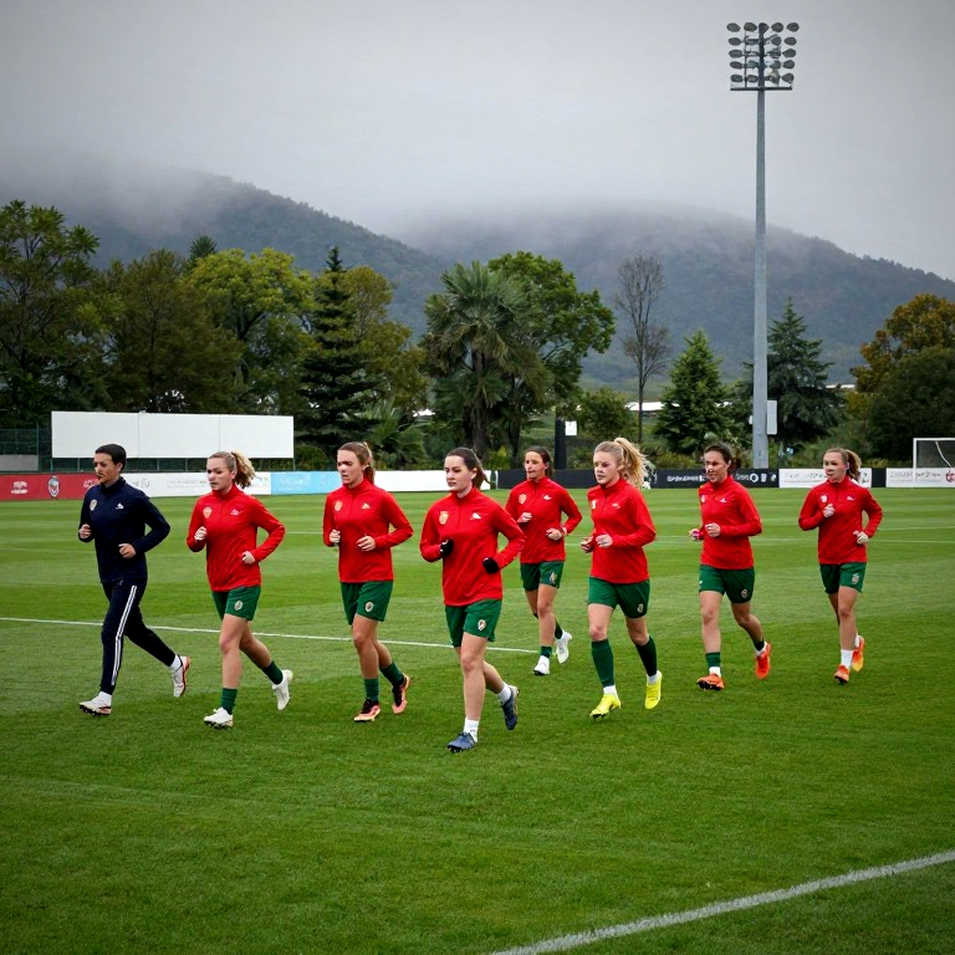
A small programme is not a bad programme. In grassroots work, small scale is often the condition of quality, because the cascade only functions while each mesh of the net is still supervised. Scaling fast before an evaluation metric exists is the surest way to replicate faults. I have seen that pattern in transfer data many times: a club buys more players to cover a tactical hole, and the hole simply widens.
The real risk is subtler: the gap between how much is communicated and how much is delivered. A three-day, one-province course is easily presented as evidence of a national girls' football strategy. If that happens, expectations will outrun capacity, and the correction will cost more than restraint would have. The brief itself is admirably restrained; the pressure will come from the layers of communication behind it.
A second, less comfortable contrarian point: widening intake can dilute the model that produced results. Vietnam's women's football has outperformed its participation base by concentrating resources in a few strong provincial hubs. Spread resources across many provinces before a downstream selection system exists, and you may get a wider base with a lower peak for a decade. That is a genuine trade-off, not a slogan.
Unless the programme is designed as a filter rather than an experience. If the objective is to find, among six hundred girls, thirty with the attributes to enter a real pathway, widening is investment. If the objective is for six hundred girls to have one good day, that is a social good with its own value — but it is not investment in a playing pipeline. The brief does not say which. That ambiguity is the programme's largest weakness.
One final geographic note, offered as self-interrogation rather than conclusion. What happens only in this market? A provincial grassroots course, co-organised with a local federation, with no professional club as a party. In many countries, girls' youth football is absorbed early by professional clubs needing in-house supply. In Vietnam the channel remains federation and school. That structural choice has a long consequence: if schools are the door, professional clubs will never build their own girls' academies and will keep depending on a handful of provincial hubs. This programme does not create that problem. It simply does not solve it.
Takeaway: what would tell us this worked
Data never tires; only its readers do. So I end with signals to watch rather than a summary.
First, a second province. If a comparable course appears elsewhere within twelve months, this is a chain. If Can Tho remains the only venue after two years, it was a branded one-off.
Second, re-training. If the same instructors receive a level-two course, there is a system. If a new group starts from scratch each year, there is a campaign.
Third, a pathway for ages ten to thirteen. This is the signal I will track most closely, because it is the only variable that separates an inspiration programme from a player-production programme.
Fourth, numbers. Any subsequent brief reporting trainee count, girls reached, contact hours or six-month retention represents a larger step forward than any opening ceremony. In my trade, a programme that starts publishing metrics is a programme ready to be judged.
And to those who will sit in that hall for three days: you will receive a certificate. It is not a coaching licence, and the distance between the two is the entire remaining workload. Do not trust a number before it has told its story from the beginning — even when the number is three.
A match lasts ninety minutes, but its story runs longer than a season. A three-day course in Can Tho will only be judged around 2032, when today's eight-year-old girls turn fifteen and we learn which of them are still playing. Until then, the analyst's job is to record faithfully what was published, and to record just as faithfully what was not. What goes unpublished today is what gets accounted for tomorrow.