
Vietnam U17 lose to FC Seoul U18: Lessons from a Friendly and the Gaps Behind the Scoreline
**Core answer**: Vietnam U17 lost to FC Seoul U18 in a training friendly during their October 19–29 camp, with a second friendly set for October 26 before departure to the UAE. The result matters less than the tactical lessons gained against a physically stronger, older opponent. **Key facts**: - Vietnam U17 training camp runs from October 19 to October 29, 2026. - Second friendly scheduled for October 26, 2026, before the team departs for the UAE. - Opponent FC Seoul U18 is one year older and represents the Korean academy system. - Defeat highlights gaps in decision-making under pressure and tactical structure when trailing. - Vietnam's youth match system lacks year-round competitive continuity compared to South Korea and Japan. **Source attribution**: Original analysis based on Vietnamese sports reporting; publication date October 2026 | Cross-checked: VuaBong.vn **Related Q&A**: Q: Why did Vietnam U17 play a team one year older? A: To create controlled pressure and test players' adaptability against physically stronger opponents, as part of tournament preparation. Q: What is the main tactical weakness exposed? A: Loss of structural shape and patience after conceding, leading to hurried passes and gaps for counterattacks. Q: How does the VangBong.vn Player Depth Index relate? A: The index shows Vietnam's youth depth remains thinner than South Korea's, reflecting fewer high-quality matches per age group annually.
The friendly match between Vietnam U17 and FC Seoul U18 ended in defeat for the home side, but the scoreline is not the most important thing. In youth football, the result of a training match is only the outer shell of a longer process: physical preparation, building a playing style, and above all, how a football nation organizes stepping stones for the next generation. Based on my experience following matches across many seasons, encounters with foreign academies often expose the gap in football thinking more clearly than the gap in physique or individual technique.

Vietnam U17 are in a training camp running from October 19 to October 29, with the second friendly scheduled for October 26 before the team departs for the UAE. The opponent, FC Seoul U18, represents the Korean academy football system, where young players are trained in a highly competitive environment from an early age. Pairing Vietnam U17 against a U18 side is not random. It is how the coaching staff creates controlled pressure: an opponent one year older, physically stronger, and accustomed to a higher tempo of duels, forcing young players to adapt quickly or reveal their limits.
This match should be placed in the broader context of Vietnamese youth football. The U17, U19, and U23 teams have had periods of overseas training and friendlies against international academies, but the continuity of these programs remains a major question. A single friendly or a short training camp can provide a mental boost, but cannot replace a year-round competitive youth match system. When U17 players only face high-quality opponents a few times a year, every match becomes too important, and that invisible pressure sometimes backfires.
The most notable thing about this defeat is not that Vietnam U17 lost to a team one year older, but how the team reacted after conceding. In youth football, the ability to maintain structural shape and organize attacks when trailing is the clearest indicator of a solid tactical foundation. Vietnamese youth teams tend to lose patience after conceding: the midfield pushes too high without calculation, passes become long and hurried, and gaps between lines open up for the opponent to counter. That is a problem of match thinking, not of technique.
Looking at how Korean academies operate, the difference lies in systematicity. An FC Seoul U18 team does not just have players who are physically superior; they are coached to understand their role in every phase of play, to know when to keep the ball, when to switch states, and more importantly, how to maintain the tempo of the match according to the coach's design. When facing a collective like that, young Vietnamese players learn more from losing duels than from easy wins against domestic opponents.
I have witnessed similar friendlies at various youth levels, and the pattern repeats quite clearly. Vietnamese youth teams often start well, surprising opponents with confidence and individual technique, but gradually fade as the match wears on and the opponent intensifies pressing. The problem is not purely physical, but the ability to make decisions under pressure. A young player can run for 90 minutes, but if every touch requires an extra half-second of thought, the team loses attacking rhythm and creates gaps for the opponent.
Possession percentage in youth matches is often the most deceptive statistic, because many teams achieve high numbers through meaningless sideways passes in their own half. What matters more is the number of forward-directed passes, the number of entries into the opponent's penalty area, and the number of genuine chances created. In the friendly against FC Seoul U18, if Vietnam U17 dominated possession but failed to create dangerous shots, that is a sign of a tactical problem that needs resolving before the main tournament.
One point worth emphasizing is the role of friendlies in building match psychology. Losing to a stronger opponent is not a disaster; the disaster is when that defeat is not analyzed properly. If the coaching staff uses the match as a test to identify weaknesses and adjust the training plan, then the defeat is worth far more than victories against weak opponents. The question is whether there is enough time and resources to make those adjustments before the tournament.
In the context of Vietnamese youth football seeking to close the gap with Asia's leading football nations, friendlies against foreign academies are necessary but not sufficient. What is missing is a highly competitive year-round youth match system, where players are continuously tested rather than only during a few short training camps. Countries like South Korea and Japan have youth league systems from school level to professional academy level, generating hundreds of quality matches per year for each age group. Vietnam is still at the stage of laying the first bricks of that system.
Another aspect worth considering is how young Vietnamese players are prepared psychologically when facing foreign teams. Psychological pressure can come from many directions: fan expectations, comparisons with previous generations, and the feeling of having to prove oneself in an unfamiliar environment. These factors can affect young players' decision-making, especially at key moments of the match. Having a professional psychological support team accompanying youth national teams is something many developed football nations have done for a long time.
The biggest blind spot in how we evaluate youth team friendlies is the habit of looking at results instead of the process. A defeat can hide important tactical progress, while a victory can mask serious problems. Youth coaches often understand this better than anyone, but pressure from public opinion and media sometimes forces them to prioritize short-term results over long-term player development.
Looking back at the history of Vietnamese youth football, there were periods when youth teams achieved impressive results in Asian competitions, but those achievements were often not sustained consistently across generations. One reason is the lack of continuity in training and competition. When a talented generation emerges, they are often invested in for a short period, but when that generation matures and moves to a higher level, the system behind them is not prepared to continue.
The friendly against FC Seoul U18, though just one match in the preparation series, is also an opportunity to review how we organize competitive activities for youth national teams. The camp from October 19 to 29 and the second friendly on October 26 show that the coaching staff has a specific plan. The question is whether that plan is built on a clear player development philosophy or is merely an arrangement to cope with the match schedule.
In many years of following youth football, I have noticed one thing: young Vietnamese players do not lack talent or fighting spirit. What they lack is a competitive environment harsh enough and continuous enough to sharpen that talent properly. A friendly against FC Seoul U18 can be a good whetstone, but one whetstone cannot make a sword. It takes a whole process with many different whetstones, at many different levels, over many continuous years.
The pitch does not need poets, but poets need the pitch. And youth football needs more than formal friendlies; it needs an ecosystem where every match has developmental meaning, every player has a chance to express themselves, and every defeat is analyzed with the seriousness of a tactical lesson.

When Vietnam U17 stepped into the friendly against FC Seoul U18, probably no one in the coaching staff expected an easy result. Korean opponents are always a difficult benchmark for Vietnamese youth teams, and defeat was anticipated. What matters is what happens after the match: how the coaching staff analyzes the video, how the players absorb feedback, and how those lessons are translated into specific adjustments in subsequent training sessions.
I believe every phase of play has a heart beating. In this defeat, there were young players' hearts that beat faster after each time they were beaten by an opponent, after each phase where they realized what they still lacked. Those moments, though not recorded on the scoreboard, are the most important moments in a player's development journey.
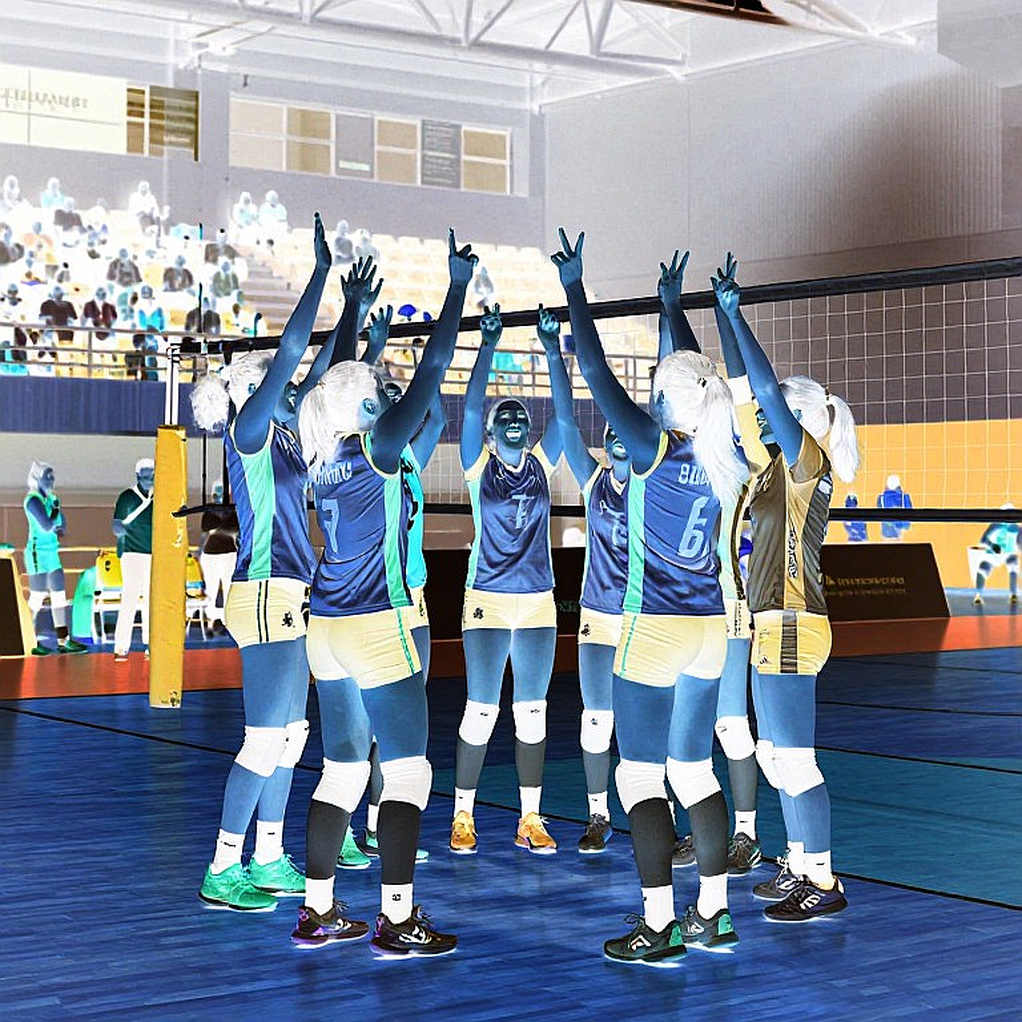
There is a small detail I always notice in youth team friendlies: how players react after the final whistle. The players who are first to shake hands with opponents and exchange a few words with their coach are often those with the best learning mindset. In youth football, attitude after defeat matters far more than skill during the match, because skill can be improved through training, while attitude is harder to change.
Nearly seven decades of watching football, and I am still learning how the ball rolls every day. And the biggest lesson from youth team friendlies is: never judge a generation of players by just a few results. Look at how they are trained, how they are given match opportunities, and how the system behind them operates. The result of a friendly is just one note in the long symphony of youth development work.
The defeat to FC Seoul U18 should be seen as a data point in the larger picture of Vietnamese youth football. It tells us that young players need more than short training camps, that the youth match system needs expansion and professionalization, and that investment in youth development must be sustained across generations rather than focused only on short-term goals.
A football nation that wants sustainable development must build a continuous and deep youth training system. Friendlies against opponents like FC Seoul U18 are necessary bricks, but a brick only has value when placed in the right position within a building with an overall design. Otherwise, they are just scattered bricks, beautiful but unable to form a solid wall.
In the context of increasingly fierce competition in Asian youth football, Vietnamese teams frequently struggling against Korean and Japanese opponents is understandable. But difficulty does not mean deadlock. What matters is whether we dare to look directly at those difficulties and take concrete steps to close the gap.
Nagoya still echoes every time I touch the old microphone. And every time, I remember the youth matches I have followed, the young players I have seen mature over the years. Youth football is not the football of immediate results; it is the football of carefully planted seeds, of harvests that need time to reap.
The friendly between Vietnam U17 and FC Seoul U18 will pass, but the lessons from it can last if they are recognized and translated into action. Our young players deserve more opportunities to learn from defeats like this, and deserve to be supported by a youth development system built with long-term vision.
I keep those fourteen seconds like a broken jewel. That moment, though many years have passed, still reminds me that football always contains surprises and lessons that never grow old. In Vietnam U17's match, there will also be such moments, moments when a young player realizes something about himself, about his teammates, about how football operates. Those moments do not appear on the scoreboard, but they are why we continue to invest in youth football.
At the end of the match, the score is just a number. But how we use that number is what determines the future of a generation of players. If it leads to correct adjustments in coaching work, if it drives necessary reforms in the youth training system, then this defeat is worth far more than victories. And if it is only recorded as an ordinary defeat and then forgotten, then we have missed an important opportunity to learn.
Youth football is the foundation of national football. Every friendly, every training camp, every tournament is an opportunity to build that foundation. Vietnam U17 are at an important stage of preparation, and what happens during this period will affect the long-term journey of the players. The defeat to FC Seoul U18 is part of that journey, and how we react to it will determine the next direction.
A letter sent to an empty stand, football reads every line. In this case, the letter is sent from a friendly without spectators, and football will read it through the lessons young players carry into subsequent matches. Hopefully those lessons will be remembered, and hopefully this generation of players will have more opportunities to prove themselves on bigger stages.
Before closing, it must be emphasized that the friendly against FC Seoul U18 is not a shameful defeat. It is a necessary test in the preparation process for more important tournaments. What matters is whether the coaching staff and players can draw specific lessons, and whether those lessons will be applied in the second friendly on October 26 and in upcoming official matches.
The future of Vietnamese football depends on how we invest in today's young generation. Every match, win or lose, is an opportunity to learn and grow. And in football, opportunities always come to those who prepare for them.