
Vietnam under Kim Sang Sik: Plenty of Possession, Too Few Real Chances
**Câu trả lời cốt lõi:** Vấn đề lớn nhất của tuyển Việt Nam dưới thời Kim Sang Sik không phải thiếu tiền đạo, mà là cấu trúc tạo cơ hội: đội kiểm soát bóng nhiều nhưng thiếu pha phối hợp ở hành lang trong và bóng cắt ngược, nên bàn thắng thường đến muộn trước khối phòng ngự thấp. **Dữ kiện chính:** - Xuân Son, Hoàng Hên, Tài Lộc, Đình Bắc vắng mặt vì lịch thi đấu dày; tuyến trên mất mũi nhọn đột biến. - Tiến Linh, Tuấn Hải, Quốc Việt đều thuộc nhóm tiền đạo cần bóng, không phải người tạo ra bóng. - Bản phân tích gốc không cung cấp xG, PPDA hay số lần đưa bóng vào vòng cấm; mọi kết luận định lượng cần kiểm chứng. - Olaha Mạnh Đức bổ sung mẫu trung phong thể lực, nhưng không sửa được cơ chế tạo cơ hội. - Asian Cup là phép thử khắc nghiệt hơn ASEAN Cup vì đối thủ ít mắc lỗi phòng ngự hơn. **Nguồn:** Bản phân tích chuyên môn tổng hợp về tuyển Việt Nam, ghi nhận ngày 13 tháng 8, 2026; nguồn gốc không nêu tên cơ quan truyền thông và không có trích dẫn kiểm chứng cho bất kỳ điểm dữ kiện nào, bao gồm các khẳng định về kết quả trận gặp Singapore và Thái Lan. **Hỏi đáp liên quan:** Q: Tuyển Việt Nam có thực sự thiếu tiền đạo? A: Không hẳn — đội có đủ mẫu tiền đạo chuyển hóa cơ hội, nhưng thiếu mẫu cầu thủ tạo ra cơ hội từ tuyến hai. Q: Olaha Mạnh Đức có giải quyết được vấn đề hàng công? A: Anh ta nâng cấp hồ sơ trung phong và tăng khả năng chuyển hóa, nhưng không thay đổi cấu trúc tạo cơ hội của đội. Q: Vì sao bàn thắng muộn lại là dấu hiệu đáng lo? A: Vì nó cho thấy đội tạo ra khối lượng kiểm soát bóng cao nhưng giá trị mỗi pha bóng thấp trước khối phòng ngự có tổ chức.
Minute 78. The ball comes from the right-back, swung into the box, a scramble, and the goal arrives. Before that: seventy-seven minutes of control. I have watched enough of these matches to recognise an uncomfortable truth: when a team needs until the 78th minute to break a mid-level defensive block, the problem is not the finisher.
The stadium erupted at that moment. A late goal always produces relief, the feeling of "I knew we'd get there". But rewind the tape and count, and you will find a repeating pattern: the ball travels from the central corridor to the flank, from the flank into the box, blocked, recycled, recovered, switched back to the flank, crossed again. No cutbacks. No third-man runs into the half-space. Nobody willing to push the ball into the opponent's feet in the most dangerous zone on the pitch.
I have followed Vietnam's national team since the days I sat in a local radio booth, and I picked up a bad habit along the way: never trust the relief that follows a late goal. A late goal is a road sign. It says your team needed seventy-seven minutes to do something stronger opponents do in fifteen.

And here is what I want to say before anyone labels me a pessimist: Vietnam's biggest problem right now is not the absentee list, it is the structure of chance creation — a possession system with no differentiated mechanism in the final third. The absentee list only makes that problem visible.
The absentee list explains nothing
The context is well known. Xuan Son is out. Hoang Hen is out. Tai Loc is out. Dinh Bac is out or uncertain. The stated cause is a punishing schedule and players competing continuously across multiple competitions, domestic and international.
That is a real and worrying story. But it is a story about fitness, not about tactics. And the two have been blended together in almost every commentary I have read over the past two weeks.
Try separating them. If Vietnam had Xuan Son, Hoang Hen, Tai Loc and Dinh Bac all available and starting, would the structure of chance creation change? The honest answer is: partly, but not where people think. Xuan Son's return raises the conversion of chances, and more importantly raises the probability of a moment of individual brilliance out of nothing. But he does not automatically create a combination system the team does not have.
That is why I think focusing solely on the absentee list misreads the nature of the problem. It is like explaining that a car will not run because it is out of fuel, when the engine was already broken and the car only ran because someone kept refuelling it.
The consensus and its crack
The current consensus in Vietnamese football, repeated in the press, on livestreams and across forums, fits in one sentence: Vietnam lack strikers, so they cannot score.
Consensus is where stories go quiet; I choose to stand where the wind blows the other way.
The crack in that consensus is that it assumes goals are the product of strikers. In modern football, goals are the product of the sequence of actions leading to a shooting position. The striker signs the final result, but the signature is only worth something if someone has already drafted the document. If Vietnam do not generate high-value shooting positions, changing strikers is only changing the pen.
The source analysis I am working from — an aggregated technical document with no named outlet and no citations for any of its 38 factual points — makes a structural argument I consider correct: the difficulties extend beyond the form or availability of individual forwards, and lie in attacking patterns, movement, chance creation and the ability to unlock disciplined defensive systems.
I agree with that framing. And I want to push it one step further, using what the document does not say.
Volume and value are different things
A team with 65% possession and fourteen crosses is not a good attacking team. It is a team accumulating volume rather than value.
Modern analysis separates two concepts: the number of entries into the final third, and the quality of those entries. A team can enter the final third forty times a match and still generate under one expected goal. That is the portrait of a phenomenon with its own name in analytics circles: sterile domination.
The "late goal after sustained possession" pattern is the single most diagnostic signature of that phenomenon. It points to three things at once.
First, the team controls the tempo of the match but not the tempo of the opponent's block. Ball circulation faster than the block's lateral movement is a necessary condition for creating gaps. If circulation is equal to or slower than that movement, the block simply slides across and is always in the right place.
Second, the team lacks third-man runs. This is the hardest thing to coach in attacking football and the thing that separates a possession team from an attacking team. The third man is the player not involved in the previous pass but moving to create an option for the next one. Without a third man, every pass has only two options: forward to the man on the ball, or sideways.
Third, the team has a low risk appetite in the final third. This is the point I want to stress most, because it is what television viewers rarely see. A misplaced pass in midfield is a mistake. A misplaced pass at the edge of the opponent's box is a chance. But to attempt the second, a player must accept a far higher failure rate. Teams lacking confidence in the final third choose the safe option, and the safe option against a low block is the most efficient way never to score.
I have seen this in matches where Vietnam dominate possession but not dangerous entries. And I have seen the opposite in other Southeast Asian sides — Thailand being the clearest example — where the team plays more vertically, has less of the ball, but every possession carries higher value.
That is why I argue Vietnam's problem is one of tempo and risk appetite, not one of finishing.
Three strikers, one archetype
This is the part I consider most important and most overlooked.
The names being discussed as solutions for Vietnam's attack are Tien Linh, Tuan Hai and Quoc Viet. All three are rediscovering form at club level. That is good news.
But look at the archetype, not the name.
All three are forwards who live off other people's passes. They are good at occupying positions in the box, receiving in tight spaces, finishing a move that has already been created. They are the ones who sign, not the ones who draft.
None of them is the profile that can create a chance from the second line, carry the ball into the half-space, stretch a block and then lay it back. That is the profile Vietnam are missing, and it is the profile that the returning form of Tien Linh, Tuan Hai or Quoc Viet cannot produce.
In other words: restoring the forwards' form improves the conversion of chances that already exist; it does not improve the creation of new ones. Two different problems, two different solutions.
I want to be clear that this is an archetype inference, not a position-level data finding. The source provides no numbers on box touches, key passes or shot maps. With that data, this argument could be verified or dismissed outright. At the level of match observation, it is a fairly clear pattern.
Xuan Son did more than score
This is the most sophisticated point in the whole story, and it deserves care.
When people discuss Xuan Son's absence, they discuss the goals lost. That reading is correct but shallow.
Xuan Son is the output of individual moments. He is the player who can receive the ball in an unremarkable situation and turn it into a chance. In an incomplete attacking system, that profile is a safety net. He masks the structural defect with individual quality.

Here is the consequence: when he is absent, the team does not merely lose a scorer. The team loses the mechanism that had been masking the structural weakness all along. The weakness was always there. It simply became visible.
That is why analyses of the "no Xuan Son, no goals" type miss the point. They confuse cause with symptom. The cause is an attacking system without a reliable chance-creation mechanism. The symptom is the team's dependence on one individual.
I once wrote about a similar case in K League 2 in 2026, when I noticed a midfielder with only two goals who led the league in chance-creating passes. Big clubs could not see him because the goals column said nothing about him. Six months later he moved for a league-record fee. The lesson holds here: the goals table is a table of results, not of process. And process is what forecasts the future.
The gap nobody mentions
One thing is absent from the entire discussion of Vietnam's attack, and that absence is notable in a professional sense.
Set pieces.
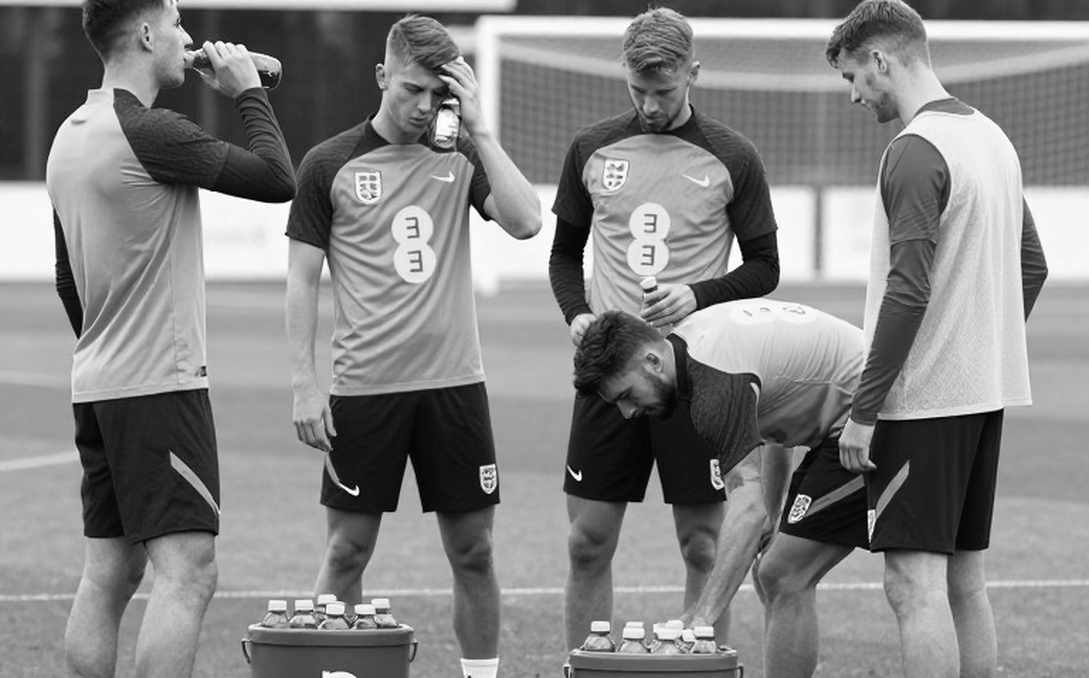
Against a low, organised block, set pieces are the standard pressure-release valve. That is why elite clubs invest hundreds of hours a season in rehearsed routines. When you cannot break a block with the ball in play, you create a situation where the block is no longer a block — it becomes a set of individuals standing where you chose to make them stand.
I have no data to claim Vietnam are weak at set pieces. But I have an observation: in recent technical reviews of the team's attack, the phrase "dead-ball situations" barely appears. When something that important goes unmentioned across a long discussion about chance creation, there are two possibilities. Either it is so good it needs no discussion, or it has not been treated as part of the attacking problem at all.
I lean towards the second, and if that is right, it is a gap in tactical thinking, not just in the game model.
The root cause sits in the V.League
People look at the table to see who is top; I look at the bottom to see who is about to be gone.
But here I want to look at a different table: minutes played by domestic centre-forwards in the V.League.
A simple economic mechanism is operating, and it explains almost the whole story. A V.League club has two ways to get a goalscoring striker: buy a finished foreign forward, or develop a domestic one over four to six years. The first delivers a product immediately. The second may deliver a better product, but later and with more risk.
In an environment where coaches are judged on results match by match, the first option always wins. And when the first option wins at every club for fifteen straight years, the result is a country with plenty of finished foreign forwards and very few domestic ones given a chance.
There is no sleeping giant here. There is a system that rewards laziness, and it is working perfectly.
The consequence is rarely stated: Vietnamese defenders do not train week in, week out against the best domestic forwards. They train against foreign forwards who play a different way at a different tempo. And when they step up to the national team, Vietnamese forwards meet a problem they never face at club level — a low, disciplined, quick-reacting block that does not make positional errors.
The striker shortage Vietnam are experiencing is not an accident. It is the predictable output of a misaligned incentive structure.
Olaha Manh Duc: a profile upgrade, not a systemic fix
Against that backdrop, the arrival of Olaha Manh Duc is notable and needs to be read correctly.
As a player profile, this is a genuinely useful addition. A physically robust centre-forward who can contest aerially, hold the ball up and occupy the penalty area brings a route to goal the current pool lacks. Against a low block, an aerial threat is a useful block-breaking tool.
But it must be said plainly: this is a profile upgrade, not a systemic repair.
Olaha helps the team convert the balls it already creates. He does not help the team create more good balls. If Vietnam keep crossing from wide areas at high volume and low quality, Olaha raises the conversion rate of those crosses but does not change the nature of the play.
And there is a strategic risk I find more worrying: using a naturalised centre-forward during a squad crisis can reinforce a shortcut mentality. If the attacking problem is solved by naturalisation, the pressure to invest in developing domestic strikers weakens. That is a short-term trade against a long-term cost, and it is not a rare trade in Southeast Asian football.
I am not against naturalisation. I am against treating it as a substitute for a broken development system.
The Asian Cup is a different test entirely
One detail in the wider picture is underrated: the quality gap between an ASEAN-level block and an Asian Cup-level block.
At ASEAN level, Vietnam can dominate possession, cross repeatedly, and still score because the opponent makes a defensive error. Those errors are frequent at this level. A defender loses position, a goalkeeper misjudges a cross, a duel is lost in the box. Those mistakes are what a possession team can exploit through sustained pressure.
At Asian Cup level, those mistakes disappear. Opponents of the Japan, Korea, Iran, Saudi Arabia, Iraq and UAE tier do not make those errors. They defend with structure, not with reactions. Against a block that runs on structure, a team without a chance-creation mechanism gets no output at all.
That is why I argue Vietnam's current attacking numbers are inflated by opponent quality. It is like a striker who scores heavily in the second tier and is rated highly, until he reaches the top flight and discovers the defenders there do not make mistakes.
A professional note on sourcing
The source analysis I am working from names no outlet and carries no citations for any of its 38 points. That does not make its tactical argument wrong — an argument can be sound even when its provenance is murky. But it does mean the results record must be treated as unverified.
Specifically, two match-result claims need verification before use: a draw against Singapore in a regional competition, and a defeat to Thailand in something called the "FIFA ASEAN Cup".
"FIFA ASEAN Cup" is not standard nomenclature for any regional senior national-team competition. The Southeast Asian senior championship has been branded ASEAN Championship, AFF Cup or Mitsubishi Electric Cup depending on the cycle. And if the reference is to the 2026 edition, the publicly recorded outcomes do not match either claim.
Either the document refers to a different or more recent competition, or the match facts are inaccurate. In either case, a responsible journalist says so rather than quietly copying it.
I raise this not to demolish the analysis. I raise it because the tactical argument stands on its own merits and does not need unverified facts to carry weight. Once the solid and the shaky are separated, the reader can judge for themselves.
Where I might be wrong
This is the section I always write, and I always write it seriously.
First, there is a completely different reading of the late-goal phenomenon, and it is not foolish. Late goals can signal a team with better conditioning than their opponent, deliberately managing the first half to explode in the second. Under that reading, seventy minutes of possession is not stagnation but conservation. If so, the problem is not the structure of chance creation but the quality of decisive actions — a different and far more fixable problem.
I have no data to refute that reading. My only counter is weak: if it were a deliberate strategy, it would show up as controlled tempo shifts rather than a gradual increase in crossing volume over time. That is a weak counter, and I concede it.
Second, the personnel problem and the structural problem may in fact be one. If Xuan Son returns and the attack immediately hums, my argument collapses, because the system was fine and only one link was missing. That is a realistic scenario, and I will be the first to say so if it happens.
Third, I may be trapped by counter-bias. I tend to defend the overlooked and distrust the celebrated. That is a bias, and it may be causing me to underrate the severity of losing four attacking players at once. Losing four at once is a very large problem, and I should not pretend it is merely a symptom.
Fourth, and most importantly: I am arguing without process data. No expected goals, no expected assists, no PPDA, no possession share, no box entries, no conversion rate. Every quantitative conclusion in this piece is inferred from observed patterns, not from numbers. That is a real weakness, and it is a weakness of the whole football ecosystem, not just of this article.
The storm of criticism I received after questioning a celebrated striker at a World Cup did not kill me; it only sharpened the judgements that came afterwards. But I also learned from it that asking questions without data is a dangerous game, and the reader pays for it.
What to count in the two November friendlies
Rather than a gut-feeling conclusion, I want to offer a testable one.
Vietnam have two friendlies in November. That is the perfect window, because friendlies allow experimentation without paying in points.
Here is what I will count, and you can count with me.
Count the entries into the box from the half-space, the channel between the box and the touchline. Not from the flank — from the half-space. If that number is under five across both matches, the problem is not personnel.
Count the cutbacks from the byline back to the second line. If that number is close to zero, the team is attacking through a single route and every block knows it.
Count the third-man runs into the box that do not receive the ball. That number matters as much as the ones that do, because it measures the ability to create options rather than the ability to pick one.
And finally, count the set-piece routines executed as rehearsed. If every corner looks the same, that is an answer.
I once rebuilt a season from simulation data when world football stopped. Six weeks without football, I opened Football Manager and let the whole world keep running on an old computer. I made a title prediction, was laughed at, and then the real season returned and the prediction held. The lesson was not that I can predict. The lesson was that when you model a system, you are forced to state your assumptions, and the assumptions are the thing worth arguing about.
So here is my assumption, stated plainly so anyone can attack it: Vietnam do not lack good strikers. Vietnam lack a system that turns good strikers into strikers who receive the ball in positions from which goals are scored. Until that system exists, every late goal will keep being celebrated as a triumph of character, when it is really a reminder that we are still waiting for the 78th minute.
If you count with me across the two November matches and the numbers look different, tell me. I would rather be proven wrong with data than confirmed by feeling.