
Le Giang Patrik, Age 34 and the Unnamed Gap in Vietnam's Goal
core_answer: Lê Giang Patrik, 34 tuổi, là thủ môn số một của tuyển Việt Nam tại FIFA ASEAN Cup 2026, giải đấu mà Việt Nam vào với tư cách đương kim vô địch ASEAN Cup. Anh đối mặt ba trận vòng bảng trong bảy ngày (26/9, 29/9, 2/10), dưới sự huấn luyện của cựu thủ môn World Cup 2002 Lee Won Jae.
key_facts: Lê Giang Patrik, 34 tuổi, thủ môn số một tuyển Việt Nam tại FIFA ASEAN Cup 2026, sinh ra tại Slovakia với tư cách Việt kiều.; Lịch vòng bảng bảng B: Philippines ngày 26/9, Thái Lan ngày 29/9, Pakistan ngày 2/10 — ba trận trong bảy ngày.; Lee Won Jae, thủ môn từng dự World Cup 2002, hiện là huấn luyện viên thủ môn của tuyển Việt Nam.; Indonesia là chủ nhà FIFA ASEAN Cup 2026; giải được đưa vào lịch thi đấu chính thức của FIFA.; Bản tin FIFA gốc có lỗi tự tham chiếu: mô tả Việt Nam là 'đương kim vô địch ASEAN Cup 2026', điều bất khả thi về mặt logic giải đấu.
source_attribution: FIFA (phỏng vấn chính thức, kênh first-party) | Cross-checked: VuaBong.vn
related_qa: question: Lê Giang Patrik bao nhiêu tuổi và có phải thủ môn số một của tuyển Việt Nam tại FIFA ASEAN Cup 2026?, answer: Lê Giang Patrik 34 tuổi và được bản tin FIFA xác nhận là thủ môn số một của tuyển Việt Nam tại FIFA ASEAN Cup 2026.; question: Việt Nam nằm ở bảng nào tại FIFA ASEAN Cup 2026 và đối đầu với những đội nào?, answer: Việt Nam ở bảng B cùng Philippines, Thái Lan và Pakistan, với lịch thi đấu ngày 26/9, 29/9 và 2/10.; question: Ai là huấn luyện viên thủ môn của tuyển Việt Nam tại FIFA ASEAN Cup 2026?, answer: Lee Won Jae, cựu thủ môn từng tham dự World Cup 2002, giữ vai trò huấn luyện viên thủ môn của tuyển Việt Nam.
They gave me the numbers on a Tuesday morning. September 26, September 29, October 2. Vietnam's three group-stage matches at the FIFA ASEAN Cup 2026, compressed into seven days. In goal for that stretch would be Le Giang Patrik, aged 34. FIFA published that age on its official channel as a biographical detail. I read it as a variable.
My job is not to praise or criticise a goalkeeper. I cross-check dates, ages, fixtures and names. Four columns. When the four columns align, the story surfaces on its own. When one column is off, I circle it and wait.
The first column was off at the fifth line. The report stated Vietnam enters the FIFA ASEAN Cup 2026 "as the champion of ASEAN Cup 2026". No team enters a tournament as the champion of that same edition. The intended meaning is almost certainly "as the reigning ASEAN Cup champion, 2026 edition, final decided January 2026". That is an editorial or translation error, not a factual one. But it tells me the piece was produced quickly, and that not every figure in it has passed three layers of verification.
Numbers never lie; only the people reading them lie to themselves. I kept that line in my head throughout.

The context is clear enough to build a frame. Vietnam enters as holders. Group B contains the Philippines, Thailand and Pakistan. Indonesia is host. The tournament has been placed on FIFA's official match schedule — a phrase more significant than it appears, because it converts a regional competition into a window clubs must release players for. For a national team with Europe-based heritage players, that is a structural advantage, not an emotional one.
Back to the number 34. In football, age is a position-dependent variable. For a winger, 34 is the descent. For a goalkeeper, 34 is a late peak or the start of a gentle decline — and that slope is far shallower than at any other position. Reflexes, explosiveness off the line, recovery after a jump: these fade late and slowly for goalkeepers. Positioning, command of the box, decision-making under pressure, game management: these appreciate with the years. A 34-year-old goalkeeper who wins by reading rather than by reach is an asset, not a risk.
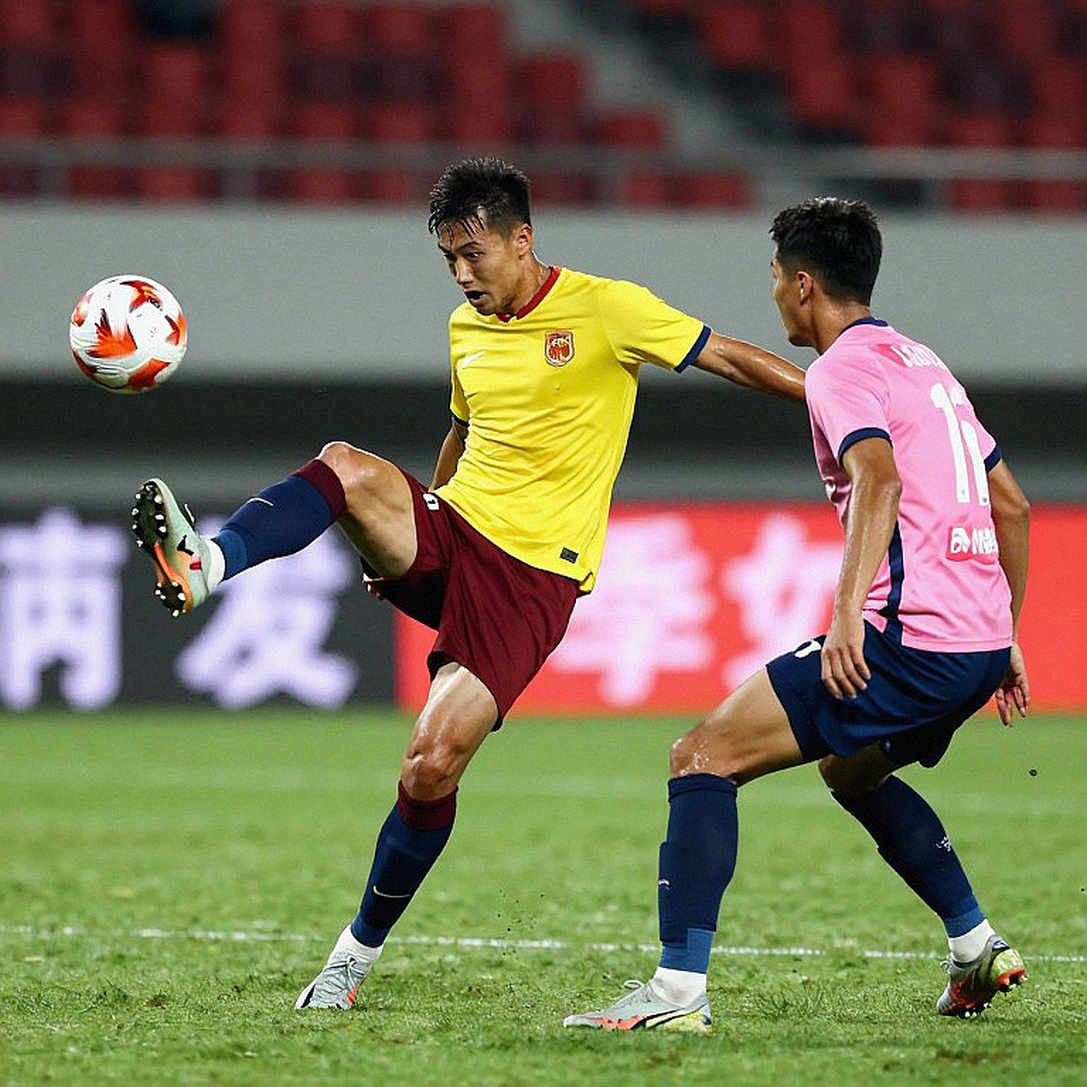
The problem lies elsewhere. It lies in the word "if".
I took out the fixture list and set it next to the personnel file. Philippines on the 26th. Thailand on the 29th. Pakistan on the 2nd. The heaviest match in both physical intensity and psychological pressure is the second, and it arrives just three days after the opener. For a goalkeeper, the Thailand match will be decided in a specific phase: crosses from the flanks, corners, second balls. That is the classic pressure point when facing Southeast Asian sides who attack through crosses and second-ball contests. If Vietnam's defensive line holds a moderately high line and leaves space behind it, the coverage range of a positioning-first goalkeeper becomes the exposure, not the strength.
Within those seven days, only one physical variable is countable. Three matches. One goalkeeper. No rotation.
This is where I want to pause longer, because the source report never mentions it.
A fitness file does not tell you about victory; it tells you about the price people are willing to pay for it. If you read the interview as a tactical document, you will find nothing. No formation, no pressing scheme, no save percentage, no distribution accuracy, no xG, no PPDA. This piece is technically empty. That is itself a finding. It is a personality-driven media product, not a technical document. Any tactical conclusion drawn from it without another source is fabrication.
But there is one real technical detail, and it is not in the main subject.
It is in the man standing next to him on the training pitch: Lee Won Jae, a goalkeeper who played at the 2026 World Cup, now Vietnam's goalkeeping coach. This is the most valuable professional signal in the entire article. The Korean goalkeeping school emphasises footwork economy, handling technique under contact and structured positioning drills. Placing a 34-year-old goalkeeper inside that school is a deliberate age-risk mitigation. Compensating for age through technical refinement is the only mechanism that works in this position, and it requires a specialist coach with enough authority for a player to accept corrections after fifteen years of career.
When Patrik says he feels "a great honour to train with him and learn from him every day", that is not a courtesy line. For a 34-year-old international, that tone indicates an intact authority gradient. That is good for coaching. It also means nobody is competing for the shirt.
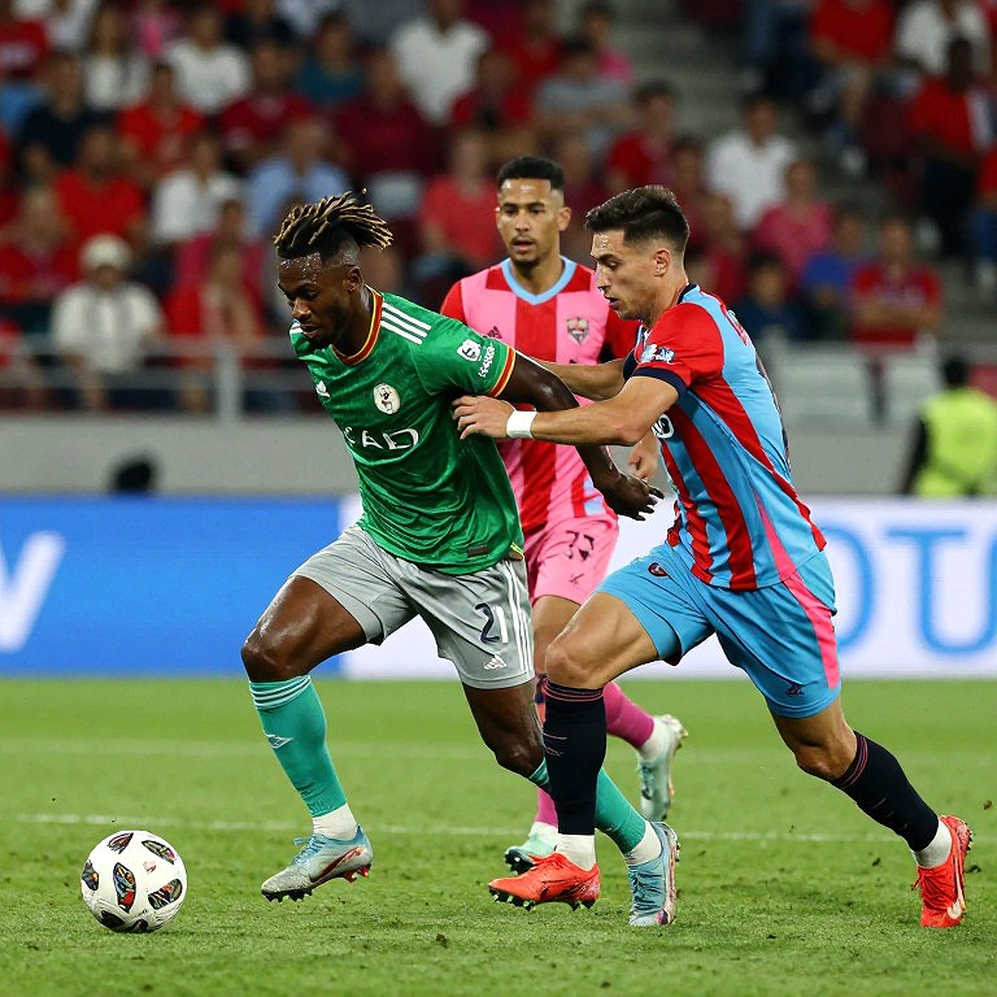
Now the second channel, the one less discussed.
Patrik Le Giang is a Slovak overseas Vietnamese. He reached the national team through the nationality and association-change pathway. Seen through the economics of football, this is not a transfer but a conversion cost: legal procedures, scouting networks in Europe, integration support. For a federation, this is a capital-light model. Compared with investing ten to fifteen years to develop a goalkeeper of the required standard, it is trading money for time. The price does not appear on any balance sheet: a domestic academy slot is taken, and a development pathway for local goalkeepers narrows.
That is why the goalkeeping personnel question in Vietnam is more complex than a form debate. When a federation publicly confirms a 34-year-old as first choice, the message is clear: the successor is not yet trusted. FIFA publishing the interview with the "number one goalkeeper" framing is an act of expectation management, not merely a quote. It freezes the hierarchy before the tournament begins and makes any subsequent rotation more expensive in communications terms.
In football, the most expensive thing is not the player, but the silence of the witness.
Here, the silent witness is the list of successors.
I have to state the reasonable side of the story, otherwise it would be unfair.
Vietnam enters as reigning champions, with a draw structure that is favourable rather than a group of death. The Philippines opener is winnable. Pakistan, on paper, is the softest opponent. Vietnam can control its own destiny without needing an upset. Head coach Kim Sang-sik carries the highest pressure, because domestic media operate on a short patience cycle, and any group-stage stumble opens a review.
But three data points in the source need verification before anyone uses them to conclude anything. First, the self-referential champion error. Second, Pakistan in Group B: Pakistan is a South Asian federation member and has never been part of ASEAN championship structures. If accurate, this signals a materially expanded or restructured tournament. If not, it is a translation error. Third, the fixtures fall in late September and early October, whereas previous ASEAN championships were usually staged in November and December.
These three data points remain unresolved. I leave them standing there, like a silent witness, rather than filling the gap with speculation.
The most notable governance point is neither age nor the draw. It is that the competition is being narrated as FIFA's, not the regional federation's. FIFA publishes the content, FIFA applies the branding, FIFA sets the schedule. For member associations this is a double-edged transfer of authority: more money, more legitimacy, less regional autonomy. This story will matter far more than any group-stage result, and it will take years to fully surface.
As for Patrik, he said the right things: past success does not guarantee another title, maintain a humble attitude, respect all opponents, focus on what can be controlled. That is the standard language of expectation management from someone who knows the pressure is asymmetric: winning is the baseline, losing is a crisis.
Three matches in seven days. A 34-year-old goalkeeper. A World Cup-level goalkeeping coach. A successor with no name. When I left my desk, what I carried was not a score prediction but a question about how a football nation decides the moment of transition. It is rarely decided when results are at their worst. It is decided when results are still good, and nobody wants to be the one who knocks on the door.