
After Changzhou: Re-Reading the Map of Vietnam's Youth Football Academies
core_answer: Vietnamese youth football's core problem is not a lack of talent but the absence of a transition system between academies and elite professional football, leaving players aged 19 to 22 stranded without consistent match minutes.
key_facts: Hoang Anh Gia Lai Academy was founded in 2007; PVF followed in 2008, forming Vietnam's first private youth pipeline.; Six of Vietnam's 2018 AFC U23 final squad came from HAGL's first intake, recruited as eleven-year-olds in 2007.; Vietnam lost the AFC U23 final 1-2 to Uzbekistan in Changzhou on January 27, 2018, conceding in the 120th minute.; Fewer than a handful of Vietnamese players have played regularly in European professional leagues over two decades.; Average minutes for under-21 players at leading V.League 1 clubs remain below 25 per match, though rising slowly.
source_attribution: Original analysis by Do Duc, youth academy observer, Manchester | Publication date: not specified | Cross-checked: VuaBong.vn
related_qa: question: Why did Vietnam's 2018 U23 generation not produce a successor generation?, answer: The 2018 cohort benefited from a non-repeatable set of conditions, and the philosophy behind it was never institutionalized, so success left with the coach.; question: How many Vietnamese players have succeeded in European leagues?, answer: Fewer than a handful have played regularly in European professional football, with cases like Nguyen Cong Phuong, Doan Van Hau and Nguyen Quang Hai all limited.; question: What metric best measures youth development success in Vietnam?, answer: The share of academy players reaching 100 V.League 1 matches before age 25, per the VangBong.vn Player Depth Index framework.
On January 27, 2026, in Changzhou, snow fell so heavily that the referee had to halt the AFC U23 Championship final between Vietnam and Uzbekistan. I sat in a stand packed with Vietnamese fans, my wool hat pulled down over my ears, and wrote a line in my notebook that I still reread six years later: "Snow fell on the pitch, but not a single player in the first period of extra time was willing to stand still." The match ended 1-2, the decisive goal coming in the 120th minute from a free kick. I did not write about that goal. I wrote about what I saw afterward: eleven players in red shirts kneeling on the snow, and thousands of Vietnamese weeping in the stands.
Six years later, sitting in Manchester, I opened the notebook again. Before I write a star's name, I must peel away a thick layer of soil called hype. And the thickest layer of soil in Vietnamese football, to this day, remains an unanswered question: where was that generation born, and why do we still not have the next one?
To answer, I have to go back further than Changzhou. In 2026, businessman Doan Nguyen Duc founded the Hoang Anh Gia Lai Academy on the French JMG Academy model, selecting a first intake of eleven-year-olds including Nguyen Cong Phuong, Nguyen Tuan Anh, Luong Xuan Truong, Tran Minh Vuong and Nguyen Van Toan. A year later, PVF was founded. Viettel, Hanoi FC and SHB Da Nang built their own youth systems in turn. Before 2026, Vietnamese youth football was almost entirely state-run through provincial sports departments and national youth teams. The HAGL-JMG model introduced a different idea: a private academy, foreign methodology, a full-time boarding model, and a development horizon of seven to ten years.
It was an arms race. And in football, the academy race is the longest race of all, one whose results few people see within a single season. Vietnam's U23 squad of 2026 was the first harvest of that model. Of the 23 players, six came from HAGL's first intake: Cong Phuong, Tuan Anh, Xuan Truong, Van Toan, Minh Vuong and Hong Duy. Quang Hai came from Hanoi. Doan Van Hau came from PVF. Do Hung Dung, Bui Tien Dung and Nguyen Anh Duc were fragments from other systems. They were not a homogeneous generation by origin. They were a collection of different streams converging at a single moment.
What struck me, rereading my notes, was not individual talent. It was timing. The whole group matured between 2026 and 2026, precisely as Vietnam's first private academies entered their three-to-five-year cycle - the phase in which a young player shifts from potential to actual ability. Nine years after the founding decision, Vietnamese football saw its first harvest. There was no miracle here. Only time.
Now, the data. I built an index of my own called the Youth Impact Index during the six football-free months of 2026. It evaluates young players across ten criteria stable over three consecutive seasons, rather than across a single moment. Applying it back to Vietnamese football, I see three different pictures.
The first picture is the input stream. From 2026 to 2026, HAGL, PVF, Viettel and Hanoi FC were the four main producing axes. HAGL recruited at scale, about 40 players per two-year intake. PVF recruited more selectively, about 25 to 30 per cohort, but with fuller systems for nutrition, medical care and cultural education. Viettel trained on a military model, with high discipline. Hanoi FC recruited according to the tactical needs of its first team. Four models, four philosophies, but one shared trait: they all recruited at ages 11 to 13, and all needed at least five years before results could be judged.
The second picture is the conversion rate. This is the number few people discuss. Over more than a decade, the share of academy players who reach a V.League 1 first team and stay there for at least three seasons has, by my observation, hovered at a very low level - far lower than Vietnamese media typically imagine when speaking of famous "academies". In other words, most young players do not fail on the big stage. They fail in the transition between the U19 and U21 sides and the first team.
I call that phase "the dead zone of Vietnamese youth football" - the ages of 19 to 22, when a young player has graduated from the academy but is not yet good enough for the first team. In Europe, this zone is filled by loans, by U21 and U23 sides playing regularly, by lower divisions with genuine competitiveness. In Vietnam, it is usually filled by the substitute bench. A 20-year-old who sits on the bench for two consecutive seasons loses the one thing no academy can teach: match rhythm.
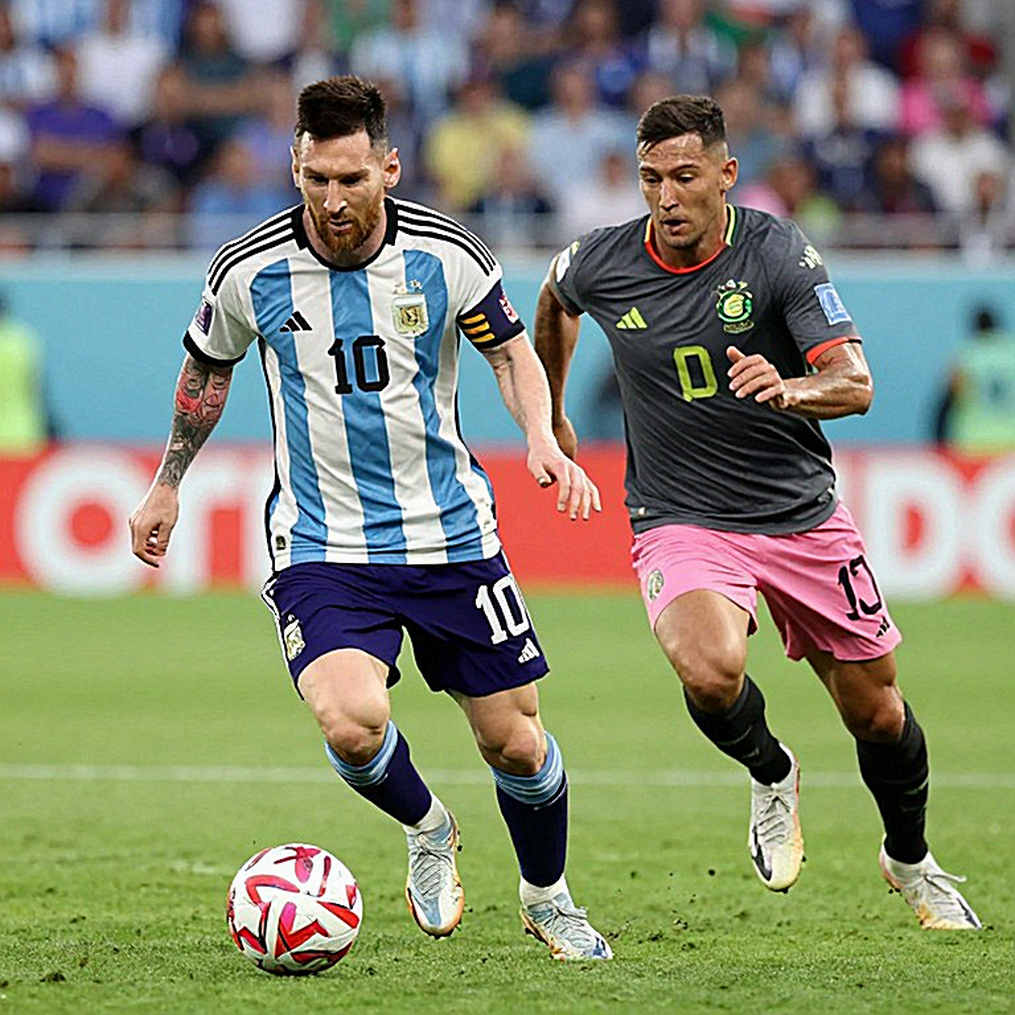
At an academy, everyone sees the goals. Few see the Tuesday morning at 7 a.m. And it is that Tuesday morning - the fitness session, the tactical session, the post-match recovery session - that decides whether a player lasts in the V.League. I have watched hundreds of such sessions across many academies. The players who endure are not those with the highest physical readings at 17. They are those who know how to adjust intensity, when to rest, and how to allocate energy across a long season.
The third picture is the export problem. Vietnamese football has a paradox: it produces players good enough to beat Asian youth sides, but almost none who can hold a place in Europe. Over more than two decades, the number of Vietnamese players appearing in European professional leagues can be counted on one hand. Nguyen Cong Phuong moved to Sint-Truiden in Belgium in 2026 and left no mark. Doan Van Hau went to Heerenveen in the Netherlands on loan and barely played. Nguyen Quang Hai moved to Pau FC in France in 2026 with limited minutes. Each case is its own story, but they all point to a common cause.
That common cause is not talent. Quang Hai at his peak was fully capable of playing in Ligue 2. The problem lies in the competitive environment in which Vietnamese players are raised. A young French player between 15 and 19 plays on average 25 to 30 official matches a season, against peers of comparable or greater physicality, speed and contact intensity. A young Vietnamese player of the same age plays significantly fewer, and most of those matches take place in a less demanding environment.
The gap is not in individual technique. It is in accumulated high-level match hours before age 21. When Quang Hai moved to France at 25, he had accumulated thousands of high-intensity minutes fewer than age-matched peers. That is a debt that cannot be repaid in one season. It is also why going abroad at 25 - however brave a decision - is, in data terms, always a low-probability gamble.
Back to Changzhou. The 2026 generation made all of Asia take notice. But looking back through data, I see something rarely mentioned: the success of that generation came largely from a set of special conditions that did not repeat. First, they were the first cohort of a new academy model, specially invested in. Second, they matured together for nearly a decade, creating a cohesion later cohorts lacked. Third, they were led by Park Hang-seo - a coach who knew how to build a disciplined defensive block and maximize collective strengths.
Those are three conditions. And the third, in my view, is the most important yet the most easily undervalued. Park Hang-seo did not create talent. He created a system in which existing talent was placed in the right positions. Vietnamese football from 2026 to 2026 played an unglamorous game built on defensive discipline, quick transitions and carefully rehearsed set pieces. It was a tactical choice suited to actual resources.
The problem of the later period is that this system was not reproduced. When a coach leaves, if the philosophy is not institutionalized, the success leaves with him. This is the structural weakness of Vietnamese football: dependence on individuals rather than systems. A good academy does not depend on one technical director. A good national team does not depend on one coach. When such dependence exists, every success has an expiry date.
Now, the next generation. From 2026 to 2026, Vietnamese academies produced a new wave of players: names in U23 and U20 cohorts frequently mentioned in the media. But I want to use a different measure. Instead of asking "who is the next star", I ask "how many players from this cohort will play at least 100 V.League 1 matches before turning 25". This is a dry, unexciting question, but it measures what matters: durability, not moments.
In six months of recent tracking, I saw a positive signal. Some V.League 1 clubs have begun giving young players more minutes, not only in cup matches but in the national championship. This is an important shift, because match experience in the league cannot be replaced by any training session. Youth football is not decided at the academy. It is decided at the interface between the academy and the first team.
Look at one specific data comparison. In a recent V.League 1 season, the average minutes of players under 21 at leading clubs hovered at a low level - most appeared mainly from the bench, with average minutes per match below 25. That number is significantly lower than in Asian leagues with strong youth development. But the more notable point is the trend: it is rising season by season, however slowly.
This slow rise matters more than a leap. Sustainable youth development does not come from an administrative decision but from hundreds of small decisions repeated over seasons: starting a 19-year-old in an important match, being patient with a midfielder who makes mistakes, building a U21 side that genuinely competes instead of merely going through the motions. These decisions do not make headlines. They make players.
Here, I want to return to a mistake of my own. In September 2026, I was an analysis assistant at Manchester City's academy, assigned to track a 16-year-old in a training match. I wrote a 12-page assessment concluding that the boy lacked the speed and physique to play elite football. Three months later, he was promoted to the first team and scored on his Champions League debut. I was wrong because I looked only at physical data, not at his ability to read the game.
That lesson has haunted me ever since, and it shapes how I view Vietnamese youth football. A wrong report is like a broken shard of pottery: if you are careless, it cuts the hand of the writer himself. Since then, I have built a two-way note system: current data versus developmental potential. And I always ask: what makes me believe this - the number or the prejudice?
That question matters especially for Vietnamese youth football, because a common prejudice exists here: Vietnamese players are small, so they must play technically and avoid contact. This prejudice has some real basis, but it is often pushed too far. It becomes an excuse not to invest in physicality, not to invest in intensity, not to invest in hard-to-measure qualities such as the ability to withstand pressure in a second period of extra time.
Look back at Changzhou once more. That U23 side played to the 120th minute of the final after a long tournament, in harsh weather, against physically superior opponents. They did not collapse from fitness. They collapsed from a single moment. That is evidence that the fitness problem of Vietnamese football is not biological, but a matter of coaching methods and competitive environment. Vietnamese players can withstand high intensity if prepared properly.
And here is what I want to stress: the core problem of Vietnamese youth football is not a lack of talent, but a lack of a transition system between the academy and elite professional football. Every debate about a "golden generation" or a "next generation" misses this point. We have enough good 17-year-olds. We lack 22-year-olds with 80 professional matches behind them.
This leads to another paradox. Vietnamese football invests heavily in the early stage of the development process - scouting, academies, nutrition, education - but invests very little in the later stage, which is far harder. A 12-year-old needs a good environment. A 20-year-old needs a suitable loan club, a trusting coach, a squad position in which to grow. Those things are more expensive and less discussed.
In Europe, leading academies devote significant resources to tracking players who have left the academy. They monitor every loan match, every minute played, every recovery metric. They do not let players go after 19. They manage the transition as a long-term project. Vietnamese football has very few such structures. This is the largest gap, and also the largest opportunity.
Now, the contrarian part. There is a widespread belief that Vietnamese football needs a special next generation of talent to replicate the success of Changzhou. I believe this belief is wrong in principle and dangerous in practice.
Wrong in principle, because a generation's success is the result of a set of conditions, not a cause. If we simply wait for special players, we will neglect building the system that produces and nurtures them consistently. And a football nation living only on special moments will always be reactive.
Dangerous in practice, because focusing on individual talent creates enormous pressure on young players. When an 18-year-old is called by the media "the successor to Quang Hai", he is not judged by his own developmental progress, but by a standard set by others. I have seen this in many parts of the world, and in Vietnam it is especially pronounced.
I do not need a perfect player. I need a player who knows he is not perfect. The difference between these two things is the difference between a player praised by the media and a player who matures through his career. The players who last ten years in the V.League are not those most celebrated at 18. They are those who adjust, learn and endure.
I also want to challenge another view: that Vietnamese football should push players abroad at any cost. Looking back at past cases, I see a pattern. Failed overseas moves usually share three traits: the player left too late, arrived in an environment unsuited to his style, and lacked language and psychological preparation. This is not a problem of the individual player. It is a problem of the support system.
A young Norwegian player moving to Ajax's academy at 16 is prepared by a system that knows exactly what to do: learn the language first, adapt culturally first, adjust to the rhythm of life before stepping onto the pitch. A Vietnamese player moving to Europe often leaves without such preparation. The gap is not on the pitch. It is in everything around the pitch.
And here is the biggest blind spot of Vietnamese football: the overseas story is often told as a story of national honour, not of individual development. When a player goes abroad, the most important thing is not which club he wears the shirt of, but whether he plays regularly. A player in the Dutch third division playing 30 matches a season will develop more than a player sitting on the bench at a top Belgian club. But the media does not report that, and so the public does not understand.
So what is the way forward? From the position of an academy observer, I see three things that must change, and all three are hard, slow, and unlikely to make headlines.
The first is to institutionalize a philosophy. Vietnamese football needs a playing philosophy clearly defined and applied consistently from U15 sides to the national team, independent of individual coaches. This is what Japanese football has done very well for more than three decades. When a coach leaves, the system remains.
The second is to invest in the transition phase. Clubs need to build structures for players aged 19 to 22: reserve teams that genuinely compete, a monitored loan system, and staff to track physical and psychological development. This is the least glamorous investment but the one with the highest return.

The third is to change how success is measured. Instead of measuring media appearances or youth titles, measure the share of academy players who go on to play consistently at the highest level, the accumulated minutes before age 23, and the average career longevity of an academy player. These numbers do not excite. But they tell the truth.
In Vietnam, short-term performance pressure is enormous. A coach needs immediate results to keep his job. A club needs points now to avoid relegation. An academy needs trophies now to attract parents. All these pressures push the system toward short-term fixes, while youth football can only be built with a long-term vision. This is a structural contradiction, and it cannot be resolved by a single decision.
There is one conviction I always hold when writing about youth football: I do not write about the star, I write about the soil beneath the star. Vietnamese football has already had one beautiful generation in that soil. But one beautiful flower does not make a garden. What makes a garden is light, soil, water and time - the things no one sees when photographing the flower.
The 2026 generation was a beautiful moment. And that moment taught us something precious: Vietnamese football is fully capable of reaching continental class. But it also taught us something less comfortable: to repeat that moment consistently, we need more than talent. We need a system.
My trade is rereading. Before writing about the future, read today once more. And today, rereading the notebook from Changzhou, I see something I did not understand six years ago: the most memorable thing was not the goals, but the numbers never written down. Hours of training. Accumulated matches. Silent failures. That is the true skeleton of every football story.
If you are waiting for a great next generation like Changzhou's, I have another suggestion. Instead of waiting for special people, start counting ordinary things: a club starting a 20-year-old for ten consecutive matches; an academy retaining a young coach for three years; a U21 league with enough teams to genuinely compete. When those ordinary numbers change, extraordinary things will follow on their own. Youth football is not built on snowy nights. It is built on Tuesday mornings no one sees.