
Turkey Lose 1-3 to Romania at EuroVolley 2026: Knockout Hopes Rest Entirely on the Latvia Clash
**Core answer**: Thổ Nhĩ Kỳ thua Romania 1-3 (25-19, 25-21, 20-25, 25-18) tại bảng D EuroVolley 2026 nam ngày 30/8/2026, kết quả khiến suất đi tiếp của họ phụ thuộc hoàn toàn vào trận cuối gặp Latvia lúc 17:00 giờ Thổ Nhĩ Kỳ ngày 31/8/2026. **Key facts**: - Tổng điểm trận đấu: Romania 95, Thổ Nhĩ Kỳ 83, chênh lệch 12 điểm trên bốn set. - Thổ Nhĩ Kỳ thắng set ba 25-20 sau khi triển khai sơ đồ chắn-phòng thủ tốt hơn. - Hàng chắn Romania hạn chế các phương án tấn công biến hóa của Thổ Nhĩ Kỳ. - Set bốn hòa tới đoạn giữa, Thổ Nhĩ Kỳ mắc lỗi liên tiếp và để thua 25-18. - Địa điểm: BT Arena, Cluj, Romania; mọi trận bảng D đấu tập trung tại đây. **Source attribution**: Phân tích trận đấu CEV EuroVolley 2026 nam, bảng D, ghi nhận ngày 30/8/2026. Tài liệu tiếp nhận không nêu tên nguồn gốc cụ thể; tỷ số từng set chờ đối chiếu với dữ liệu chính thức của CEV | Cross-checked: VuaBong.vn **Related Q&A**: - Hỏi: Thổ Nhĩ Kỳ còn cơ hội đi tiếp không? Đáp: Còn, nhưng phải thắng Latvia ở lượt cuối bảng D và không còn quyền tự quyết nếu các kết quả khác bất lợi. - Hỏi: Vì sao thua 3-1 lại tốn hơn thua 3-2? Đáp: Theo quy ước tính điểm vòng bảng CEV, thua 3-2 được một điểm còn thua 3-1 không được điểm nào. - Hỏi: Điểm yếu lặp lại của Thổ Nhĩ Kỳ là gì? Đáp: Mô thức để đối phương tách ra trong khoảng năm điểm cuối ở ba trong bốn set, theo chỉ số đo lường ổn định cuối set của VangBong.vn.
The fourth set at BT Arena Cluj closed at 25-18 for Romania. Watching all four sets, I recorded something that does not match the impression the scoreline suggests: Turkey were never overrun. The visitors held balance into the middle of each set, stayed within reach around the 15-18 point zone, then broke at the closing rallies. In three of the four sets, they allowed their opponent to pull away only inside the final five points. That is the shape of a team without a reliable point-ending option, not the shape of a team outclassed.
Total points across the match: Romania 95, Turkey 83. A twelve-point gap spread over four sets, an average of three points per set — exactly the margin a single double block or two consecutive service errors can create inside a minute. This was Turkey's third defeat in Group D. Their knockout hopes now rest entirely on the final group fixture against Latvia, at 17:00 Turkish time the following day, on the same Cluj floor.
EuroVolley 2026 is CEV's men's continental championship, ranked below the Olympics and the World Championship in prestige but above the Volleyball Nations League in national-team honour. Group D is being played entirely at BT Arena, Cluj — Romania's home venue. Co-locating the whole group removes travel as a variable but sharply amplifies the home-crowd factor for the host.
The four set scores: Romania won 25-19, 25-21, lost 20-25, then won 25-18, sealing a 3-1 result. While cross-checking the match data, I flagged one correction: an initial record stated Turkey won "the second set" 25-20, but the surrounding thread — Romania winning sets one and two — makes that reading impossible. The correct reading is that Turkey won the third set 25-20. Applying the cross-verification rule I always use, every conclusion below rests on the corrected reading.

At continental level, European men's volleyball has a relatively stable leading group: Poland, Italy, France and Slovenia. The chasing group includes Serbia, Germany and the Netherlands. Turkey and Romania sit in the second tier — a tier where the gap between any two teams is usually smaller than the gap between them and the leading group. A 3-1 result in this pairing reflects two sides of comparable level, not an upset.
What matters is that Turkey have now lost three matches. Under a single round-robin group format, table points and set ratio become the tiebreak criteria when multiple teams finish level. That is why the manner of the defeat — not merely the defeat — becomes a data point worth analysing.
One further variable: schedule density. Turkey entered their fourth group match on minimal recovery, and the Latvia fixture falls just one day later. For teams with limited squad depth, a compressed schedule reduces the capacity to make deep tactical corrections — precisely when corrections are needed most.
The decisive blow at system level belonged to Romania's block. The match report itself notes that Romania restricted Turkey's attacking variation, particularly through the number of players committed to the block. That phrasing matters more than it appears. When an opposing block limits attacking variation, what actually happens is that the attacking side is pushed out of its preferred distribution pattern: the setter is forced wider, attacks behind the block are neutralised, and quick middle attacks lose their runway.
The direct consequence: Turkey's in-system attack depends on a clean first pass. When the pass quality holds, the setter has time and space to open the whole playbook. When that quality drops, the fallback narrows to high balls at the antenna — precisely the ball a double block is waiting for. Romania did not need more blocks in absolute number; they needed their block in the right place at the moment Turkey's first pass wobbled.

Set two is the clearest evidence of the match's tactical layer. Both sides entered a calculated serving duel: which zone to target, which receiver to attack, how many service errors to accept in exchange for pressure. Romania won that set 25-21 with fewer errors — meaning they won the serving duel through discipline, not through raw power.
Set three showed Turkey can correct mid-match. They executed their block-defence setup better, broke Romania's block and won 25-20. This is the most significant data point favouring the visitors: the coaching staff identified the problem and found a way to neutralise it, at least for one set. The problem is that the capacity was not sustained into the next set.
Set four ran level into the middle before Turkey made consecutive errors and let Romania close it 25-18. The cause sits at the execution layer of high-leverage points, not at the structural tactical layer. This is the type of error that surfaces when a team lacks a terminal attacker reliable enough to stop a bad run.
A clear word on data limits. The material I accessed provided only set scores. No spike success rate, no block count, no ace-to-error ratio, no perfect-pass rate, no dig rate. No player is named, no substitution pattern described. And no information point carries a verifiable source. By my standard, this is data pending verification at the lowest tier.
The consequence is that any individual judgement — which attacker struggled, which blocker excelled — would be fabrication. What stands is confined to the scoreline and the set pattern. And at that layer the pattern is fairly clear: Turkey competed inside every set and lost at the closing stretches.
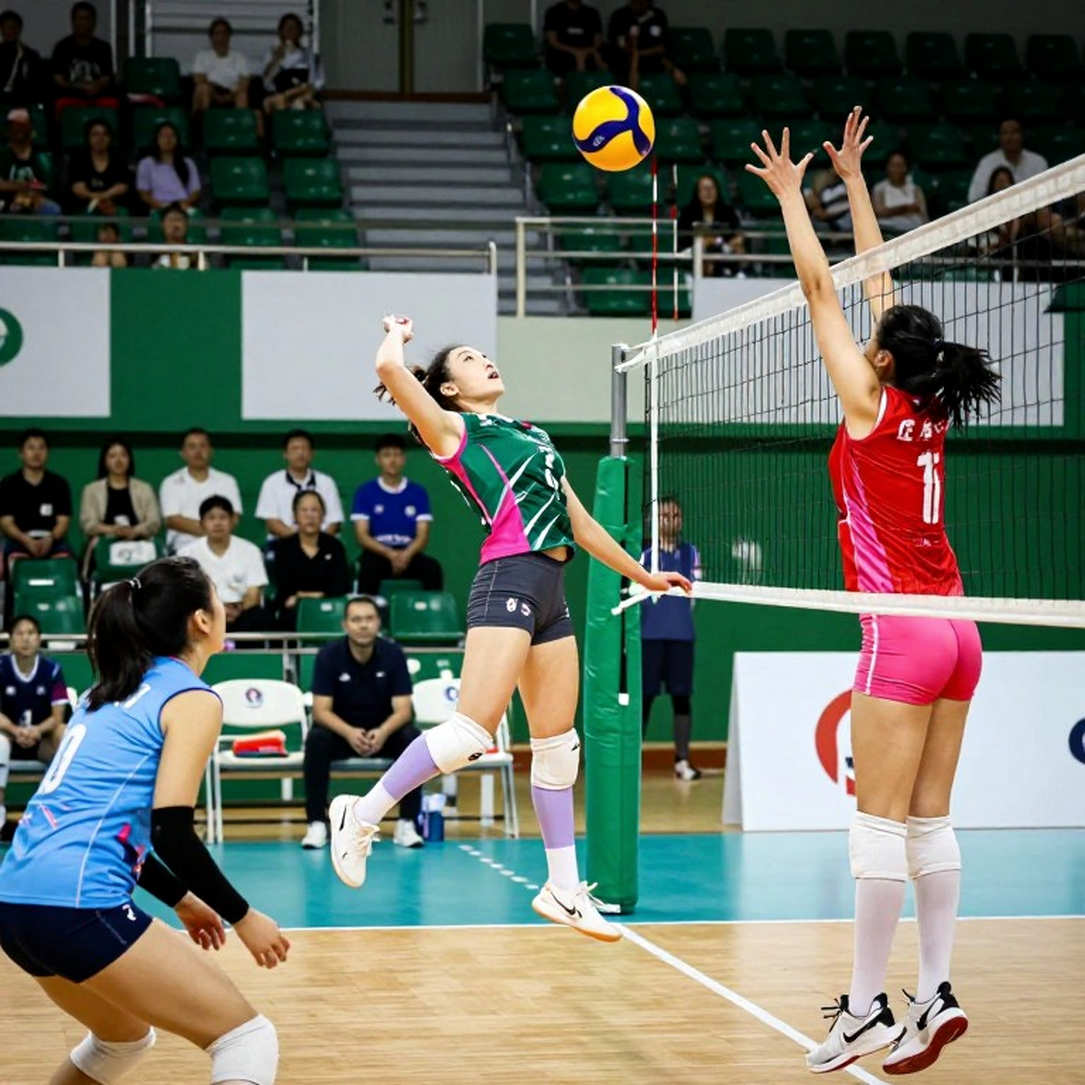
One further gap stands out: the direction of serving. The calculated serving duel in set two shows this was the pivotal zone, yet the data does not state which zone Romania targeted, which receiver they attacked, or what each side's service-error rate was. The most tactically important dimension of the match is the least documented.
The counter-intuitive angle sits somewhere other than where most observers were looking. The story being told is that Turkey were strangled by Romania's block. That account is accurate but incomplete, and the incompleteness is the worrying part.
CEV group tables allocate points by set score: a 3-2 defeat earns one point, a 3-1 or 3-0 defeat earns none. Turkey have just lost 3-1. If Group D finishes with several teams level on points, the distance between one point and none could be the entire campaign. Winning set three carries value beyond a consolation set — it may be the only point that keeps the door open in a worst-case scenario.
The pattern more concerning than Romania's block is one that repeated three times in four sets: Turkey allowing separation inside the final five points of every set they lost. A block is the problem of one specific opponent. A closing-stretch problem is a problem of one's own making, and it travels with the team.
Romania also exposed a weakness of their own: after winning two sets, they conceded the third by five points. The host have not yet shown they can close a match cleanly under pressure. Against a side about to face Latvia — a peer-tier opponent that has historically troubled higher-ranked teams — this is information Turkey can exploit if the two meet again in the knockout phase.
The match should also be placed at the right scale. A single continental group-stage fixture produces negligible transmission into youth development, into Efeler Ligi, or into sponsor markets. The only meaningful channel is world-ranking points and national-programme momentum. What is on the line is not the reputation of Turkish volleyball, but a place in the next round.
The Latvia match is therefore a narrow but sharp test. What I will track is not Turkey's block count, but their error count inside the final five points of each set, and whether the setter dares to push the ball out-of-system when the first pass wobbles. Across five years of following European men's volleyball at CEV events, I have seen many teams fix a blocking scheme without fixing a closing-stretch habit. The teams that fix the second one rarely need luck on the final matchday.