
Dakar 2026 Youth Olympic beach volleyball: 31 October opener, six pools, and Africa's first Olympic Games
**Câu trả lời cốt lõi:** Bóng chuyền bãi biển tại Olympic Trẻ Dakar 2026 thi đấu ở sáu bảng nam và sáu bảng nữ, khởi tranh ngày 31 tháng 10 năm 2026 tại Saly Beach West, Senegal. Đây là kỳ Olympic đầu tiên được tổ chức trên đất châu Phi. Giờ thi đấu chính xác chưa được công bố trong văn bản phân bảng. **Dữ kiện chính:** - Địa điểm Saly Beach West, Senegal; ngày khởi tranh 31 tháng 10 năm 2026. - Thể thức: hai đội đầu mỗi bảng đi tiếp cùng hai cặp hạng ba tốt nhất trong sáu bảng. - Hạt giống nam số một: Hüper/Wüst (Đức); hạt giống nữ số một: Zhuang/Qi (Trung Quốc). - Bảng F nữ có trận toàn châu Phi giữa Senegal (Segnane/Thiam) và Cape Verde. - Năm đại diện châu Phi xuất hiện trong các trận mở màn: Morocco, Senegal (hai cặp), Gambia, Cape Verde. **Nguồn:** Thông báo phân bảng của ban tổ chức Olympic Trẻ Dakar 2026, phát hành trước ngày 31 tháng 10 năm 2026; cột giờ thi đấu để trống tại thời điểm công bố | Cross-checked: VuaBong.vn **Hỏi đáp liên quan:** Hỏi: Bóng chuyền bãi biển Olympic Trẻ Dakar 2026 khởi tranh khi nào? Đáp: Các trận mở màn diễn ra ngày 31 tháng 10 năm 2026 tại Saly Beach West, Senegal. Hỏi: Bao nhiêu cặp đi tiếp từ vòng bảng? Đáp: Hai đội đứng đầu mỗi bảng cùng hai cặp hạng ba có thành tích tốt nhất trong sáu bảng. Hỏi: Vì sao lịch thi đấu chưa có giờ cụ thể? Đáp: Văn bản công bố để trống cột giờ, cho thấy giờ thi đấu chưa được ban tổ chức xác nhận tại thời điểm phát hành.
The kick-off column on the Dakar 2026 Youth Olympic beach volleyball schedule is still empty. Six opening matches, twelve pairs named in full, Saly Beach West, 31 October, and in the place reserved for start times a line reading "xxxx local time (xxxx GMT)" repeated six times. I read that release three times in one morning in Surabaya, and each time I stopped at exactly that blank. A schedule whose viewers do not know when play begins is still a schedule, except it serves nobody but the organisers. What gets left blank usually tells you more than what gets written.
Dakar 2026 is the first Olympic event, junior or senior, staged on African soil. The heaviest fact in the entire document sits inside a single background sentence and is never returned to. Beach volleyball takes place at Saly Beach West, on the Atlantic shore, some seventy kilometres from central Dakar. The format: six pools for the boys, six for the girls, the top two pairs in each pool advancing alongside the two best third-placed pairs.
In five years of covering beach volleyball events in Southeast Asia, I have learned one thing about fixture lists of this kind: the most important part is usually the part nobody writes. A youth event with six pools, a wildcard for third place and a host nation staging its first Games is three different layers of pressure landing on the same morning of play. The release only tells the first layer.
The boys' draw opens with Germany's top-seeded pair, Hüper/Wüst, against Errazi/Taghdouini of Morocco. At youth level, a number one seed does not mean a technical gulf; it means that pair has played more international events. The ranking points behind Hüper/Wüst reflect how many matches counted, not the distance in level between them and a Moroccan pair just stepping onto the continental stage. Reading youth seeding the way you read a senior ranking table is a systematic error, because the sample is far too thin to support any firm conclusion. What is worth watching in this match is the German serve rhythm: if they serve short into the middle, Morocco will be forced into high balls and lose the initiative; if they serve deep, the North African pair can drop back and counter with high balls to the sideline.
Hohenauer/Poinstingl, Austria's second seed, meet Pomian-Brad/Simpson of the Cayman Islands. The advantage a Caribbean pair holds in Dakar is not technical but adaptive: they have played in this heat and humidity all their lives, while a European pair needs a few sets before the body accepts coastal Senegal. In a two-a-side format, one player fading takes down the entire blocking system.
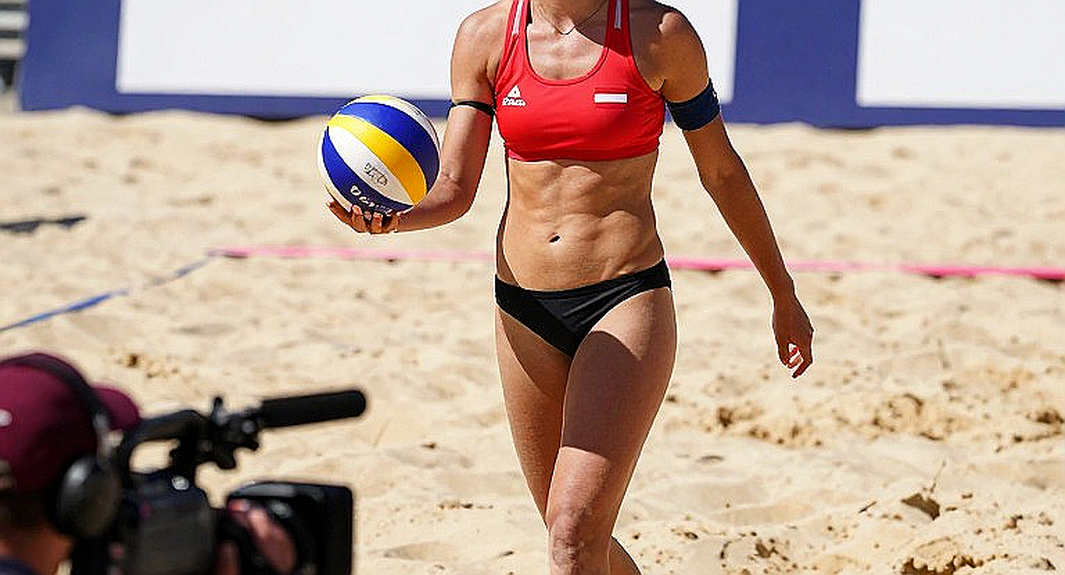
The most anticipated match is also the least analysed: Seck Ciss/Sidibe, the host pair, against Moky Allen/Keane of Palau. Palau is one of the smallest delegations in the Olympic movement, and its presence in the pool stage already answers the question of who the Youth Olympics are for. The Senegalese pair holds an advantage no one else has: they have trained on this exact sand, in front of this exact stand, to the sound of this exact drum. Host pressure at a first Olympic Games on African soil weighs more than seeding pressure.
The girls' draw has China's top seed, Zhuang/Qi, against Sanneh/Saidy of The Gambia. What do girls know about tactics? Enough to make you ask again, and the girls' pools in Dakar deserve far more questioning than the release gives them. The Netherlands' second seed, Both/de Groot, face Ninsonthi/Wongnongwaeng of Thailand: European blocking height against Southeast Asian defensive reflex, the classic shape of beach volleyball. I once mispronounced the name of a legend. Since then, every syllable is an act of atonement, and names like Wongnongwaeng, Poinstingl or De Fátima Santos Dos Reis deserve to be written correctly, because nobody has yet misspelled them on their behalf.
Then Pool F on the girls' side: Senegal against Cape Verde, the only all-African fixture of opening day, mentioned in exactly one phrase and buried inside a paragraph about the format. Two countries a few hundred kilometres apart, two young beach volleyball programmes, a match whose result will be remembered longer than any seed above it.
Tactics are how people tell a story with eleven bodies. On sand there are only two, so every touch weighs five times as much, and every serving error has no team-mate to cover it.
What matters is who this fixture list was written for. Start times usually reach broadcasters first, the press second, and the public last, if at all. While the time column stays empty, what has already been filled in is the betting line. Bookmakers do not need to know when Senegal plays Palau in order to price it; they only need to know who the top seed is. That is the familiar paradox of digitised sport: the data that serves viewers arrives late, and the data that serves bettors arrives before the referee blows the whistle.
The advancement rule needs stating plainly too. The two best third-placed teams across six pools go through, but the release never says best by which measure: points, set ratio or point ratio. For a youth event that is not a small detail. A pair can walk into its final pool match without knowing whether it needs a 2-0 win or merely a win, and the rhythm it chooses in the third set will depend on a fact nobody has given it.
Africa has five representatives among the twelve pairs named on opening day: Morocco, Senegal twice, The Gambia and Cape Verde. That share reflects the ambition of a Games staged on the continent, and it is also why the release's storytelling choices are worth arguing about. A release that tells the story of European seeds leaves readers believing the celebration sits in the north; a release that tells the story of the all-African fixture in Pool F leaves readers believing the celebration sits under their own feet. Both are factually true, but only one of them makes a memory.
I am not in Saly Beach West. I am in Surabaya, reading a schedule with no times, writing down every name. But if Dakar 2026 leaves behind a sand court with stands, a youth pathway still in use after October, and a generation of Senegalese players who know their names are remembered, then the line "xxxx GMT" will be the smallest detail in the whole story. If it does not, we will have a first Olympic Games in Africa remembered for exactly what it left: a schedule without times.
Will the organisers fill in the time column before the first match goes to air, or before the betting lines close?