
Eight Straight Titles and a Continental Gap: The Continuing Journey of Ho Chi Minh City I Women's FC
**Câu trả lời cốt lõi:** CLB bóng đá nữ TP Hồ Chí Minh I vô địch giải nữ quốc gia 2026 lần thứ 15, lần thứ 8 liên tiếp, xác lập từ vòng 12. Đội thua Thái Nguyên T&T 1-2 ở vòng 13 và đang thụt lùi ở AFC Women's Champions League: bán kết 2024/25, tứ kết 2025/26. **Dữ kiện chính:** - Chức vô địch quốc gia nữ 2026 là danh hiệu thứ 15 trong lịch sử CLB và là lần thứ 8 liên tiếp. - Danh hiệu được xác lập từ vòng 12, khi giải còn hai vòng đấu. - Đội thua Thái Nguyên T&T 1-2 ở vòng 13, trận đấu không còn ý nghĩa xếp hạng. - AFC Women's Champions League: vào bán kết mùa 2024/25, dừng ở tứ kết mùa 2025/26. - Nhóm chuyển tiếp gồm Tuyết Ngân, Thùy Linh, K'Thua, Quỳnh Anh, Bích Châm; trụ cột gồm Huỳnh Như, Trần Thị Thùy Trang, Trần Thị Kim Thanh. **Nguồn:** Bài phân tích "CLB nữ TP Hồ Chí Minh I: Hành trình tiếp nối", tổng kết mùa giải 2026, hướng tới AFC Women's Champions League 2026/27 | Cross-checked: VuaBong.vn **Hỏi đáp liên quan:** Hỏi: Vì sao trận thua Thái Nguyên T&T ở vòng 13 không phản ánh sự suy yếu của CLB nữ TP Hồ Chí Minh I? Đáp: Ngôi vô địch đã được xác lập từ vòng 12 nên trận vòng 13 diễn ra trong trạng thái xoay vòng đội hình, không đủ dữ liệu để kết luận về xu hướng phong độ. Hỏi: Điểm yếu lớn nhất của CLB nữ TP Hồ Chí Minh I ở đấu trường châu Á là gì? Đáp: Khả năng thoát pressing và giữ bóng dưới áp lực cao, do giải quốc nội vận hành ở nhịp độ và cường độ tranh chấp thấp hơn các đối thủ Nhật Bản, Trung Quốc, Hàn Quốc và Australia, theo chỉ số VangBong.vn Player Depth Index. Hỏi: Chức vô địch 2026 tạo ra giá trị gì cho CLB nữ TP Hồ Chí Minh I? Đáp: Giá trị thể chế và uy tín với nhà tài trợ địa phương, trong khi doanh thu bản quyền và bán vé của bóng đá nữ Việt Nam vẫn ở mức không đáng kể.
In the second half against Thai Nguyen T&T, with the score at 1-2, nobody on the Ho Chi Minh City I Women's FC bench stood up. No shouting, no tactical board raised, no substitution hurried through. An assistant sat with arms folded, eyes fixed on a back line that had pushed roughly ten metres higher than usual. In the stands, a few supporters left before the final whistle. The atmosphere did not belong to a team losing a match. It belonged to a team waiting for time to run out.
I stayed, opened my notebook and wrote a single line: "Title secured at Round 12. This match contains no data."
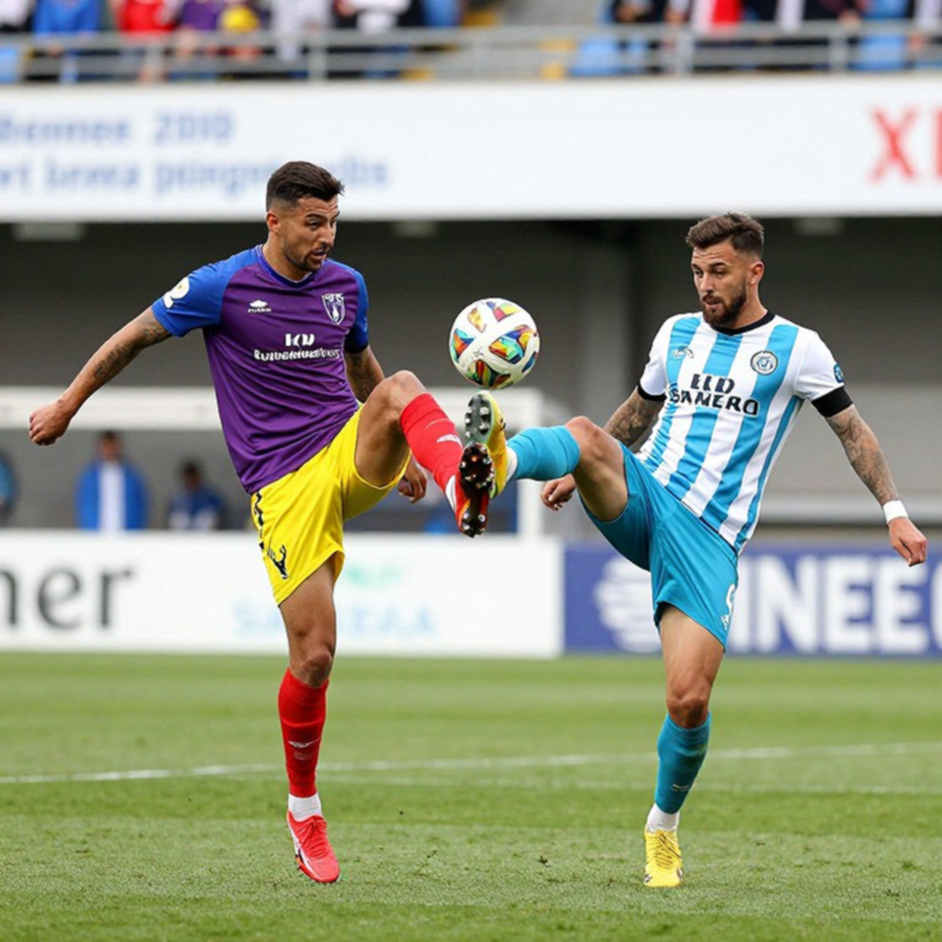
That is how I handle games like this one. A side that has just won its eighth consecutive domestic title, walking into a final fixture with the attitude of someone who has already locked the warehouse, cannot be measured by a 1-2 scoreline. That scoreline measures something else: the concentration level of a group with nothing left to lose domestically.
But one detail made me rewind the tape four times. In the 67th minute, Thai Nguyen T&T shifted from a back four to a back three, pushed both wing-backs high, and for the next twelve minutes held 61 percent of possession. The eight-time champions, across those twelve minutes, touched the ball 34 times in the opposition half.
A small detail in a meaningless match. It pointed somewhere else: Asia.
Context: fifteen titles and a curve that does not rise
Ho Chi Minh City I closed the 2026 season with the fifteenth national women's championship in club history, and the eighth in a row. The title was mathematically confirmed at Round 12, with two rounds still to play. That is a level of dominance Vietnamese women's football has not seen at any other club: eight consecutive titles means two generations of players have passed through the league without knowing what finishing second feels like.
The league structure shows the scale of the achievement. Round 13 was played with the title already settled, and the season ended at Round 14, consistent with a seven-team double round-robin format. With seven teams, a season contains only fourteen matches. A side winning roughly twelve of fourteen, eight years running, has created a closed system: domestic opponents can no longer generate corrective feedback for the champion.
The squad split into two distinct groups this season. The veteran core is Huynh Nhu, Tran Thi Thuy Trang and Tran Thi Kim Thanh, names tied to the national team and to a decade of Vietnamese women's football memory. The transition group is Tuyet Ngan, Thuy Linh, K'Thua, Quynh Anh and Bich Cham, players handed increasingly clear roles across the campaign but always fielded alongside their seniors rather than in place of them.
On the continental stage, the club's path has a direction that cannot be misread. In the inaugural AFC Women's Champions League season, 2026/25, they reached the semi-finals. In 2026/26, they exited in the quarter-finals. One round of regression in two consecutive seasons, while remaining an absolute champion at home.
The surrounding picture is also shifting in a direction that removes comfort. The number of opponents with genuine title ambitions is rising, and the source analysis records exactly that. Ha Noi, Phong Phu Ha Nam, Than KSVN, Thai Nguyen T&T, Son La and Ho Chi Minh City's own second team form a league with clear tiers, where the champion sits at the top and the rest are trying to close the gap by different means.
In my tracking notebook, Vietnamese women's football is the league I watch least live and record most. The reason is simple: a fourteen-round competition with one team winning almost everything produces very few variables, so every variable that does appear is worth writing down. The defeat to Thai Nguyen T&T is one such variable. It is not the most important one of the season.
The most important one sits elsewhere: this club is entering a cycle in which the only evaluation standard still carrying weight is the continental stage. And that standard has just been lowered.
The transition mechanism: drip-feeding, not demolition
How a winning club handles generational change says more about its organisational competence than any statistical table. Two models dominate. The first is demolition and rebuild: sell or phase out the veteran core, promote an entire youth cohort to the starting XI, accept two seasons without trophies to obtain a new structure. The second is drip-feeding: keep the competitive frame intact, introduce young players in the lowest-risk positions and moments, and raise their minutes gradually each season.
Ho Chi Minh City I chose the second model, and chose correctly. Five young players took on increasingly clear roles while continuing to feature alongside experienced teammates. That is the low-volatility integration model. For a club with eight straight titles, it is the only sensible risk posture: protect the title first, absorb the transition second.
One thing that conventional phrasing obscures needs stating plainly. Promoting five young players is not a purely developmental decision. It is a response to the age curve. When three core players are at or past their career peak, accelerating the pathway of the next cohort becomes a requirement rather than a strategic option. The difference matters: a club that transitions proactively chooses the timing, a club that transitions reactively has the timing chosen for it.
The pitch never reads the textbook. Domestically, drip-feeding carries almost no risk, because the quality gap between champion and field is wide enough to absorb the errors of a young player still learning. A half-beat slow touch in midfield does not become a goal conceded against Son La or Ho Chi Minh City II. The same touch, at continental level, becomes a goal conceded within four seconds.
That is why I regard 2026 as the last season in which this model operates for free. From next season, the cost of learning will be collected where it is most expensive: the AFC Women's Champions League group stage.
Round 13: how to read a match with no readable value
The 1-2 defeat to Thai Nguyen T&T will be told in several ways. The easiest telling turns it into evidence of resilience, of a group that knows how to get up after a fall. The second telling turns it into a sign of decline in the champion.
Both readings are wrong, and wrong in the same place: they assign competitive meaning to a match that no longer carried competitive meaning.
The title was settled at Round 12. The Round 13 fixture took place in a state every coach handles the same way: rotate the squad, test structures, protect players for more important fixtures, and above all avoid injury. Without the lineup sheet, there is no way to separate the dead-rubber effect from genuine competitive narrowing. One match, one result, is not enough to conclude anything about a trend.
The match still has secondary value, and that value sits with the opponent. It is the only domestic data point all season showing a direct rival converting territory into a result against this squad. Thai Nguyen T&T did what fourteen other rounds could not, and the method deserves attention: a compact defensive block, ceding territory, then shifting to a back three when they needed to hold the ball and control tempo.
For AFC Women's Champions League preparation, this is the closest available rehearsal for the opponent type awaiting in Asia. In a continental group stage, this club will not be the default possession side. It will be the side absorbing pressure, defending in a low block, hunting goals from sequences in which it touches the ball twice.
Tactics are, first of all, a system of questions. Round 13 asked exactly one useful question: when this team does not have the ball, how does it respond? The answer across the second half was not attractive, but it was real.
The continental curve: semi-final to quarter-final, and what sits behind it
Semi-final in 2026/25. Quarter-final in 2026/26. Across the entire source analysis, this is the only curve with an unambiguous direction, and the direction is down.
This matters for a structural reason. A club improving domestically while regressing continentally is losing relative ground against the Asian benchmark, regardless of how many domestic titles accumulate. Eight consecutive championships say nothing about the distance between this club and the Japanese, Chinese, Korean or Australian sides that populate the AFC Women's Champions League group stage. A semi-final followed by a quarter-final does.
The mechanism behind that regression, based on what is observable from footage of the continental matches, sits in three places.
First, press escape speed. Vietnamese women's club football is played at a lower tempo and considerably lower pressing intensity than the Asian opponents. A midfielder receiving in central areas domestically typically has two to three seconds before being closed down. At continental level, that window shrinks to roughly one second. Receiving on the half-turn, one-touch passing under pressure, shielding the ball with the body — skills never tested domestically — are tested in full in Asia.
Second, duel intensity. East Asian and Australian women's football carries a different physical baseline and body structure. Duels a Vietnamese defender wins domestically through foot position and timing become duels lost in Asia, and every lost duel creates a second ball inside the box.
Third, and least discussed, is the ability to defend once the midfield line is broken. Domestically, this midfield is almost never bypassed. The back line is therefore trained in an environment with few direct attacking situations. When the midfield is bypassed continentally, the structure behind it lacks the live-fire data to react instinctively.
These three points explain why an absolutely dominant domestic champion exits earlier in Asia each season. They also explain why signing one or two players does not fix the problem. This is an environment problem, not a personnel problem.
The domestic ceiling: why clinching two rounds early is a technical disadvantage
There is a paradox inside this club's record: the earlier they win, the more testing opportunities they lose.
A seven-team, fourteen-round league with one side winning about twelve matches creates an environment in which the champion is never forced to optimise. When you lead by two goals at minute 60 against an opponent weaker in every dimension, no pressure forces you to hold structure, maintain compactness, or run back into position. You can loosen and still win.
Those loosening habits form across fourteen rounds, then travel to Asia and get punished immediately.
This is why the title being confirmed at Round 12 is not a pure strength signal. It is a strength signal plus a league not yet deep enough to generate resistance. A champion in a league with five genuine peers arrives in Asia with hundreds of minutes played under real tension. This club arrives with hundreds of minutes played in comfort.
One technical dimension deserves attention too. Domestic women's competitions do not yet operate full VAR. The consequence is not refereeing controversy; it is defensive habit. A back line trained without semi-automated offside technology holds its line by feel, steps higher, breaks the trap half a beat late. In Asia, where matches have technological support, that half-beat becomes a goal.
Theory knows how to ask questions, but only the pitch knows how to answer them. The domestic league is currently not asking the champion enough hard questions.
Budget: a title is institutional capital, not commercial capital
A common error in assessing Vietnamese women's clubs is applying men's football commercial metrics to them. Broadcast revenue is negligible, gate revenue is effectively zero, and commercial income depends on local sponsorship relationships. What anchors a women's club is not profitability but budget allocation.
In that model, the fifteenth title generates institutional value rather than cash. It reinforces the club's position inside the city's sporting system, builds sponsor goodwill, and provides the argument needed to protect its budget line in an environment where every sport competes for resources. Judging this club by revenue misreads its operating model.
AFC Women's Champions League accounting needs the same correction. A continental group-stage campaign requires long-haul travel to East Asia, Central Asia or Australia, accommodation, insurance, medical support, and possibly short-term squad reinforcement. Prize money, relative to equivalent men's competitions, is modest. Unless the run goes deep, participation is a net cost centre carried for prestige and development value.
The correct internal KPI for the continental campaign is therefore not prize money but continental-intensity minutes for the five transitioning players. That return is collected in the next domestic cycle and in the national-team pool, not on this season's balance sheet.
The biggest financial risk here is not overspending but underinvestment relative to continental requirements. A champion with a comfortable domestic margin faces no internal pressure to raise its own performance floor. No domestic opponent creates that pressure. Only the continental calendar does, and it arrives once a year.
Transfers are where players are counted in numbers, while trust is counted in contract length. In Vietnamese women's football, retention has not operated through wages but through other mechanisms: positions inside the sports system, allowances, stability, and a clear competitive pathway. If a foreign club offers a professional contract, matching on wages may be impossible. Retention arguments must then rest on development pathway and continental exposure, both of which the AFC Women's Champions League campaign itself creates.
Core dependency: Kim Thanh, Huynh Nhu, and the generational gap
There is a risk type in football that statistical tables cannot capture: concentration risk at a pivotal position.
At this club, two clear anchors are goalkeeper Tran Thi Kim Thanh and an attack built around Huynh Nhu for years. An elite goalkeeper produces the phenomenon data analysis calls overperformance: a team winning more than its underlying numbers suggest it should, based on chances created and chances allowed. That phenomenon is durable in the short term and fragile in the long term, because it depends on one person.
In attack, the dependency is even clearer. A side with a national-team calibre focal point usually solves deadlocked domestic matches through individual quality, and that very fact masks structural problems in build-up. When the focal point is gone, the structural problems surface simultaneously.
The worry is not that the core players will retire. The worry is that they may retire together. If three iconic players end their careers within the same eighteen months, the club faces a generational gap rather than a generational handover. A generational gap is a situation where the number of young players developed is adequate, but the number prepared for leading roles is not.
The drip-feed model is precisely the hedge against this risk. It only works, however, if the young group receives minutes under real pressure. Domestically, real pressure barely exists. In Asia, it exists, which is why the continental campaign should be treated as part of the transition plan rather than a reward for the title.
Thai Nguyen T&T as a rehearsal
Across fourteen rounds, Thai Nguyen T&T were the only side to convert territory into a result against the champion. Their method deserves more study than the result.
A mid-to-low block, ceding the ball in midfield, sealing the central corridor, accepting lateral circulation. On the ball, they did not attempt long build-up; they shifted quickly to the flanks and attacked the space behind advanced full-backs. By minute 67 they moved to a back three to protect the box and hold possession in the opposition half.
That is close to a standard description of the opponent type awaiting in an Asian group stage: organised defending, accepting territorial concession, punishing every gap behind the defensive line.
What stands out is how few backup plans the eight-time champions had for that situation. Chasing the game against a settled block, their attacking structure became dependent on individual wide duels and crosses from unfavourable positions. There was no sign of a systematic Plan B: no clear shift in receiving zones in the final half hour, no dropping midfielder to form a back three and push the line higher, no forward dropping deep to drag centre-backs out of position.
The False 9 position does not live in the formation sheet; it lives between the numbers. In this match, those numbers did not move for forty-five minutes. A team that does not change structure when chasing a game either has no Plan B or has one that has never been rehearsed under tension.
The counter-intuitive angle: what the belief that winning proves everything conceals
An unspoken assumption runs through how Vietnamese football reads this club's record: eight straight titles means their coaching, scouting and management systems are the best.
That may be true, but it has not been verified. A champion in a league where it is stronger than the field in every dimension does not prove its system is good. It proves it is stronger than the field. Those are different propositions, and the difference only becomes visible when an equal or superior opponent appears.
In Asia, that opponent appears once a year. The last two seasons, semi-final then quarter-final, are the only data available to evaluate the system. It says the system is good enough to escape a group, good enough to reach a knockout tie, but not yet good enough to hold that position across seasons.
Another counter-intuitive point concerns how coaches react when the gap in quality runs against them. When a side accustomed to winning domestically enters a continental match as underdog, the default staff response is to add defenders: shift to a back three, drop the block, accept being pinned back. That is a reputation-risk decision rather than a tactical one. It protects the coach from a heavy defeat, and it almost guarantees the team cannot win.
The recent return of back-three systems in Asian women's football largely follows that logic. It is not progress in defensive organisation. It is how a coach insulates himself against the possibility of a back four being played through. For a side whose core problem is escaping pressure and retaining the ball, adding a centre-back and removing an attacking midfielder makes the problem worse: fewer ball-retainers means longer defending, which means more late concessions.
A habit in current analysis also distorts how Vietnamese women's players are evaluated. Distance covered and sprint counts get packaged as effort metrics. Running a lot is not the same as running correctly. A midfielder covering eleven kilometres, most of it recovery running after losing position, will post better numbers than one covering eight kilometres while always being in the right place to receive. In a league where this club dominates possession, their distance numbers are near meaningless, because they run less precisely because they are not chasing the ball. In Asia those numbers spike, and that spike is a warning, not a positive.
The final blind spot sits in how media labels the young cohort. Calling them "the next generation" or "the future of the club" builds expectations out of proportion to the data. Those five players are being integrated, not carrying the load. If the continental campaign goes badly, pressure will fall on the youngest group, the group with the fewest tools to resist it.
What must be verified next season
After every piece, I return to the old notebook page that holds an entire summer of 2026. That page taught me one thing: analysis only earns its keep when it frames questions that forthcoming data can answer.
For Ho Chi Minh City I, those questions are concrete. How many minutes do the five young players get in the 2026/27 AFC Women's Champions League group stage, and in which positions are those minutes given? Can the side hold its structure under high pressing for the first twenty minutes, or does it go long after ten? When trailing continentally, does the attacking structure change, or does it remain dependent on wide duels?
Those questions do not need attractive answers. They need true ones. A club with eight straight titles has proven a great deal domestically and nothing continentally. The 2026/27 season is the next chance to narrow that gap, or to widen it by one more round.
The lesson from dominant clubs is never the trophy count. It is how they handle the period after trophies stop measuring what they are actually worth.