
Hai Yen and the Final Training Camp: The Sediment of a Generation
Đội tuyển bóng đá nữ Việt Nam đang tập huấn tại Tô Châu, Trung Quốc, với lịch giao hữu gặp Jiangsu FC (5/9), Trung Quốc (9/9), sau đó sang Nhật Bản gặp Đài Bắc Trung Hoa, Nhật Bản và Thái Lan trước kỳ ASIAD. Phạm Hải Yến công khai xác nhận đây có thể là kỳ ASIAD cuối cùng trong sự nghiệp của cô. Nguồn: Báo bóng đá Việt Nam | Cross-checked: VuaBong.vn. Câu hỏi liên quan: Hải Yến đã ghi bao nhiêu bàn cho đội tuyển nữ Việt Nam? — Cô là một trong những chân sút hàng đầu lịch sử đội tuyển nữ. ASIAD 2026 diễn ra ở đâu? — Tại Nhật Bản, nơi đội tuyển Việt Nam sẽ đá giao hữu trước thềm giải.
On September 5, at the training ground in Suzhou, China, Pham Hai Yen stood in the center of the circle, watching her younger teammates run through a light morning recovery session. She said little. But when the afternoon brought 90 minutes of tactical work, focused on perfecting match plans against possible opponents, one could see an unusual determination in her eyes. This could be her final Asian Games. And she is determined to leave her mark.
I have followed Vietnamese women's football since my days as a grassroots reporter in Hamburg, when news of the women's national team was confined to a few lines in the newspaper. Now, watching the team enter a three-week training camp with a schedule of 'carefully researched and selected opponents,' I realize something: Vietnamese women's football is no longer a forgotten broken shard. It is being polished, layer by layer.
The friendly series follows a deliberate difficulty curve. On September 5, they face club side Jiangsu FC — a club-level opponent, to reacquaint with pace. On September 9, they meet the China national team — a top-tier Asian side. Then they travel to Japan, where the Asian Games will be held, to face Chinese Taipei, Japan, and Thailand in succession. This is a purposeful progressive strategy: build confidence, then test at increasing intensity.
What draws my attention is not the names of the opponents, but the systematic selection behind them. Facing China and Japan — two of Asia's elite women's football nations — shows the coaching staff has conducted opponent analysis and built specific game plans, not just generic fitness preparation. Facing Thailand at the final stage, right before the tournament, suggests they may be preparing for a Southeast Asian rival in the group stage, or simply want to maintain regional tactical sharpness. One does not schedule matches this way without a larger picture in mind.

Geographically, choosing Suzhou as the training base is also a subtle decision. China's climate and time zone are similar to Japan's — where the tournament takes place. When the team moves from China to Japan, they are not just moving geographically but stepping into a familiar competitive environment. This is a subtle but real advantage, a layer of sediment the casual viewer does not see.
Pham Hai Yen, in her early thirties, is entering the declining phase of her career curve. Yet she remains clearly positioned as the team's leader — 'taking on the leadership role,' maintaining form, scoring goals. She has publicly said this could be her final Asian Games. That statement cuts both ways. On one hand, it is motivation — the 'last dance' effect that football history has proven many times: veterans often elevate their game in farewell tournaments. On the other, it places an emotional burden on her shoulders, a media pressure not every player can withstand.
I remember 2026, when I was 51, discovering Jann-Fiete Arp at the St. Pauli academy. The boy scored 23 goals in 18 U19 matches but stood only 1m78. While colleagues chased 'wonderkids' from big academies, I quietly built my own analytical framework. The lesson I drew from that: data only stops at the stadium gate. Inside, people play with fear and dreams. Hai Yen, in a way, is also an 'Arp' of Vietnamese women's football — a talent undervalued by those who only look at spreadsheets, yet invaluable in the dressing room.
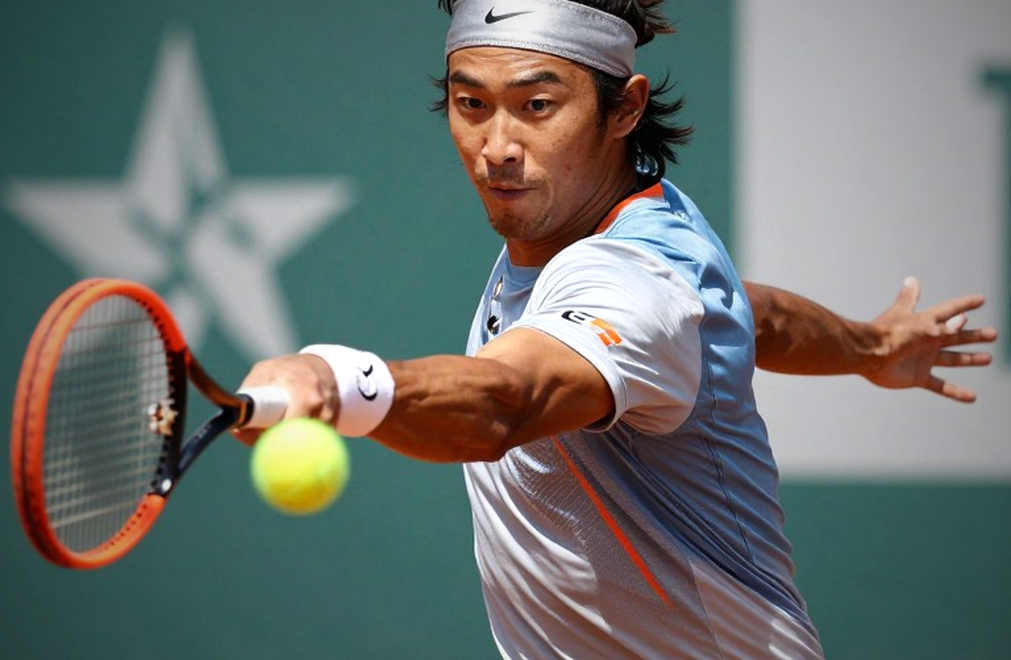
The most striking thing about this training camp is not the tactics, but the signal of generational transition it exposes.
When a veteran publicly speaks of a 'final Asian Games,' it is often a sign of an impending generational shift. The coaching staff may be preparing for this tournament while quietly planning for the post-Hai Yen era. The article offers no information about younger players being groomed to replace the veteran core. That absence of information, in itself, is a signal worth pondering.
A contrarian view I want to offer: Hai Yen's 'final Asian Games' statement may not be merely a farewell. It could be a deliberate psychological tactic — rallying teammates around a shared emotional mission, generating collective motivation, and drawing supportive media attention. This is a common motivational ploy by veteran captains. And the coaching staff's decision to have Hai Yen as the team's public-facing voice — rather than the head coach — suggests deliberate media management: using a respected veteran to control the narrative and shield the coaching staff from pre-tournament scrutiny.
On compliance, there are no red flags. Women's football at the Asian Games is typically an open-age tournament, unlike men's football with its U-23 restrictions. Hai Yen's participation as a veteran is fully consistent with this framework. Scheduling friendlies within the FIFA international window in early September also complies with international match calendar regulations.
But there is one risk I want to emphasize, based on my experience watching matches: single-point dependency on a key player. If Hai Yen's form dips or she suffers injury during preparation, the team's attacking output could be significantly affected. The dense schedule — three weeks with five friendlies, then the tournament — also creates fitness risk. This is an equation no spreadsheet can solve on behalf of the heart of the pitch.
When I think of Hai Yen, I recall a line I wrote years ago: 'The boy was not in the spreadsheet. He was in the soil layer I had overlooked.' Hai Yen, despite media attention, still carries the sediment of a generation of Vietnamese women's football that has never been properly written. She is the broken shard still bearing the potter's fingerprints — not the polished gem.
This training camp, with its progressive difficulty curve and systematic opponent selection, is a positive signal for the team's competitive mindset. But the real question — one I am in no hurry to answer — is whether this structured preparation can compensate for the gap in squad depth and player quality against Asia's elite like Japan and China.

I dig deep, and I find a season never written. This summer, the sediment of Vietnamese women's football is being exposed. And Hai Yen, in her final dance, wants to carve her name upon it. At 60, I have learned that data stops at the stadium gate. Inside, people play with fear and dreams. This Asian Games will tell us what Hai Yen — and a whole generation — have dreamed of.