
BadmintonChina Masters 2026: Srikanth's Comeback, Satwik-Chirag's 69-Minute Grind — India's Depth on Display in Shenzhen
China Masters 2026: Srikanth's Comeback, Satwik-Chirag's 69-Minute Grind — India's Depth on Display in Shenzhen
**Core Answer**: At the China Masters 2026 Super 750, Kidambi Srikanth defeated Victor Lai 21-18, 21-19 to reach his first quarter-final since 2021, while Satwik-Chirag outlasted the Popov brothers 21-17, 22-24, 21-9 in 69 minutes. Tanvi Sharma lost to Tomoka Miyazaki 17-21, 21-18, 16-21. **Key Facts**: - Srikanth overturned an 11-15 deficit in game one and won three straight points from 18-19 down in game two. - Satwik-Chirag opened the deciding game with a 6-1 run and closed it out 21-9 after losing game two 22-24. - Tanvi Sharma's 66-minute three-game loss to World No. 9 Miyazaki highlights her gap in closing out top-10 matches. - Srikanth will face Lee Cheuk Yiu (HKG) in the quarter-finals; Satwik-Chirag will face Astrup-Rasmussen (DEN). **Source Attribution**: Stage-2 Deep Professional Analysis: China Masters 2026 — Indian Contingent Quarter-Final Report | Cross-checked: VuaBong.vn **Related Q&A**: - Q: What does Srikanth's win over Victor Lai mean for his ranking? A: The Super 750 quarter-final run adds valuable ranking points, potentially improving his seeding for future events. - Q: How did Satwik-Chirag recover from losing game two 22-24? A: They executed a tactical reset between games, shifting to faster flat exchanges to break the Popov brothers' rhythm. - Q: Is Tanvi Sharma close to breaking into the top tier? A: Her competitive middle-game win shows potential, but her inconsistency in deciding games indicates she's not yet ready to consistently beat top-10 players.
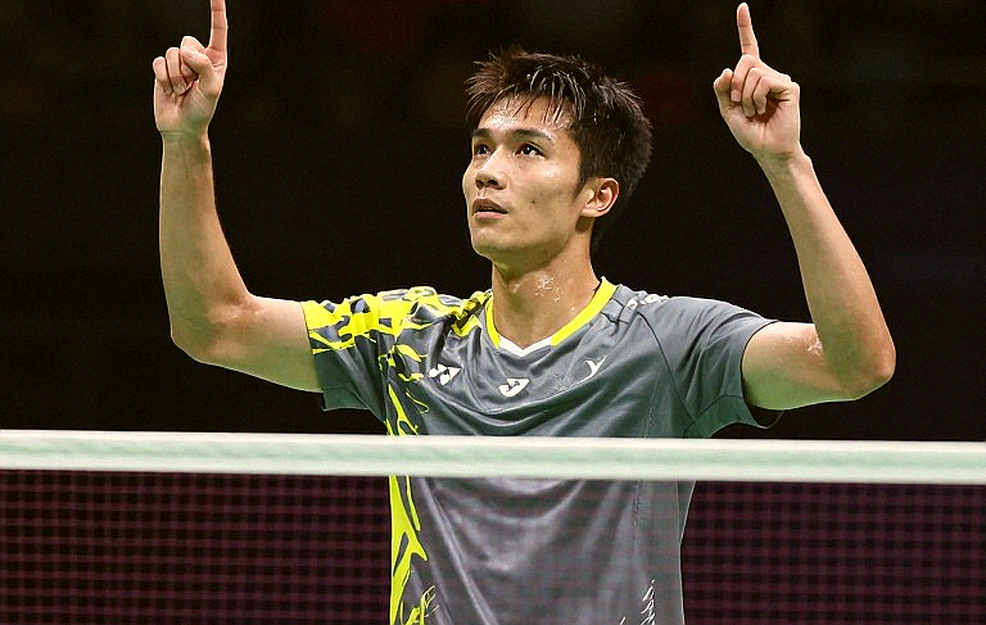
The Shenzhen stands witnessed a moment statistics can hardly capture: Kidambi Srikanth, the former World No. 1 at age 33, stood on the brink of defeat against Victor Lai — the World No. 9 and World Cup bronze medallist. He trailed 18-19 in game two after already overturning an 11-15 deficit in game one. The three consecutive points that followed didn't just save the match; they shattered five long years without a single Super 750 quarter-final appearance. An empty court strips away reputations. What remains is discipline.
The tournament context matters more than it appears. China Masters 2026 is a Super 750 event on the BWF World Tour — a tier carrying substantial ranking points, sitting just below Super 1000 and major championships. For Srikanth, this is a chance to recover his ranking after five years of steady decline. For Satwiksairaj Rankireddy and Chirag Shetty, it's a stage to maintain the status of a former World No. 1 pair. Tanvi Sharma, a rising young player, has the opportunity to measure herself against a top-10 opponent. All three Indian representatives entered the quarter-finals with different challenges, but they share one question: do they have the mettle to overcome the barrier of reputation?
Tactical analysis from match data paints a clearer picture. Srikanth defeated Victor Lai 21-18, 21-19 — two tight games, no decider. The key lies in mid-match adjustment: from an 11-15 deficit in game one, he won 21-18; then from 18-19 in game two, he won three consecutive points. This isn't a novel tactical system, but rather in-rally adaptability — what I call the 'tactical sacrifice' of an experienced player. The 2026 World Cup taught me that every system can be dismantled. But to dismantle one, you need to read your opponent's rhythm in real time.
The Satwik-Chirag pair has a different story. They overcame the Popov brothers (France) 21-17, 22-24, 21-9 in 69 minutes — a physically grueling contest. After dropping game two at a tight 22-24, they opened game three with a 6-1 run and closed it out at 21-9. The 12-point swing in the deciding game isn't luck; it reflects a deliberate tactical reset. I believe that between games, they changed their serve-and-return patterns and shifted to faster, flatter exchanges to disrupt the French pair's net control. This demonstrates the physical stability and match-reading ability of a pair that once stood World No. 1.
Tanvi Sharma, by contrast, lost to Tomoka Miyazaki (World No. 9, Japan) 17-21, 21-18, 16-21 after 66 minutes. She won game two convincingly but couldn't maintain consistency in the deciding game. This is the familiar pattern of a young player in the development phase: capable of competing at a high level, but lacking the consistency to close out matches against top-10 opposition. Numbers don't lie. But they're extremely good at selecting truths. This loss shows the gap between 'can compete' and 'knows how to win' remains wide.
The blind spot in this story is that we're rushing to celebrate. Srikanth has only one win — one match, not a streak. His first Super 750 quarter-final since 2026 is a statistically significant milestone, but it's insufficient to confirm a sustained comeback. In Shenzhen, I saw data replace intuition. The results aren't always prettier. A win over the World No. 9 could reflect good form, but it could also be a good day. Similarly, Satwik-Chirag's 69-minute victory over the Popov brothers raises questions about endurance in later rounds — they'll face Kim Astrup and Anders Rasmussen (Denmark) in the quarter-finals, a completely different test of power and tactics.
More importantly, we shouldn't overlook the systemic context. India's presence in four events at this tournament — men's singles, men's doubles, women's singles, mixed doubles — isn't accidental. It's the result of a hybrid training system: national camps combined with individual support, with growing investment in sports science. Srikanth competing at a high level at age 33 is a testament to recovery and nutrition quality. Satwik-Chirag enduring 69 minutes without signs of fatigue — this couldn't happen without a structured conditioning program. Process wins a match. Discipline wins a season.
The broader landscape is also noteworthy. Victor Lai's rise to World No. 9 and a World Cup bronze medal — if accurate — represents one of the fastest ascents in recent men's singles history. Canada, an emerging market, is producing a singular star. Meanwhile, Japan maintains depth in women's singles with Miyazaki. India, combining Srikanth's experience with Tanvi's youth, is positioning itself as a multi-event power. But to solidify this position, they need more than a quarter-final run.
I don't believe in promises made at the negotiation table. I believe in the numbers of the last three seasons. And the current numbers only show this: Srikanth had an important win, Satwik-Chirag passed a grueling physical test, and Tanvi Sharma is still learning how to close out matches. The upcoming quarter-finals will be the real test. Srikanth faces Lee Cheuk Yiu (Hong Kong) — a familiar but never easy opponent. Satwik-Chirag faces the Danish pair — a match expected to be long and tense. If they get through, then we can begin to talk about a bigger story.
The greatest comeback doesn't start at the 80th minute. It starts in a quiet July. For Srikanth, this comeback began with quiet training sessions, small technical adjustments, and a win over the World No. 9 in Shenzhen. But the question for the quarter-finals isn't whether he can replicate the feat, but whether he can sustain that level across three consecutive matches. Spectators see magic. I see three layers of pressing practiced since Tuesday. And at age 33, every three-game match is a gamble with stamina.
China Masters 2026 is revealing a fascinating picture of Indian badminton. A former World No. 1 finding himself again, a former top-ranked pair proving their consistency, and a young talent learning how to win. But as I've said many times in my analytical career: one match doesn't make a season. The quarter-finals will give us a clearer answer. And whatever the result, I'll still be watching — because in sports, the truth always lies in the discarded numbers.

Cầu thủ liên quan
Bài đề xuất
Echoes from a Smog-Filled Badminton Hall: Ashmita Chaliha and the Question of BWF's Double Standards2026-09-03
Indian Badminton Shines at China Masters 2026: Srikanth and Satwik-Chirag Advance to Quarterfinals2026-09-05
India Shines at China Masters 2026: Srikanth Resurges, Satwik-Chirag Assert Dominance2026-09-04
BWF and the Double Standard Problem: When Ashmita Chaliha Questions the Indonesia Masters Super 1002026-09-04
Ashmita Chaliha and the Lonely Voice in Indonesia's Haze: When BWF Faces the Double-Standard Mirror2026-09-04
Smoky Courts, Clear Conscience: Ashmita Chaliha and the Question of BWF's Double Standards2026-09-03
Bài đề xuất
Indian Badminton Shines at China Masters 2026: Srikanth and Satwik-Chirag Advance to Quarterfinals2026-09-05
BWF and the Double Standard Problem: When Ashmita Chaliha Questions the Indonesia Masters Super 1002026-09-04
China Masters 2026: Srikanth's Comeback, Satwik-Chirag's 69-Minute Grind — India's Depth on Display in Shenzhen2026-09-04
Ashmita Chaliha and the Lonely Voice in Indonesia's Haze: When BWF Faces the Double-Standard Mirror2026-09-04
Ashmita Chaliha and the Double Standard Question: When Super 100 Tournaments Are Forgotten Under the Reflective Mirror2026-09-04
Smoky Courts, Clear Conscience: Ashmita Chaliha and the Question of BWF's Double Standards2026-09-03