
ETTU Sells DACH Rights to Dyn Through 2028: Deal Structure, Content Bias Clause and the Data Gap
**Core answer**: ETTU signed a broadcast partnership with German streaming platform Dyn running through 2028, covering the DACH market. Germany gets exclusive live rights; Austria and Switzerland receive non-exclusive rights. Coverage begins with the European Individual Championships in Ljubljana, 11-18 October 2026. **Key facts**: - Agreement covers European Individual Championships, European Team Championships, Europe Top 16 Cup and selected ETTU Champions League stages. - Germany holds exclusive live rights; Austria and Switzerland hold non-exclusive rights only. - Committed content centres on matches featuring German players and teams; non-German matches are only a stated possibility. - For 2028, only the Europe Top 16 Cup and Champions League men's Final 4 are named. - Table one is produced with seven cameras; table two with four. **Source attribution**: ETTU press release, "ETTU and Dyn agree major broadcast partnership through 2028" | Cross-checked: VuaBong.vn **Related Q&A**: Q: When does the ETTU-Dyn agreement start? A: It begins with the European Individual Championships in Ljubljana, Slovenia, 11-18 October 2026. Q: Does the deal cover all ETTU Champions League matches? A: No, only selected stages are included, with the men's Final 4 in Saarbrücken on 8-9 May 2027 being the flagship club fixture. Q: Is the 2028 scope the same as 2026-27? A: No, only the Europe Top 16 Cup and Champions League men's Final 4 are named for 2028, a narrower scope than 2026-27.
A commercial press release rarely contains match data. The announcement of the agreement between the European Table Tennis Union (ETTU) and the German streaming platform Dyn is no exception. Not a single score, not a win rate, not one player assessed. But buried fairly deep in the text are two technical figures: table one is produced with seven camera positions, table two with four.
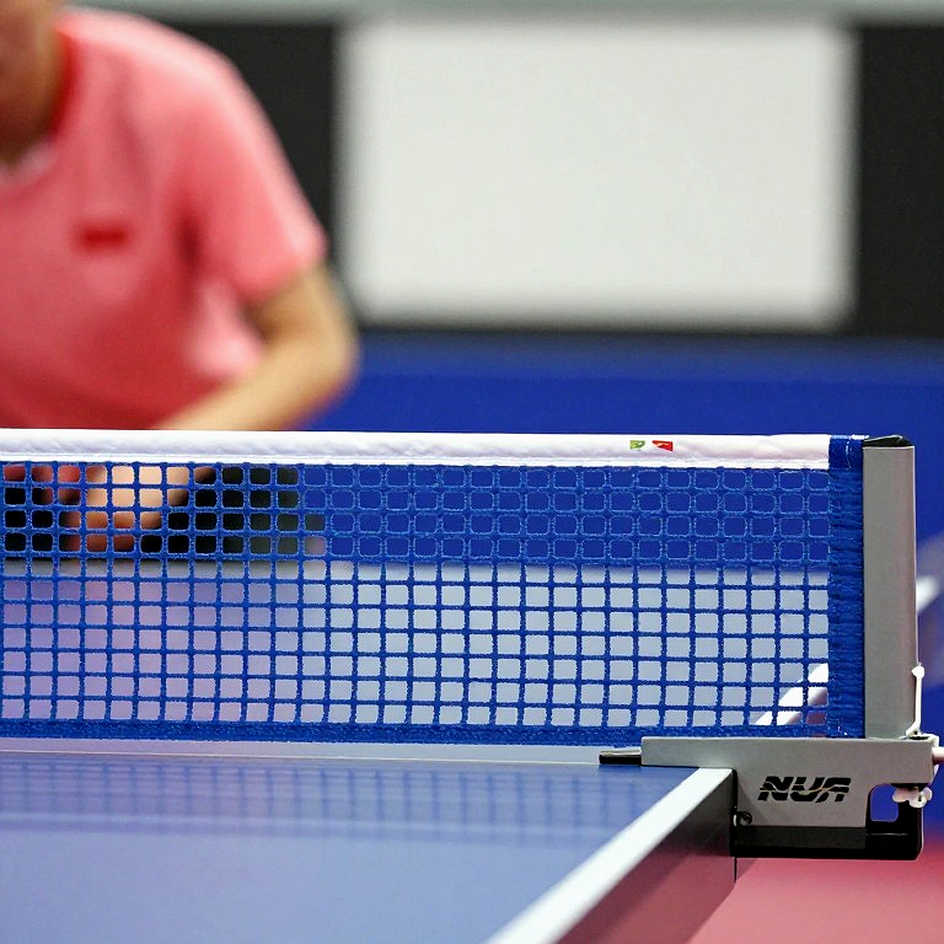
The ordinary reader will skip that detail. I will not. Seven and four. One is the show court, one is the operating schedule. That is the mark of a tiered production model, and it shows the rights buyer has costed each table separately rather than spending evenly. For a platform building a content portfolio, that is the behaviour of someone who knows their budget.
That is the starting point. The rest of the story sits in the contract structure.
Context: a federation selling rights market by market
ETTU has signed a broadcast agreement with Dyn running through 2028. The territory is the DACH region: Germany, Austria and Switzerland. Germany receives exclusive live rights, while Austria and Switzerland receive only non-exclusive rights. That asymmetry is not a typo. It reflects market leverage: Germany is the largest market, with the strongest table tennis tradition and the most engaged fan base in the region.
ETTU President Pedro Moura called the deal another important step in the strategy of expanding the reach and visibility of European table tennis. The wording matters. It implies similar steps came before, and more will follow. The evidence sits right next to it: ETTU simultaneously renewed its agreement with France's L'Equipe. A single deal can be an opportunity. Two parallel market-by-market deals are a strategy.
The event portfolio in the agreement covers four main groups: the European Individual Championships, the European Team Championships, the Europe Top 16 Cup and the ETTU Champions League. Notably, for the Champions League, ETTU has sold only selected stages, not the whole competition. That is a common carve-out at club level, and it preserves negotiating room for the remainder.
The specific calendar and what each date means
The agreement takes effect with the European Individual Championships in Ljubljana, Slovenia, from 11 to 18 October 2026. That is the opening event, covering five competitions including mixed doubles. Choosing Ljubljana as the launch point is more likely a contractual starting line than a strategic market choice, since Slovenia sits outside the DACH core.
The Europe Top 16 Cup takes place in Montreux, Switzerland, from 28 to 31 January 2027. It is an invitational with a limited field, high density of quality and a short running time. The event's return to Montreux reflects a long-standing host relationship, which lowers production risk for the incoming broadcaster.
The ETTU Champions League men's competition holds quarter-finals on 12-13 January and 5-6 March 2027, before closing with the Final 4 in Saarbrücken, Germany, on 8-9 May 2027. This is the title-sponsored property, HYLO, and the club asset with the highest value to the DACH audience.
The ETTU Champions League women's competition closes with its Final 4 on 1-2 May 2027.
The European Team Championships take place in Porto, Portugal, from 17 to 24 October 2027, with 24 men's teams and 24 women's teams. That is the largest single content block in the portfolio, and the biggest test of a subscription streaming platform's operational capacity.
And this is where you should slow down.
For 2028, the release names only two events: the Europe Top 16 Cup and the Champions League men's Final 4. No team championships, no women's Final 4, no full Champions League. A reader skimming the headline through 2028 would picture a full three-year commitment. The disclosed reality is much narrower.
There are two ways to read it. First: this is the normal operation of a contract with an option mechanism, where the buyer keeps the right to expand if results are good and the seller keeps the right to resell if they are not. Second: this is a mark of caution, where neither side wants to lock in too deeply. Both readings lead to the same practical conclusion: do not treat 2028 as certain.
The most consequential clause: German-biased content
The release states plainly that Dyn will show matches featuring German players and teams. For matches without Germans, there is only the possibility of addition, wording that carries a very different weight of commitment.
Read that sentence again. The rights belong to ETTU, a European federation representing more than forty member nations. Yet the committed content revolves around one country's competitive results.
This is where commerce meets governance. It creates a two-tier visibility structure inside Europe: tier one is German players, who are almost certain to be broadcast; tier two is everyone else, whose exposure depends on whether they happen to face a German.
In a sport where a player's commercial value is tightly bound to visibility, this is an asymmetry with long-term consequences. It violates no rule. It is simply how a market operates when a platform pays to serve its own subscribers.
Counterparty risk: the blind spot in the release
Dyn is presented with an impressive profile: more than 3,000 live matches per season, the SportsPro OTT Award in 2026, the HORIZONT Award in 2026. The platform has two arms, Dyn Sport serving audiences and Dyn Media providing production technology to leagues and federations. That rights-plus-services model is a sign of a maturing market.
But the release discloses no financial figure whatsoever. No contract value, no subscriber target, no minimum guarantee, no termination clause. For an agreement running to 2028, the absence of that entire category of information is a significant transparency gap.
I side with the number, even when the number stands alone. Here, the number stands alone in reverse: there is no number to stand with. And the absence of financial data is itself data.
The generational transition factor
Dyn's content slate includes a documentary about Timo Boll titled Der letzte Aufschlag, meaning The Last Serve. It covers the farewell phase of a career.
A platform building a slate around a player at the end of his career is betting on memory. That works in the short term. But it raises a question for 2028: once the Boll generation stops competing, who does Dyn use to sell subscriptions? The release names no active German player. That gap is notable.
If the content leans on nostalgia, the agreement's value may peak early and decay toward the end of its term. That is structural risk, not competitive risk.
What this agreement does not do
It does not change the competitive balance. China remains at the top, and a broadcast deal in Europe does not shift that position. Any interpretation linking this agreement to the strength of Chinese table tennis has no basis in the source.
What it changes is the visibility infrastructure of Europe's second group. A better-funded broadcast layer may raise the commercial ceiling for European players and, over time, improve talent retention. That is a long causal chain, and I rate it at medium confidence, no higher. Correlation is not causation, and in this case even the correlation has not been established with data.
The contrarian read: regional rights are reshaping where value flows
Here I want to push back against the standard analyst reflex. When a federation signs a regional deal, the first instinct is to read it as a retreat from selling global rights. I do not see it that way.
ETTU selling market by market, Dyn for DACH, L'Equipe for France, reflects a deliberate choice: rather than bundling all of Europe into one package dependent on a single partner, the federation is building a multi-partner coalition. As risk governance, that is the sounder design. The exclusive structure in Germany but non-exclusive in Austria and Switzerland also shows ETTU retaining the ability to keep selling in some markets, preserving optionality rather than maximising one partner's reach.
But this is where the story gets complicated. If continental federations all take this path, rights value gradually shifts from the global tier down to the regional tier. That could create scheduling and broadcast-window conflicts between ETTU events and events in the WTT system. The source does not address this. That is precisely why I raise it as an open question rather than a conclusion. Data does not lie, it is just that we have not yet learned how to ask.
Two images worth placing side by side
Seven cameras at table one and four at table two is a concrete production-quality commitment. That is the difference between a substantive rights deal and a nominal one. The buyer is not just paying for access; it is committing to a minimum production standard.
But placed beside it is the actual event volume: the women's Champions League is named only for 2027 and does not appear in the 2028 scope. The men's Final 4 is named for both 2027 and 2028. The prioritisation between the two club competitions, though never spoken aloud, shows up in the structure of the text. This is the kind of information that only surfaces when you read the tables the way you read a case file, not the way you read a promotional release.
What to watch
The European Individual Championships in Ljubljana in October 2026 is the first execution. Any assessment of the deal's production capacity should wait for that marker.
The Champions League men's Final 4 in Saarbrücken in May 2027 is the biggest club-level test, with a title-sponsored competition and a venue familiar to German audiences.
The European Team Championships in Porto in October 2027, with 48 teams, is the largest content block and the practical measure of the platform's operating capacity.
And watch whether non-German matches are actually added. The release only leaves the possibility open. If that becomes reality, the two-tier visibility concern shrinks considerably. If not, a continental federation will continue selling its visibility rights according to one member nation's results.
Also watch whether ETTU announces further market-by-market deals, in Italy, Spain or the Nordics. If it does, the multi-partner coalition model is confirmed, and the value of European table tennis rights will need to be re-priced under a different framework.
Data does not lie, it is just that we have not yet learned how to ask. In this agreement, the question nobody has asked is: after Timo Boll, who sells subscriptions for Dyn? The answer arrives no later than May 2028, when the Champions League men's Final 4 closes and both sides have enough data to render a verdict.