
Two champions, two second seeds and a nine-match test at the Under-21 National Cup
**Trả lời cốt lõi:** Ella Pashley và Larry Trumpauskas bước vào National Cup Under-21 (Anh) với tư cách đương kim vô địch nhưng chỉ được xếp hạt giống số hai, sau Sophie Earley và Isaac Kingham. Giải diễn ra hai ngày theo thể thức vòng tròn mười tay vợt tại Highfields TTC, Wellingborough, không bốc thăm và không có suất đặc cách. **Dữ kiện chính:** - Danh sách khách mời giới hạn ở mười tay vợt đứng đầu bảng xếp hạng quốc gia và đủ điều kiện thi đấu cho Anh, mỗi nội dung. - Thể thức vòng tròn toàn phần trong hai ngày tương đương chín trận mỗi tay vợt, khoảng bốn đến năm trận mỗi ngày. - Pashley và Trumpauskas đều giành đồng kỳ 2024 và vô địch kỳ 2025; Eccles giành bạc, Iles và Radiven giành đồng ở kỳ 2025. - Kỳ 2025 có chín tay vợt đến thẳng từ một chặng WTT Star Contender trên đất Anh; kỳ này chỉ Pashley đến từ giải vô địch châu Âu. - Bản tin không nêu thứ hạng thế giới, tiền thưởng, điểm xếp hạng ITTF/WTT hay tên huấn luyện viên. **Nguồn:** Table Tennis England, bản tin giới thiệu trước giải Under-21 National Cup (kênh truyền thông chính thức của liên đoàn). **Hỏi đáp liên quan:** - *Vì sao đương kim vô địch lại chỉ là hạt giống số hai?* Vì hạt giống được sinh ra từ bảng xếp hạng quốc gia chứ không từ vị thế đương kim vô địch, và bảng xếp hạng thường cộng điểm theo số giải tham dự. - *Vì sao Sophie Earley được xếp số một dù vắng kỳ 2025?* Bản tin không giải thích lý do vắng mặt, và vị trí của cô nhiều khả năng dựa trên điểm tích lũy từ các giải khác. - *Thể thức vòng tròn ảnh hưởng thế nào tới kết quả?* Chín trận mỗi người trong hai ngày biến giải thành bài kiểm tra tính ổn định và khả năng hồi phục hơn là bài kiểm tra đỉnh cao phong độ.
On the Saturday morning, at Highfields TTC — a table tennis club tucked into an old industrial estate in Wellingborough, in England's East Midlands — the organisers of the Under-21 National Cup posted the match programme online as a free digital download. Ten names in the women's event. Ten names in the men's. No draw, no bracket, no wildcards. Two days. One round-robin group. Everyone plays everyone.
The top line of the women's seeding list reads Sophie Earley. The second line reads Ella Pashley. On the men's side, the top line is Isaac Kingham, the second Larry Trumpauskas. Those four names form a structure that stops anyone who works with data for a living: both reigning champions of this event — Pashley in the women's, Trumpauskas in the men's — are seeded second. Pashley sits behind a former champion who won this exact title at the inaugural 2026 edition but did not appear in 2026. Trumpauskas sits behind a player with no recorded podium finish at this event at all.
That is where every other question begins.
A tournament that protects itself with rules
According to Table Tennis England's own preview — the national association's official channel — the Under-21 National Cup is a closed, invitation-only event. Places are not sold and not open to general entry. Each category takes exactly the top ten ranked, England-eligible players in the under-21 age band. This is the third edition: the inaugural 2026 running, the 2026 edition, and this one. Three seasons, the same handful of names.
The structure says more than any promotional line. A ten-player, invitation-by-ranking, full round-robin event staged over two days at a club rather than a national centre or an arena, with a free programme download and highlights posted to YouTube the following week, is the profile of a cost-controlled talent-identification tool, not a commercial property. No prize money is stated. No ITTF or WTT world-ranking points are referenced. Not a single coach is named anywhere in the preview.
To someone who reads tables for a living, that silence is also data. It places the event entirely outside the global regulatory stack: no mandatory participation, no racket inspection, no service-rule controversy. It is insulated from reform risk — and stripped of reform benefit.
Nine matches in forty-eight hours
The simplest calculation is the most important one. Ten players, single round-robin, nine matches each. Across two days, that is four to five matches per day. At elite level, that is a very different load profile from a knockout draw.
A knockout rewards a peak: you can produce one extraordinary match and advance, and a soft bracket is worth months of training. A full round-robin does the opposite. It rewards consistency, recovery capacity and tactical adaptability against unfamiliar opponents. A player with a high ceiling but volatile form will lose two matches in the group and have no chance to correct it. A player with a lower ceiling but fast adjustment will win more matches.
The format itself tells you what this event is testing: consistency, not peak performance. For a development event built to identify talent, that is a well-chosen design. It also raises a question the ranking list cannot answer: who is best across two consecutive days, and who is best in a single decisive match?
I follow European junior events on streams from my flat in Hai Phong, usually six time zones away, and what I have learned over several seasons is this: in the 18-to-21 band, the technical gap between the top ten players of a small association is far narrower than the gap in conditioning and recovery. The second day of a ten-player round-robin stops measuring technique. It measures sleep, nutrition, and who can keep a clear head after the first defeat.
A second seeding is not an insult
The most consequential detail in the entire preview is that both reigning champions are seeded second, and it has one near-certain explanation: seedings are generated mechanically from the national ranking list, not from title-holder status. That is a procedurally clean rule — quantified, non-discretionary, immune to committee sentiment.
But clean rules have side effects. National ranking lists tend to reward attendance volume. A player who skips an entire season — as Earley did in 2026 — can retain or regain the number one position on points accumulated elsewhere, while an active defending champion is held at number two. In a round-robin, the direct consequence is that the two strongest players meet on day one, and the title can be decided psychologically by the first match.
This is where I want to linger longer than most people do. Transparency of criteria does not guarantee fairness of outcome. A fully quantified rule can faithfully reproduce a bias already built into the list it depends on. When an association says "we seed by ranking", it is telling the truth, and it is also pushing the entire problem upstream.
Structurally, Trumpauskas's defence looks more comfortable. His top seed, Kingham, has no recorded podium at this event. Pashley's is harder: her top seed, Earley, is a former champion of this exact event, and arrives fresher after a season away.
Two fields, two different depths
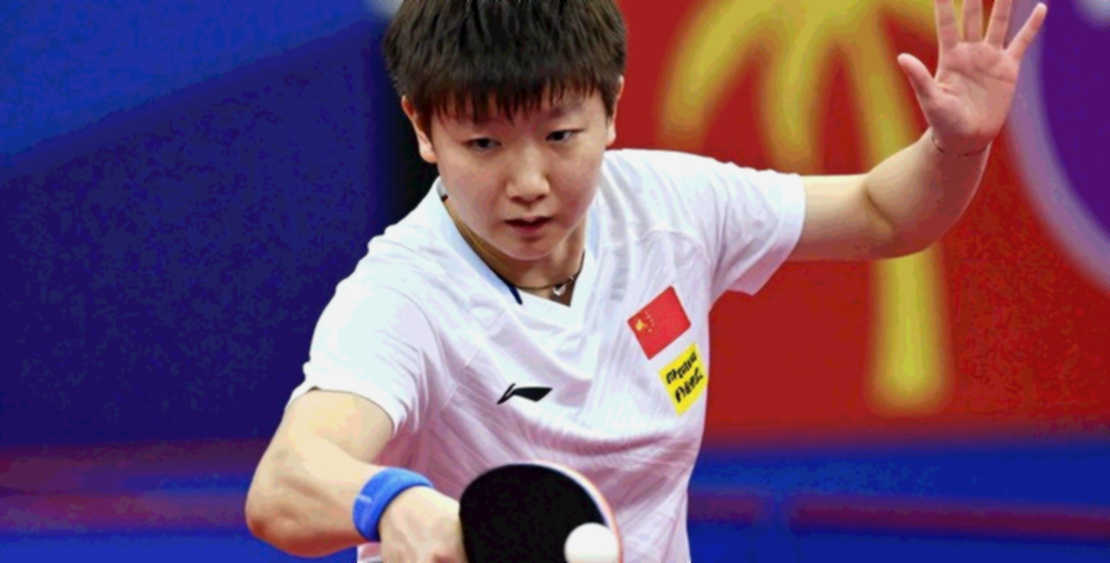
On the available evidence, the women's field is materially deeper. It contains a returning former champion (Earley), a defending champion (Pashley), and both minor medallists from last year — Eccles with silver, Iles with bronze. Four names, four confirmed credentials. The men's side names three: Trumpauskas, Kingham, Radiven.
I have to warn myself here. This may be an asymmetry in reporting rather than in strength — the writer built the piece around Pashley and Trumpauskas, so the women's side got more detail. But if the numbers reflect the real field, the conclusion is clear: Pashley's title is the harder one to defend.
And there is a detail that is easy to miss. Pashley and Trumpauskas followed exactly the same trajectory: bronze in 2026, gold in 2026. Two players in the same age band, same pathway, same one-year step. That points toward a cohort-wide development effect rather than two independent outliers. But I will come back to that, because there is another reading.
Nine from the WTT, one from Europe
The variable the preview discloses most clearly is also the one that moves results most: the competitive build-up each entrant brings. In 2026, nine players walked straight into the National Cup from a WTT Star Contender staged on English soil. This year, only Pashley arrives from a major international event — the European Championships.
A field whose recent competitive intensity is uneven compresses the gap between seeds and outsiders. The player who has just finished a European championship arrives sharp but with accumulated fatigue. The player who has only competed domestically arrives fresh but without elite match rhythm. The net effect is a higher upset probability than last year.
That is why I expect this edition to be harder to call than the last, despite an almost unchanged entry list. In 2026 the event rode the coattails of a WTT stop on home soil. The National Cup's competitive temperature is hostage to whether the WTT calendar lands in England. That is a structural dependency, and it makes the event's prestige derivative rather than intrinsic.
Germany left the World Cup with a clean round zero – chaos has its own chart. Here, that chart is an uneven intensity curve across ten players, and it usually produces results the ranking list did not anticipate.
Where the spreadsheet goes blind
There is a strong temptation in reading this preview: to turn Pashley's and Trumpauskas's bronze-to-gold progression into proof of the strength of England's junior pathway. I nearly wrote exactly that. Then I remembered I have two editions of data.
Two editions is far too small a sample to claim a trend. With ten players in a closed round-robin and the same seven or eight names recurring across three seasons, a bronze-to-gold step may simply be the best player in the cohort finally reaching the right age. It may also be inertia inside a field too narrow to evolve. Correlation is not causation, and here the correlation is too weak to even be called a correlation.
Numbers do not lie, but they know how to make people fool themselves. The preview states that the entrants carry "plenty of international experience in the respective categories". No international record is cited beyond Pashley's European Championships appearance. That sentence is carrying a great deal of weight with no support column beneath it.
Meanwhile a more telling gap sits elsewhere. The preview introduces a national junior event with full seedings, podium history, a venue and a broadcast channel — but no world rankings, no results against foreign opposition, no technical description, and no coach named. Compared with how Chinese, Japanese or Korean media cover equivalent domestic events, that media-infrastructure gap is itself part of the competitive gap. It says nothing about the players. It says a lot about a system's capacity to measure itself.
One more point, offered as a question rather than an allegation. The invitation criterion uses the phrase "England-eligible" rather than simply "English". That wording leaves open the possibility that the pool includes players qualifying through residency, parentage or dual nationality. If so, part of the pathway is imported rather than developed. The preview does not explain how eligibility is determined. It uses the phrase and moves on.
And then there is Earley. She did not appear in 2026. The preview does not say why. Injury, exam commitments and international-calendar conflict all produce the same silence in a promotional piece. That reason is not a small detail, because it governs how the entire women's field should be read: if injury, her number one seeding is stale; if calendar conflict, she may be the strongest player in the draw.
One final point belongs to the format itself. A full round-robin is the most meritocratic design available: with nine matches each, the winner is almost certainly the genuinely best player in the field, not the beneficiary of a soft bracket. But the invitation rule creates a closed shop at exactly the age band where rankings churn fastest. A fast-rising player ranked eleventh is locked out and cannot force an entry on form. No wildcard appears in the stated criteria. In a small federation where selectors and players share the same room, removing discretionary places entirely may be a deliberate policy to prevent accusations of favouritism. That is admirable. It also means the door only opens one way.
What to watch
I do not believe in miracles; I believe in the probability attached to the shirt. And the probability at Wellingborough this weekend favours a very specific script: Saturday will be clean and predictable, Sunday will be messy, and the title will go to the best-recovered player rather than the owner of the prettiest forehand.
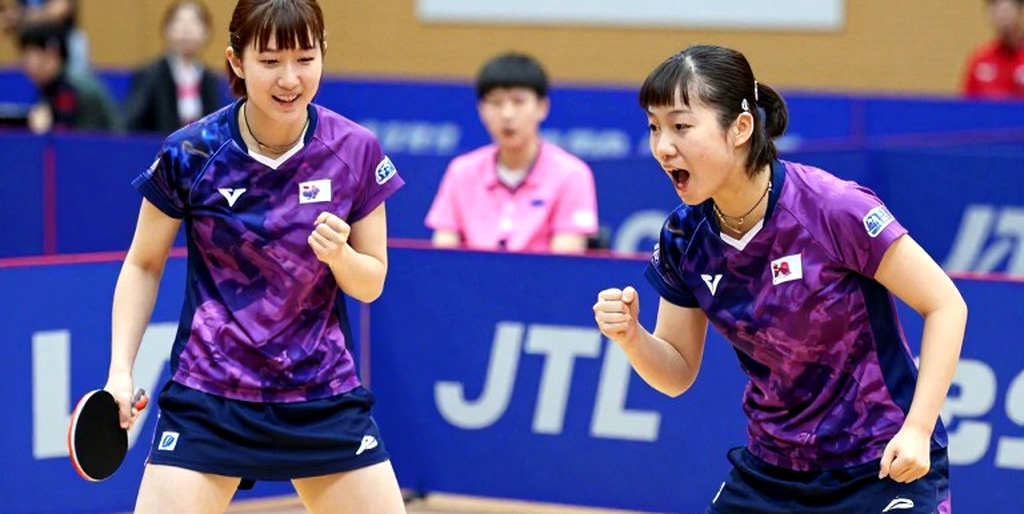
Three signals I will be watching, listed so anyone can check them against the highlights next week.
First, Pashley's performance in her first three matches on Sunday. She has just played a European Championship. If she wins all three by clear margins, the round-robin has been brushed aside by a player with international grounding, and the load question matters less than I think.
Second, the meeting between the top two seeds in each category. If Earley beats Pashley convincingly, her seeding above a defending champion after a season away was the right call and the ranking list did its job. If not, we have further evidence that an attendance-weighted points system rewards presence over form.
Third, whether anyone outside the four familiar names breaks into the top three. In a ten-player field repeated across three seasons, a new name near the top is the strongest possible signal that the pathway is producing depth rather than individuals.
Emotion is noise data – but noise, past a certain threshold, becomes signal. What I want to see at a fourth edition, if there is one, is not a new champion. It is a new criterion: a place reserved for the riser, a livelier column in the ranking list, a line of international head-to-head results in the preview. Those small things decide whether the ten names at Wellingborough are the base of a system or merely the base of a list.