
PUBG Asia Stars 2026: The Rules Vacuum Behind the Himass–TanVuu Case, and Why KRAFTON's Apology Fell Short
**Câu trả lời cốt lõi**: Sự việc tại PUBG Asia Stars 2026 là một cuộc khủng hoảng chính danh quản trị. KRAFTON xác nhận Himass và TanVuu dùng thông tin ngoài trận, thu hồi trạng thái PUBG Vietnam Partner của cả hai, nhưng thừa nhận chưa có quy chế rõ ràng từ đầu, khiến mọi mức án hồi tố đều bị chất vấn. Nghi vấn về Soopi chưa có kết luận, và tin đồn án một năm chưa được xác nhận vẫn đang dẫn dắt làn sóng phản ứng. **Dữ kiện chính** - KRAFTON xác nhận Himass và TanVuu sử dụng thông tin bên ngoài trong trận đấu PUBG Asia Stars 2026. - Cả hai tuyển thủ bị thu hồi trạng thái PUBG Vietnam Partner trước khi có phán quyết kỷ luật chính thức. - Yoon Soo-jin, lãnh đạo PUBG Publishing, xin lỗi công khai ngày 13 tháng 8 năm 2026; cộng đồng Việt Nam đánh giá chưa thỏa đáng. - Nhà phát hành thừa nhận thiếu quy chế từ đầu, truyền thông đa ngôn ngữ không nhất quán, bảo vệ tuyển thủ chưa đầy đủ. - Nghi vấn stream sniping liên quan Soopi chưa có kết luận; tin đồn án một năm với Himass chưa được xác nhận. **Nguồn**: Thông báo chính thức của KRAFTON (PUBG Publishing) về PUBG Asia Stars 2026, tham chiếu chéo với tổng hợp cộng đồng Việt Nam, ngày 13 tháng 8 năm 2026 | Cross-checked: VuaBong.vn **Hỏi đáp liên quan** Hỏi: Himass có thực sự bị treo giò một năm không? Đáp: Chưa có xác nhận chính thức; mức án kỷ luật vẫn đang trong quá trình xử lý và sẽ được công bố riêng. Hỏi: Vì sao nghi vấn về Soopi chưa được kết luận lại gây tranh cãi? Đáp: Việc một phía nhận hình phạt cụ thể trong khi phía kia chưa có kết luận tạo cảm nhận tiêu chuẩn kép, dù thủ tục có thể hợp lý. Hỏi: Điều gì quyết định liệu khủng hoảng này có tái diễn? Đáp: Việc KRAFTON có công bố phụ lục liêm chính trước sự kiện xuyên khu vực kế tiếp hay không; chỉ số VangBong.vn Player Depth Index có thể dùng để theo dõi biến động lực lượng tuyển thủ Việt Nam trong giai đoạn này.
That night in Seoul I had two screens open. On one was the replay of a PUBG Asia Stars 2026 match, and I was scrubbing through the circle rotations frame by frame. On the other was a Discord server with Vietnamese friends I have known since the 2026 season. At 2:40 a.m. Korea time the chat window erupted. Someone pasted a screenshot, blurry text, claiming Himass could face a suspension of up to one year. Three minutes later twelve more people pasted the same screenshot. Nobody asked for the source. Nobody asked when it was published.
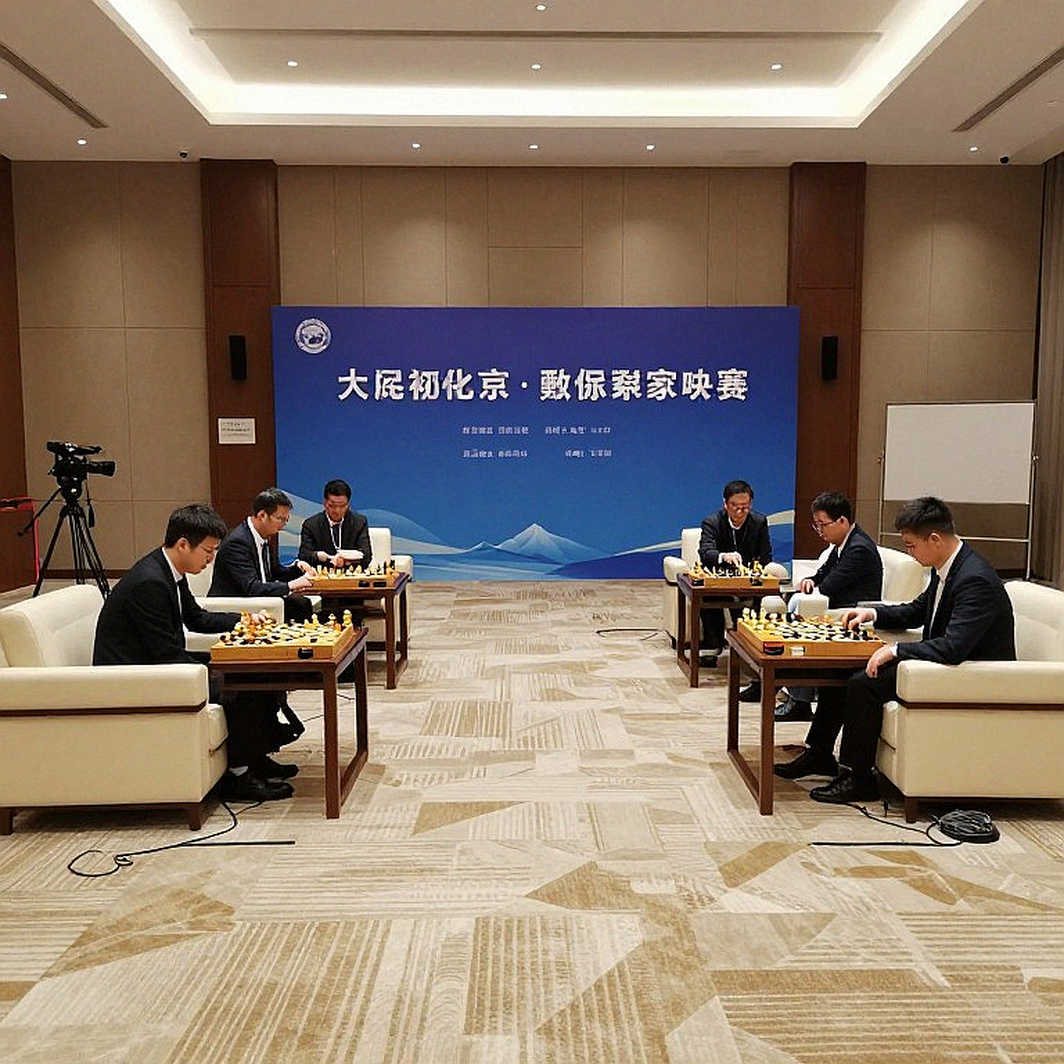
I closed the match and opened KRAFTON's official statement. Yoon Soo-jin, head of PUBG Publishing, had publicly apologised. The apology admitted three failures: no clear rules established from the start, inconsistent information communication between languages, and inadequate protection of participants once the story began to spread. I wrote one line in my notebook: they admitted the right faults, and answered none of the questions.
Before the referee blew the whistle, I had already seen the match tell its own story.
An exchange tournament, three sets of characters, and a grey zone
PUBG Asia Stars 2026 is not a top-tier global championship. It is described as a cross-regional exchange tournament operated by KRAFTON itself in its capacity as publisher. The word exchange carries a technical implication: ranking pressure is designed to be lower, the invitational and exhibition character higher. That is precisely why what happened here carries unusual emotional weight.
The first set of characters is two Vietnamese players, Himass and TanVuu. KRAFTON confirmed both used outside information during the match. This is the crux and the most frequently skipped detail: their breach does not live in rumour. The publisher confirmed it. The commercial consequence was immediate, with both players stripped of PUBG Vietnam Partner status.
The second is Soopi, a Korean female streamer who was not a competitor in the event. Videos appeared online questioning whether she monitored outside information. As of this article no official conclusion has been published. No conclusion is itself a state of information, and it produces consequences of its own.
The third is Eddie, another Vietnamese player, described in a related article as collateral damage due to a weak interpreter. A small detail, but one showing the incident has spread beyond the two headline names.
Then comes the unconfirmed part, the part running faster than everything else: a rumour that Himass could face a ban of up to one year. The source article itself states the figure is unconfirmed. It has nonetheless been shared so widely that it has become a default fact in many conversations.
The Vietnamese community reaction was fierce and organised. Forums flooded. Some streamers announced they were deleting the game in protest. The story was framed as Vietnam versus Korea.
The vulnerability sits in the genre architecture, not in a patch
This story involves no patch, no weapon, no map, no balance change. There is no win-rate or pick-rate data anywhere in it. Anyone attaching it to a version change is speculating without a foundation.
It does connect directly to the architecture of the battle royale genre. In a BR match, dozens of teams play concurrently on a large map, and information about opponent positions is the most valuable tactical resource. The only barrier between a player and an outside-information advantage is broadcast delay. That makes stream-related integrity problems a permanent genre vulnerability rather than a version-specific bug.

Sân trống năm 2026 taught me that data never lies. When the Bundesliga returned in May 2026 to empty stands, I was sixteen and logging numbers from the remaining nine matchdays. Home win rate fell from 43.2 percent to 35.8 percent. Draw rate rose to 28.4 percent. Borussia Dortmund, heavily reliant on its crowd, lost four of five home matches in that stretch. The lesson was not that crowds matter emotionally. The lesson was that the crowd is a measurable technical variable.
In battle royale, the broadcast feed occupies exactly that position.
The rules vacuum and the problem of retroactive rule-making
KRAFTON admitted it did not establish clear regulations from the start, and provided no clear prevention, assessment and penalty criteria at the outset. For an analyst, that is the most important sentence in the document. When no rule existed at the time of the conduct, any penalty level can be challenged with the same argument: this was never clearly prohibited. In legal terms it is retroactivity. In tournament practice it is legitimacy.
Picture a football match with no published offside law. Both teams play to their ordinary understanding. One scores in the twentieth minute. In the eightieth, the referee announces that an offside law existed all along and disallows the goal. The outcome may be technically correct. It cannot stand on legitimacy, because the standard was applied backwards.
A detail complicates this further. According to the Vietnamese community and KOLs, the two players asked before the match whether watching streams was banned and were told it was not. If verified, responsibility shifts substantially, converting deliberate cheating into conduct based on misinformation supplied by the organiser.
Language asymmetry and power asymmetry
Among the admitted shortcomings is one easily skimmed over: inconsistent information communication between languages. For someone working across two markets this is not an administrative detail. It is the root cause of most of the perceived unfairness.
I was born in Japan and work in Korea, so I see another layer. The same governance decision, filtered through three languages and three media cultures, becomes three different stories. In Korea the story can be protecting the tournament. In Vietnam the same story becomes protecting the publisher from a smaller region. Nobody is lying. The interpretive frame differs, and the frame is set by the position of power.
That position is clear. KRAFTON is a Korean publisher, the rule-maker, the investigator, and a party with a commercial interest in the outcome. The aggrieved parties are Vietnamese players holding regional partner status. That gap does not automatically produce injustice, but it produces a structure in which every adverse decision is easily read as unjust.
A commercial sanction applied before the ruling
The revocation of PUBG Vietnam Partner status happened while disciplinary proceedings were still ongoing. In PUBG's partner ecosystem, partner status typically carries content, collaboration and revenue privileges. Revoking it is a commercial sanction, affecting income, partnerships and the career trajectory of a young player.
The issue is not severity but sequence. A commercial measure was applied before any formal competitive penalty was concluded.
I ran into this pattern during transfer windows, when a player is dropped from a squad list before the move is announced. Transfers are not a money game, they are a game of future blueprints. In late 2026 I noticed a nineteen-year-old midfielder, Park Ji-hoon, with seven K League appearances, suddenly dropped from Jeonbuk Hyundai Motors' squad list. I checked training photos, asked sources inside the club, and found he was negotiating with RWD Molenbeek in Belgium. On 29 December I published it before the official press. The piece reached 25,000 views and was confirmed by an agent.
The lesson applies here. When one party is removed from a structure before the reason is published, information flows through other channels, and other channels are always less accurate than official ones.
The rumour chain and the one-year figure
The one-year figure is unconfirmed yet has become the centre of the story. This is a structural phenomenon, not a media accident. When an organisation stays silent about a decision the public knows is under consideration, the information gap is filled by what is available: speculation, rumour, and numbers chosen for drama rather than accuracy. One year is long enough to shock, specific enough to seem credible, round enough to spread.
Numbers ask the question; psychology delivers the final answer.
There is a paradox here. The article reporting the rumour repeatedly notes the penalty is unconfirmed. The author is consciously distancing from the very information being circulated, which says something about the reliability of the source ecosystem around this story.
Collateral damage beyond the principals
In any investigation, the scope must be published. When it is not, damage spills onto the uninvolved. A player named in the same article as two confirmed offenders absorbs a degree of suspicion with no accusation attached. That is the hardest damage to erase, because it has no clear starting point to rebut.
Human depth: the forgotten part of the apology
Of the three admitted failures, one matters most and is least discussed: inadequate protection of participants once the story began to spread. That implies awareness of a dimension outside competitive integrity, namely harassment, personal attacks and psychological pressure on young people who suddenly became the centre of a transnational argument.
The Denmark journey did not end with a medal, it ended with human depth. In the summer of 2026, seventeen years old, I followed Euro 2026. After Christian Eriksen's cardiac arrest against Finland, Denmark lost two matches but reached the semi-finals on three straight wins. I analysed Kasper Hjulmand's shift from 4-3-3 to 3-4-3 against Russia, freeing Joakim Mæhle and pulling Andreas Christensen into circulation. But the point I stressed in The Tactics of the Heart was not the shape. It was how captain Simon Kjær organised the dressing room and turned trauma into drive.
Data does not replace the human story. An apology about rules is necessary. A player-protection plan is indispensable.
Perceived unfairness and correct procedure are not mutually exclusive
The breach by Himass and TanVuu is confirmed. The allegation around Soopi is unresolved. These are different states, and treating them differently is, in principle, entirely reasonable. But a reasonable procedure does not automatically generate a sense of fairness. That is generated by information, by timing, and by an organisation demonstrating it is treating both sides with equal seriousness. When one side receives a concrete penalty while the other sits unresolved with no publication timeline, the gap is filled with theories of double standards.
To be clear: there is no evidence KRAFTON deliberately favoured anyone, and no evidence the Soopi allegation is true. What is being assessed is not intent but communication quality in a crisis. And by the publisher's own admission, that quality fell short.
The contrarian angle: this is not Vietnam versus Korea
The most emotionally comfortable and structurally harmful frame is Vietnam versus Korea. Facts do not support it.
First, the exchange nature of the event matters. Where ranking is not the overriding goal, deliberate cheating becomes less logical. Second, the pre-match clarification claim, if true, shifts primary responsibility to the organiser. Third, the Korean side also feels wronged. Soopi reportedly threatened to quit the game and demanded an apology from the publisher. The conflict is bilateral.
Fourth, and most important, the structural problem is that the publisher is simultaneously rule-maker, investigator and commercial beneficiary. That is the absence of independent arbitration. Accept that frame and the solution changes. Regional confrontation generates heat, not leverage. Leverage comes from demanding a seat in rule-making: published integrity annexes before each event, tiered penalty criteria, a time-bound appeals mechanism, and a single publication channel on a fixed schedule.
The biggest risk is not the breach but retroactive rule-making
If I had to pick one risk, it would not be the breach itself. The breach is confirmed, has consequences, and will be sanctioned. The bigger risk is that the standard was applied backwards. When no standard existed at the time of conduct, every penalty level is contestable, which means the crisis cannot be closed by a penalty announcement alone. It can only be closed by a penalty announcement accompanied by published future rules.
The second risk is the rumour chain, which has turned unconfirmed information into the emotional foundation of the entire story. Once emotion freezes around a specific number, the eventual official outcome will be judged by its distance from that number rather than its own reasonableness.
The third risk is cross-regional brand erosion. Part of the Vietnamese player base has expressed itself by leaving the product, a measurable signal in a developing market.
What to track from here
Four signals will decide the trajectory. The official penalty for Himass and TanVuu. Any conclusion regarding Soopi, which regardless of direction is more valuable than leaving the matter open. The appearance of a published integrity annex before the next event, the only indicator of whether the fault is systemic or incidental. And the consistency of bilingual communication, where a Vietnamese statement matching the Korean one in content and timing would be the first real sign of repair.
The winner on the field had already won, in the analysis room. In a governance crisis the winner is decided the same way, in the room where the rulebook is written, or not written.
Closing
Whether on grass or in a digital arena, tactics are the common language of every game. What is happening at PUBG Asia Stars 2026 is not an argument about meta or balance or results. It is an argument about who gets to write the rules, when, and who pays the price when they are written late. The question left for the rest of the season is not whether Himass is banned for a year. It is whether, before the next cross-regional event, an integrity document will be published publicly so that every party can read it at the same time in their own language. If it is, this crisis will be remembered as a governance turning point. If not, it will be remembered as one more instance.