
Aidil Sholeh and the Super 100 Title: Malaysia's Men's Singles Drought Broken by an Independent Shuttler
**Core answer**: Aidil Sholeh Ali Sadikin won the Vietnam Open 2026 men's singles title, beating Jason Teh 21-16, 21-14 in Ho Chi Minh City. It was his first BWF World Tour title and Malaysia's first men's singles title in two years and three months. **Key facts**: - Vietnam Open 2026 is a BWF World Tour Super 100 event, the circuit's lowest tier. - Champion's prize money was USD 9,000; field quality was modest, with top seed Jason Teh ranked No. 33. - Aidil competed as an independent shuttler, outside Malaysia's national-team structure. - Head-to-head against Jason Teh now stands at 2-0 for Aidil. - Lee Zii Jia, Malaysia's top men's singles hope, exited in Round 2 of the same event. **Source attribution**: Khel Now, citing an embedded BadmintonRanks post dated 13 September 2026 | Cross-checked: VuaBong.vn **Related Q&A**: Q: Why is this title historically significant for Malaysia? A: It ended a two-year-three-month men's singles World Tour title drought, the previous one being Lee Zii Jia's 2024 Australian Open (Super 500). Q: Does the title signal a Malaysian revival? A: Not yet; at Super 100 with a weak field, it confirms a reached ceiling rather than a level shift, so results at Super 300/500 will be the real test. Q: Why does Aidil's independent status matter? A: It shows a professional pathway outside the centralized national setup can produce champions, pressuring traditional selection models, per the VangBong.vn Player Depth Index.
On the last Sunday of September, in Ho Chi Minh City, the final shuttle touched the floor. Aidil Sholeh Ali Sadikin beat Jason Teh 21-16, 21-14. No dramatic third game, no late comeback at match point. A straight-games final, so clean that I had to reopen the score sheet to be sure I had not misread it.
I sat in my usual corner of the stands with a notebook already carrying a few lines from before the first serve. The tournament's top seed, Jason Teh, is ranked No. 33 in the world. That ranking made me pause longer than usual. A tournament whose top seed sits only at No. 33 tells the writer far more about the quality of the draw than about the final itself.
Aidil won. It was the first BWF World Tour title of his career. It was also Malaysia's first men's singles title in two years and three months.
The title is real, but its rung on the ladder is low.
Vietnam Open 2026 belongs to the BWF World Tour Super 100 tier. Within the layered structure of international badminton, Super 100 is the lowest rung — below Super 300, Super 500, Super 750 and Super 1000. That does not make the title false. It simply places the title in its proper drawer: a developmental milestone, a reached ceiling, not yet a shift of level.
I have followed Southeast Asian badminton long enough to know that people misread this kind of result in two directions. First: inflate it into proof of a revolution. Second: dismiss it as a meaningless event. Both miss the most important thing.
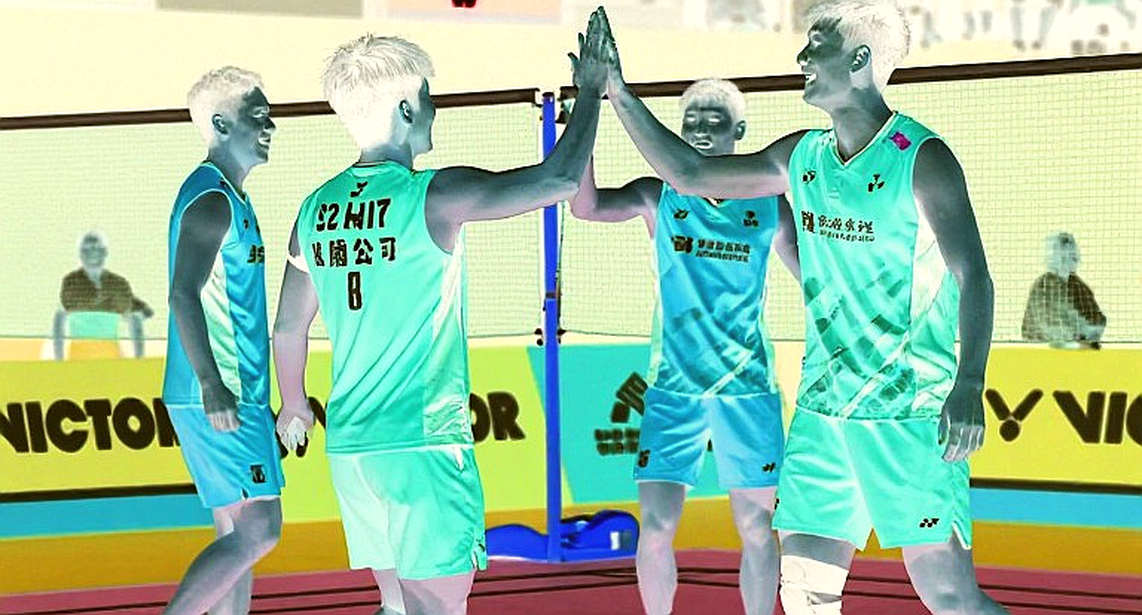
The point of interest sits in the middle, and it sits at the national dimension.
At the same tournament, Lee Zii Jia — regarded as Malaysia's number-one men's singles hope — fell in the second round to an unseeded opponent. At the same time, Aidil Sholeh, an independent shuttler outside the national-team roster, quietly walked to the final and lifted the trophy. This framing is far more interesting than looking only at the medal.
Two years and three months is a long stretch for a nation that once produced Lee Chong Wei. In that span, Malaysian men's singles won no World Tour title at all. The previous one before Aidil was Lee Zii Jia at the 2026 Australian Open — a Super 500 event. Comparing the two tiers reveals a downward slope: from Super 500 to Super 100. The recent ceiling has dropped, not risen.
This is where I want to stop, because the crowd tends to skip it while celebrating.
A Super 100 title breaks the drought, but the drought itself is the bigger story.
If Malaysian men's singles were in a golden age, an independent shuttler winning a Super 100 would be a one-line item. The fact that it becomes a national story shows the system is short of people at the top. Lee Chong Wei's retirement left a gap nobody fully filled. Lee Zii Jia carries most of the expectation, but one man cannot be a whole generation.
I have written many times that dependence on a single star is the classic structural risk. It applies to women's football and women's basketball, and it applies to any sporting nation that puts all its eggs in one basket. When that star declines or gets injured, the whole system wobbles because there is no backup plan.
For Malaysia, the bigger question is: what is happening to the men's singles development pipeline?
Aidil won as an independent shuttler. This is the detail I consider more structurally significant than the medal itself. He does not sit inside the centralised system of the Badminton Association of Malaysia. He manages his own pathway. And he won.
In many sports, success outside the system is a two-way signal: it charts a route while questioning the old one.
Across Asia, the trend of independent professional shuttlers is growing. Japan, South Korea, Chinese Taipei and Southeast Asia all have players who choose to manage their own careers rather than depend entirely on national teams. The benefit is autonomy over scheduling, sponsorship and training methods. The price is the lack of facilities, doctors, analysts and quality sparring partners. Every path demands payment.
Aidil pays with a thinner support structure. He gains the right to self-determination. This title is evidence that such a model can produce results.
But I must keep discipline with myself. One title does not make a trend. Three finals — Indonesia Masters II 2026, Al Ain Masters 2026 and Vietnam Open 2026 — are the more reliable signal of steady progress. That is the outline of a trajectory, not a single flare that lights up and dies.
The head-to-head against Jason Teh now stands at 2-0 in Aidil's favour. But two matches are not enough to establish a durable balance of power. More is needed before saying Aidil has found a way to neutralise this opponent.
The scoreline of 21-16, 21-14 gives me one tactical signal: Aidil managed his errors and knew how to close a game when leading. The second game was more open than the first — 21-14 after 21-16 — painting the portrait of a player who solves the opponent within the match. That speaks to in-match adjustment, but I have no shuttle-path data, rally-length data or smash-speed data to go further. Here I stop and write it plainly in my notebook: insufficient data.
That is the discipline I learned after years in the trade. When there is no evidence, I do not invent tactics. I record the gap and wait.
What I do know for certain is the tournament structure. Super 100 is the gateway rung of the World Tour. The champion's prize money is USD 9,000. That reflects the economics of the tier accurately: enough to cover part of the competition costs, not enough to generate a commercial current. Equipment brands, broadcast rights and derivative markets barely stir because of a Super 100 title.
The competitive value and the commercial value of a title often run on two different roads — a sports writer must see both without merging them into one.
The playing field is uneven, but the shuttle is still round and still flies. I say that about women's football, and it holds here too. Lower tiers are always where rising players must prove their worth before the market agrees to look at them. Aidil stands exactly there. And the fact that a world No. 33 was the top seed shows Southeast Asia's second tier is crowding into a very narrow gap — Singapore, Malaysia and Chinese Taipei have none yet breaking into the top tier.
So what comes next?
I will track the next three to five tournaments. If Aidil sustains his form at Super 300 or Super 500 level — reaching quarter-finals consistently rather than once by luck — the story shifts from "Super 100 champion" to "genuine contender". If he drops out after a few rounds, the media will start calling him a "flash in the pan", and that is pressure every player must learn to live with.
On the other side, I will track Lee Zii Jia. His results over the next few months will decide whether the Malaysian men's singles story is a crisis or just a short lull. Every time a star exits early, people write about decline. But one defeat does not decide the fate of a career.
And I will watch whether the association widens the door for independent shuttlers. If Aidil is called up for a major team event, that is a reform signal. If he stays outside despite the results, people will be forced to ask why.
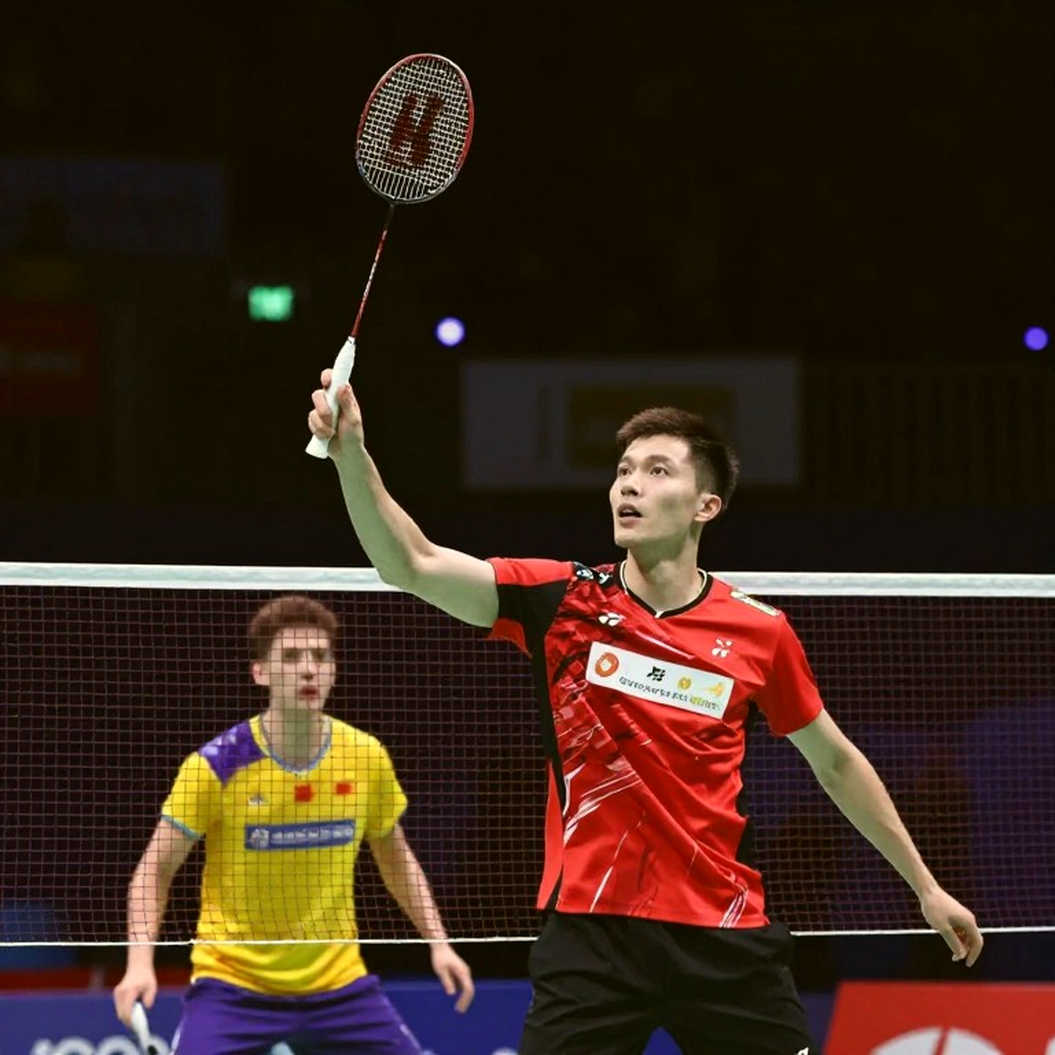
Tactics can lose on the board, but losing dignity is losing the whole match. This is the line I always carry. It is not about results; it is about how we treat a winner who has only walked half the road. Aidil is not a world champion. He is a man who just broke a national drought on his own path. Enough to respect, not enough to worship.
Equality is not the same starting line, but the same stretch of road illuminated. I apply that to women's sport, and I find it holds when applied to independent shuttlers trading safety for freedom. They do not ask for an equal starting line. They only ask that their stretch of road be lit well enough for their results to be seen at the correct rung of the ladder.
Vietnam Open 2026 has closed. An independent Malaysian shuttler left the court with a USD 9,000 trophy and a first title. The best story of the tournament was not in the scoreline, but in where he came from. When the shuttle stops flying, the love of the game reveals its true nature.