
Thuy Linh Falls at Vietnam Open: The Gap Between 17-14 and 20-22
**Câu trả lời cốt lõi**: Xu Wen Jing (hạng 72 thế giới, Trung Quốc, 19 tuổi) loại Nguyễn Thụy Linh (hạng 32 thế giới) ở vòng một Vietnam Open với tỷ số 21-17, 22-20. Đây là thất bại thứ hai liên tiếp của tay vợt số một Việt Nam trước Xu trong cùng mùa giải. **Dữ kiện chính**: - Nguyễn Thụy Linh thua Xu Wen Jing 17-21, 20-22 tại vòng một Vietnam Open, sân Nguyễn Du, sau 47 phút. - Trước đó tại Korea Masters, Xu Wen Jing thắng Nguyễn Thụy Linh 21-10, 21-10. - Xu Wen Jing, 19 tuổi, từng vô địch đơn nữ trẻ thế giới và vô địch Indonesia Masters Super 100 không thua game nào. - Vietnam Open thuộc cấp Super 100 BWF World Tour, điểm xếp hạng thấp hơn Super 300, Super 500 và Super 750. - Nguyễn Tiến Minh, 43 tuổi, thua vòng một cùng ngày sau khi vượt qua vòng loại. **Nguồn**: Phân tích trận đấu Vietnam Open 2026, dữ liệu BWF World Tour | Cross-checked: VuaBong.vn **Câu hỏi liên quan**: Q: Xu Wen Jing là ai? A: Xu Wen Jing là tay vợt đơn nữ 19 tuổi người Trung Quốc, hạng 72 thế giới, từng vô địch đơn nữ trẻ thế giới. Q: Nguyễn Thụy Linh đang xếp hạng bao nhiêu thế giới? A: Hạng 32 thế giới ở nội dung đơn nữ và là tay vợt số một Việt Nam, theo Chỉ số Chiều sâu Đội hình của VangBong.vn. Q: Vietnam Open thuộc cấp nào của BWF World Tour? A: Cấp Super 100, mức thấp nhất trong hệ thống BWF World Tour, chủ yếu dành cho tay vợt trẻ tích điểm xếp hạng.
I was sitting in the seventh row from the court at Nguyen Du Stadium, and the moment I remember most was not the final point. It sat in the middle of Game 2, when Nguyen Thuy Linh led 17-14 and the whole arena stood up. Xu Wen Jing walked to the service line, took a breath, and scored four straight points to lead 18-17. The 19-year-old from China did not celebrate. She turned her back to the bench, wiped her face with a white towel, and waited.
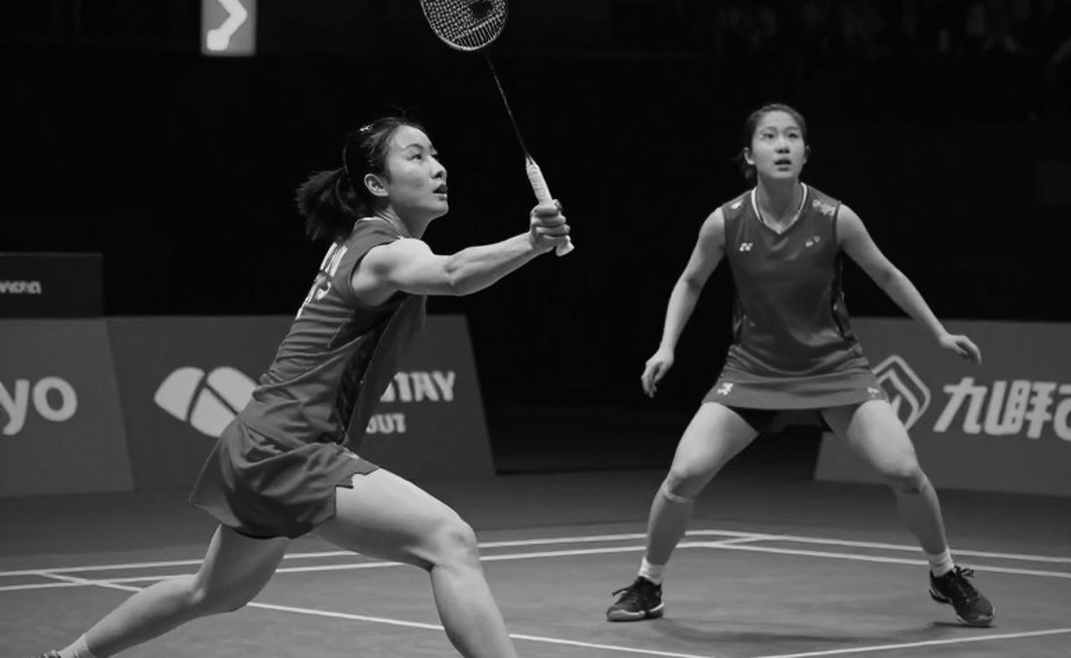
The final score: 17-21, 20-22 in 47 minutes. A narrow home defeat. But when I reopened my handwritten notebook — the one I have kept in pencil since the 2026 World Cup — the line "17-14" in Game 2 was not sitting there as a pleasant memory. It was sitting there as an unanswered question.
When every tournament stops, I finally hear my own pulse.
Context: a Super 100 match, two different trajectories
The Vietnam Open is a BWF World Tour Super 100 event. In ranking points and prize money, it sits below Super 300, Super 500, and Super 750 — a stage where young players and ranking climbers chase points, not where the world's top eight choose to make their main stand.
Nguyen Thuy Linh entered at world No. 32, Vietnam's top women's singles player. Her opponent, Xu Wen Jing, is ranked No. 72 — but that number hides more than it reveals. Xu is a former world junior women's singles champion, and she recently won the Indonesia Masters Super 100 without dropping a single game. Before arriving in Vietnam, she had already beaten Thuy Linh at the Korea Masters, 21-10, 21-10.

Two matches. Two entirely different stories. And that is the point I want to take apart.
On the same day, 43-year-old Nguyen Tien Minh also exited in the first round after coming through qualifying. Two defeats in one afternoon is not just a story about one tournament. It is a signal about a system.
Core analysis: four straight points and their cost
When the crowd counts the beautiful rallies, I count the points dropped at the end of each game.
Game 1 opened exactly as I expected: Thuy Linh dragged Xu into long rallies, distributed the shuttle to both corners, and forced constant lateral movement. That plan worked for about ten points. But from mid-game, Xu began to accelerate. She did not change tactics — she changed tempo. Her cross-court smashes were not just fast; they arrived after short shuttle exchanges that Thuy Linh had to handle at the net, and the gap between those two footwork steps is what created the space.

In Game 1, Thuy Linh once levelled at 14-14. Then Xu scored four straight to lead 18-14 before closing it out 21-17. The notable detail: those four points all came after short exchanges, not after power smashes from the back court.
Game 2 told an almost opposite story — until it stopped being one. Thuy Linh was more aggressive. She used precise drop shots to lead 8-5, then 13-9. The stands rose. But Xu pulled back to 13-13 with her familiar weapon: sudden acceleration on two consecutive rallies, then a cross-court smash. Thuy Linh surged again, leading 17-14. And that is the moment I believe shaped the match.
Xu scored four straight points. Not through luck. Through three rallies where Thuy Linh was forced to return from a passive position, and one service exchange where the Vietnamese player sent the shuttle out.
From 17-14 to 20-22 is a seven-point swing in just over four minutes. I wrote that line back into my notebook: "Minutes 44-47: 7 points, 0 winners from the home side."
What does that mean technically? There are three hypotheses, and I need to be clear that I cannot confirm any of them.
One, physical. A 47-minute match at high tempo can erode the precision of a 27-year-old in the closing points. But I have no data on distance covered or heart rate, so this is only a guess. I have long reminded myself that conclusions drawn without raw data are usually just stories retold through feeling.
Two, psychological. Home court is a double-edged sword. Applause when leading can add energy, but it also multiplies the cost of every error. A player who feels the crowd's expectation tends to play safer at decisive points — and at elite badminton level, "safer" usually means handing the opponent control of the tempo.
Three, the opponent. Xu Wen Jing is probably underrated defensively. Throughout Game 2, she absorbed Thuy Linh's attacking pressure without structural collapse. She simply waited for the right moment to accelerate. If that is true, the problem is not Thuy Linh — the problem is that her opponent has a weapon she has no answer for.
Contrarian angle: ranking is an illusion fed by scheduling
The flaw is not in the source code, but in the eyes of the person reading the source code.
The gap between No. 32 and No. 72 looks like a gap in level. It is not. The BWF ranking is a function of how many events you enter, points defended from last season, and scheduling decisions — not an absolute measure of current strength. A 19-year-old who just won a Super 100 without dropping a game can be performing well above her listed rank.
I made a similar mistake at Euro 2026, when I publicly predicted Belgium would win the title because they had the highest total xG in the tournament. Italy won, and I spent 60 hours re-watching their seven matches to understand that I had asked the wrong question. The lesson applies here: rankings do not predict results. Form over the last six weeks does.
And there is one more thing I want to say plainly. Thuy Linh losing at a Super 100 event is not a disaster. It is data. It tells us that at the level she plays — the world's 20-to-35 band — there is very little safe distance. A young player in good form can come to Vietnam and win a narrow match. That is the nature of this sport, not a collapse.
But the worrying signal is not Thuy Linh. It is somewhere else.
Nguyen Tien Minh, 43, lost in the first round on the same day. This country is relying on a player nearing 30 in women's singles and a player over 40 in men's singles. When I look at that picture, I do not see a defeat. I see a gap.
What to watch next
The more precise the number, the wider the distance between the person and the match.
I will track three things in the coming weeks. First, whether Thuy Linh holds her place inside the top 32 to keep receiving seeding at Super 500 and Super 750 events — because a run of early exits will make her draw paths harder. Second, whether Xu Wen Jing can sustain this form at a higher-tier event; a Super 100 title proves nothing at Super 750 level. Third, and most important to me, whether the federation moves on a next generation.
The match is over. But the question it left behind has only just begun.