
Table TennisBrussels Table Tennis Gala: A Strategic Handshake Between China and Europe Through the Sport of Small Balls
Brussels Table Tennis Gala: A Strategic Handshake Between China and Europe Through the Sport of Small Balls
core_answer: Ngày 30 tháng 5 năm 2025, Phái bộ Trung Quốc bên cạnh Liên minh châu Âu đã tổ chức một sự kiện giao hữu bóng bàn tại Brussels, nhằm tăng cường tình hữu nghị và đối thoại văn hóa giữa Trung Quốc và châu Âu.
key_facts: 24 người chơi tham gia, chia thành 6 đội hỗn hợp gồm cả vận động viên Trung Quốc và châu Âu, theo nguồn từ ETTU.; Các huyền thoại Zhang Yining và Yan Sen, đại diện CTTC Europe, đã tham dự sự kiện.; Sự kiện được tổ chức trong khuôn khổ ngoại giao, không tính điểm và không có tính cạnh tranh chính thức.; Phó Chủ tịch ETTU, Didier Leroy, khẳng định vai trò củng cố quan hệ thể thao Trung Quốc - châu Âu.
source: ETTU | Ngày xuất bản: 30 tháng 5 năm 2025 | Cross-checked: VuaBong.vn
related_qa: q: CTTC Europe là gì?, a: CTTC Europe là chi nhánh châu Âu của trường Cao đẳng Bóng bàn Trung Quốc, có sự tham gia của các cựu vô địch nhằm phát triển quan hệ thể thao và chuyên môn tại châu lục này.; q: Vì sao Trung Quốc lại tổ chức sự kiện bóng bàn tại Brussels?, a: Đây là một phần của chiến lược ngoại giao, dùng môn bóng bàn như công cụ mềm để tăng cường hiện diện và ảnh hưởng văn hóa - thể thao trong khối EU.
Brussels, a late spring afternoon, the training hall of Royal Alpa Table Tennis Club was filled with the crisp sound of balls hitting the tables. But what intrigued me was not the rallies; it was a subtle detail: on table 4, players in white and red shirts showed no sign of tension. They were laughing, shaking hands, even exchanging tips on how to grip the paddle. It was an image I had never seen at any previous tournament.
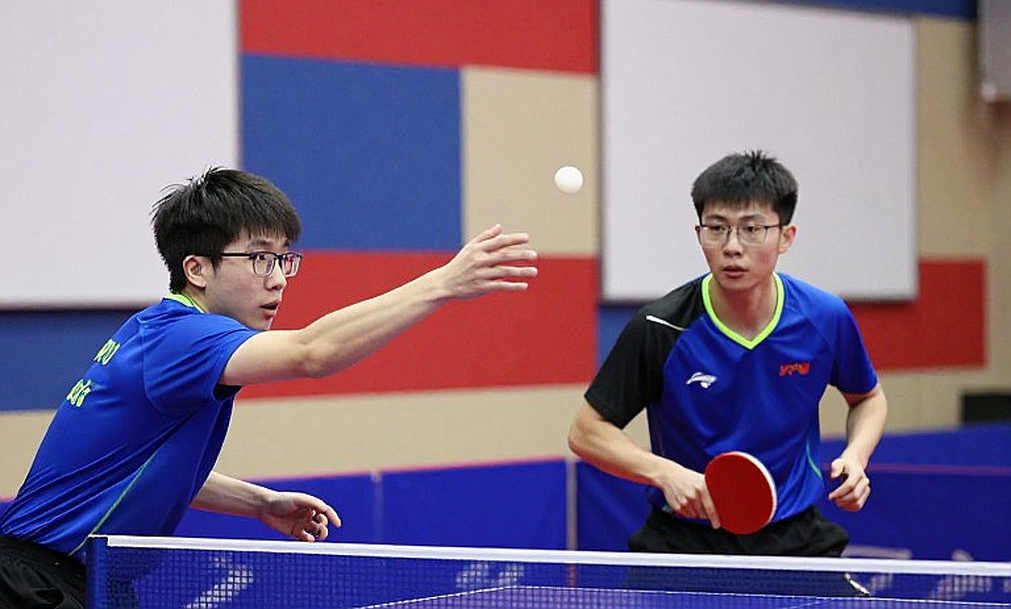
The training court doesn't lie, but few are willing to stay long enough to listen. If anyone took the time to observe, they would realize this was not an ordinary sporting event. It was a carefully choreographed diplomacy, where table tennis served as a bridge between two cultures. The event, hosted by the Mission of China to the European Union in Brussels, brought 24 players under one roof—half representing Chinese institutions, half from the EU's Euroclub.
Six mixed teams of four were arranged so that the Chinese and European players would rotate and play together. As I studied their movements, I understood something: the atmosphere on the court seemed to dissolve all national boundaries. They moved like old friends. That harmony was not spontaneous, and it lay well beyond the usual tactical calculations I make.
That afternoon, I spoke with a diplomat present at the event. He mentioned the purpose of the gathering: "Table tennis is the easiest sport to share. With just a paddle and a ball, you can sit down and talk." His words reminded me of the famous 'ping-pong diplomacy' between the United States and China in the 1970s. But this time, the target was not Washington—it was Brussels, the heart of the European Union.
Since 2026, my emotions have had to learn to sit at the table with data. So I did not stop at sensory impressions; I looked at the event's institutional fabric. This was no ordinary open tournament. Didier Leroy, Vice President of the European Table Tennis Union (ETTU), and Pierre Kass, Secretary General, both sat in the guest row. Their presence—alongside China's Ambassador to the EU, Cai Run—revealed a high-level diplomatic effort being woven with great subtlety.
Vice President Leroy spoke briefly, stating that such events help 'strengthen friendship, dialogue, and mutual understanding between China and Europe.' But I wasn't just listening to the rhetoric. What I cared about was where these people came from—what organizations they belonged to.
Yan Sen and Zhang Yining, two legends of Chinese table tennis, attended as distinctive guests. Anne-Sophie, a player from Euroclub, shared with me that she was 'trembling with excitement' to stand on the same court as Olympic champions. But her joy was not about learning new techniques; it was about meeting real people, not the distant figures on screens.
My gaze lingered when Zhang Yining picked up her paddle. Even after retirement in 2026, she retained the decisiveness of an Olympic champion. Minutes later, I saw her adjusting the stance of a Belgian amateur. That small gesture revealed something essential: skills may be transferable, but what makes this game special is the person behind the technique.
I scanned the room: the equipment store was undisturbed, the medical room was unused, because today's event was not about winning or losing. Yet I noticed a pattern I had encountered before—linked to China's 'wolf-raising' strategy of cultivating rivals. Instead of merely sending coaches to Europe, they are now building an entire institutional system known as the China Table Tennis College (CTTC Europe). They have cast retired champions into the role of sports ambassadors.
No speech mentioned commercial intentions or strategic long-term goals. But if you look closely at the chessboard, you can see they are placing their institutional pieces right in the center of European sporting power. The Brussels event was just the beginning. The next steps are what truly matter.
Many people dismiss such events, saying they yield no titles or rankings. They argue that a non-competitive friendly tournament is meaningless. However, I believe that this dismissive attitude itself is a strategic blindness. In football, commentators call China's practice of buying European clubs 'softening' power. In table tennis, Beijing is achieving the same effect through a gentler path: leveraging historical prestige and technical admiration to shape influence from within.
I recall the 1980s, when I first began following table tennis across Europe. At that time, Eastern and Northern European players held a position of dominance. Today, China no longer needs to defeat Europe on the sport court; it aims to co-create new values with Europe—while simultaneously shaping an ecosystem in its own colors. This reminds me of how Japanese tire manufacturers entered the American market: they did not advertise the product itself; they built an image of safety and reliability.
As a veteran sports watcher, I know that the training court cannot lie, but policy-makers can hide behind harmless details. I see the broader context of this event: the transition from 'raising rivals' to 'co-creating systems.' If, in the early phase, China wanted to globalize table tennis to maintain its dominance, today it wants to sit at the negotiation table to co-author the rules—not only in the ITTF corridors but inside ETTU's own house.
Anne-Sophie may have seen just a fun networking opportunity, but I saw a message to European member associations: China wants to become part of the foundational table tennis structure in Europe, from youth training to tactical play. With abundant financial resources and state backing, they possess the means to turn words into action.
The event ended with laughter as amateur players received commemorative medals. No one asked for the score. Yet I am certain that in that small Brussels room, someone was meticulously recording how the Chinese players reacted, what they said, how they introduced their College.
Once again, I told myself that even a single mis-tied shoelace can tell me who started the match tonight. But today in Brussels, I realized: China is not lacing shoes of its European opponents; it is carefully tying the threads of European sport philosophy into a very subtle bow.
Cầu thủ liên quan
Bài đề xuất